

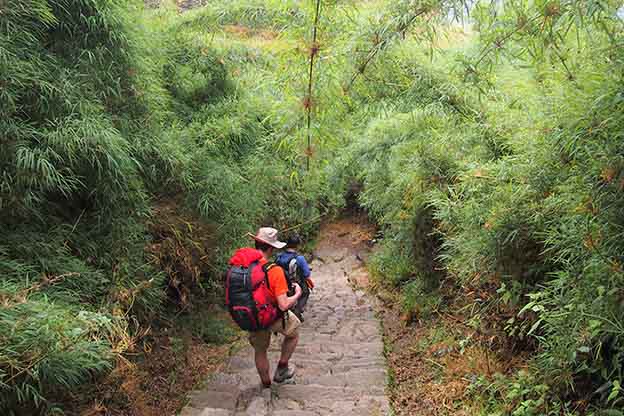
Inca Trail porters shut down the Inca trail on June 6 and 7, 2019 because their demands for fair working conditions have not been met.
Here are the details about the strike, and why this struggle should be important to anybody who treks with porters within Peru.
Despite waiting for almost two years to have their demands for basic humane working conditions and salaries improved, the porters of the Inca trail have finally run out of patience. This is the reason why on June 6 and 7 2019, the porters of the Inca Trail staged a general strike in which they will be blocked all the access points to the Inca Trail to Machu Picchu demanding that both the Peruvian government and the Inca trail tour operators address these issues.
IN JULY 2017, the leaders of the union of porters met with the representatives of the Peruvian government and Inca Trail tour operators to present a list of grievances.
As a result of this meeting, a non-binding agreement concerning the porter’s wages was made between the Inca trail tour operators and the representatives of the porters. It is worth mentioning that porters receive an average of USD $72 for a 4-day trek.
The poor working conditions of the porters on the Inca trail are nothing new. They have been previously reported by Peruvian media outlets, as well as conscious travelers in TripAdvisor reviews and other media outlets, but these reports did not have the impact expected as neither the Peruvian government nor travel companies have been willing to bring forth changes.
It has been two years since this article has been posted and the situation of the Inca Trail porters has only gotten worse. No amount of negotiations has rendered any changes, and the problems remain the same. It is important that all travelers support the struggle of the porters so they can stop the exploitative conditions in which porters work.

The issues regarding the working conditions of the porters on the Inca trail is not something new, they have been reported by some Peruvian media outlets before, but the impact of these reports has rendered fruitless as neither the Peruvian government nor travel companies have been willing to make some changes. Furthermore, some conscious travelers have made some of these same observations on their trip advisor reviews, but their efforts to sound the alarm are effectively kept quiet.
Travel companies pride themselves on being “green”, “eco-friendly”, “sustainable”, “responsible”, etc. etc., but these labels do not match in any way the demands of the porters about their working conditions. Readers can hear directly the porter’s grievances described in the following lines here in the video below. The sardonic irony of this is that some of the companies mentioned by the porters in this video have been awarded prizes by the Peruvian government.
What are the real demands of the porters and why do they matter?
Is the adjustment of wages an overall solution to their requirements or just a band-aid to a long list of problems that need to be seriously addressed as soon as possible.
Excess weight
The Peruvian government rules for porters establishes clear guidelines regarding the maximum weight that a porter can carry, which is 20 Kg. However, porters maintain that they take an average of 25 to 35 kg, no matter what company they are working with. Such situations highlight the abuse of travel operators who continue to display contempt of the government’s rules and the inefficiency of the park rangers at the Inca Trail checkpoints to expose the rife exploitation of the porters. Exposing a complicit attitude supporting the significantly high levels of corruption existing in Peru’s public institutions.
This corruption deteriorates the already unsafe working conditions of the porters. Tourists might not be aware of the extent of the situation, as some very renowned travel operators purposely mislead their clients by assuring them that the maximum weight that porters carry is 25kg. Watch this video of a “regular checkup” carried out by officials of the Ministry of Labor of Peru on the Inca trail, minutes 1:30 to 2:30, and see for yourself the real weight that porters carry on a daily basis.

Lack of proper resting conditions
Porters on the Inca Trail are the first people to get up in the morning and the last ones to go to sleep. Despite all of this, they do not receive proper camping tents, let alone sleeping bags and sleeping pads. Porters sleep in the dining tents that tourists use for dining, these tents do not have a waterproof floor, and their roofs leak when the rains are heavy or when it rains for longer than a couple of hours. To make up for the lack of a waterproof floor, they spread a tarp on the floor that with a bit of luck might keep them dry, but most of the times they would have to stay awake during the night, sleep sitting up, or find an unusual shelter in the park’s bathrooms.
Poor food, no food or eating leftovers
Porters carry out one of the most important jobs on the Inca Trail, if they fail to carry out their jobs effectively, tourists are directly affected. As such, eating a diet based on rice, noodles, and potatoes is not enough. The severity of this type of work demands that people are properly fed but on the Inca Trail porters rely on scraps left by tourists; calling each other “condor” for eating the leftovers is quite normal. Such situation shows the little concern tour operators have over these people and their health.
Cleaning bathrooms manually and exposing porters and fellow travelers to health hazards

Everyone who has been to the Inca Trail knows that a trip to one of the park’s toilets is part of the adventure, even though this is one of the negative adventures of the Inca Trail. Bathrooms on the Inca Trail are awful, dirty and by no means eco-friendly. To ameliorate this, a few travel companies offer their clients portable “biodegradable” toilets as part of their tour packages. What future travelers to the Inca Trail need to know is that biodegradable toilets imply that the waste either needs to be buried or transported out. On the Inca Trail, porters do not carry human waste out of the park to dispose of it in a proper location, and the park does not have any places to bury the waste. What tour operators supply is toilets in the form of buckets that after their use will need to be emptied out manually. A job that porters are forced to do by hand and without any personal protective equipment such as gloves or masks, exposing them to serious risks, which becomes a constant health hazard to both porters and tourists.
What these terrible things can teach us about conscious traveling is that leaving the responsibility of having sustainable travel practices to tour operators themselves only exacerbates the miserable conditions of their workers.
Every year, more than seventy thousand people hike the Inca Trail, millions of dollars in revenue is made by tour operators, both foreign and local, but things as essential as food and shelter for the ones who perform the hardest work remain stuck in time and with no signs of change in sight.
The 2018 Inca Trail reservations have started already, and it is very important for travelers to choose wisely which tour operators they use for their Inca Trail adventure. The choice they make can improve the working conditions of the porters. The trend in the world of traveling is to move toward sustainable and eco-friendly practices. New groups of local people coming together to establish alternative forms of businesses are coming forward and need to be supported; especially when working conditions for their workers, together with a sensitive treatment of mother earth are at the core of their prac

