
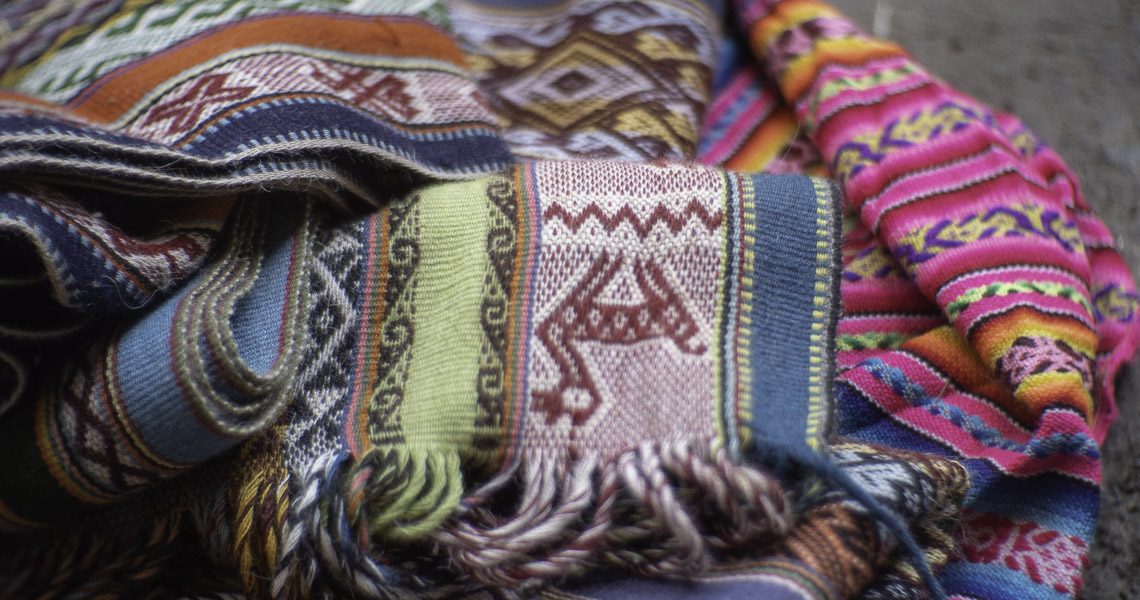
If you’re seeking to find high-quality Andean textiles, here are some places near Cusco that are not to miss.
Perhaps what weaves the diverse cultures of Peru together best are the community of artisans. From the Amazon to the coast, skilled craftspeople ensure that the country’s history, values and vibrancy for life is preserved in traditional art. Take a look at these communities in the Cusco area that continue to produce fine Andean textiles.
The Mapacho Valley
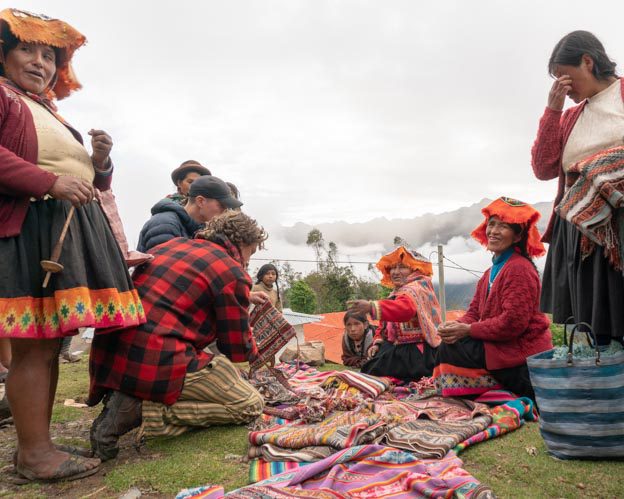
Indigenous women in the Mapacho valley create some of the highest quality of Andean textiles seen in the country. In the villages of Bon Bon, Parabamba and Chimor, you’ll find colorful textiles that are dyed naturally. Weavers collect plants native to the region to stain the fibers.
Within each textile are stories of animals, natural wonders and other tales that have been around since their ancestors. Take time to stop and listen to the women or to at least observe the skilled designs. It just may be a life-changing experience.
How to get there
Book an organized tour
There are several options to book tours to visit indigenous communities of the Mapacho valley, where you’ll have the chance to learn about the art of weaving, about traditional agriculture, and about the many medicinal plants of the region.
I recommend that you get ahold of EnthoCo, an organization run by U.S. expat Scott Lite and his Peruvian wife Isabella Vicente. Along with organizing workshops and tours across the jungles and Andes of Peru, they also offer trips into the Mapacho Valley for those who are interested in the weaving traditions, plants, and indigenous wisdom of the jungles and the Andes.
Public transportation
From Calca, take a colectivo (shared van) to the town of Ayamparis, about two hours away. From Ayamparis, you’ll need to wait for another bus (which usually only passes through in the morning) that will take you into the Mapacho Valley.
As of yet, there is very little infrastructure for tourism within the Mapacho Valley. Therefore, we recommend you make this into a day trip unless you don’t mind staying in a basic hostel or camping at the hot springs. And be sure to leave from Calca by 8-9am in order to give yourself enough time to spend at the springs, and to visit artisans in the communities of Chimor, Bon Bon or Parabamba.
The Potato Park
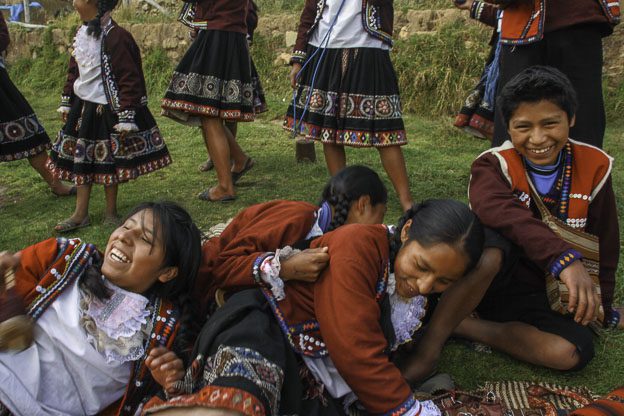
In the mountains above the Sacred Valley of Peru lies an expansive territory where communities carry on a traditional lifestyle. It’s a great place to visit for the day if you want to learn about traditional agriculture, weaving, go hiking, learn about Andean traditions and medicinal plants.
The Potato Park is a bio-cultural reserve located in the heights above the Sacred Valley of Peru. Though it has a strange name, it is a great place to visit for those who are interested in learning about Andean traditions.
More than 6,000 people live within the boundaries of the park, spread between twelve different communities. Though some communities are more traditional than others, most everybody who lives in this territory is subsistence farmers, living in the same ways that their ancestors have.
They collect wool from their own llamas, alpacas and sheep in order to make stunning garments that are colored with natural dies.
If you visit the communities of Chauhuaytire, Paru Paru or Amaru, you can easily encounter families who will teach you all about their weaving traditions. In general, people are very generous, and you’re likely to be offered a place to stay for the night. If you have an opportunity to do this, I highly recommend that you take it.
Keep in mind that most families that live within the Potato Park have very little means of income. Please be mindful of this, and offer your hosts a generous payment for offering their hospitality.
Chinchero
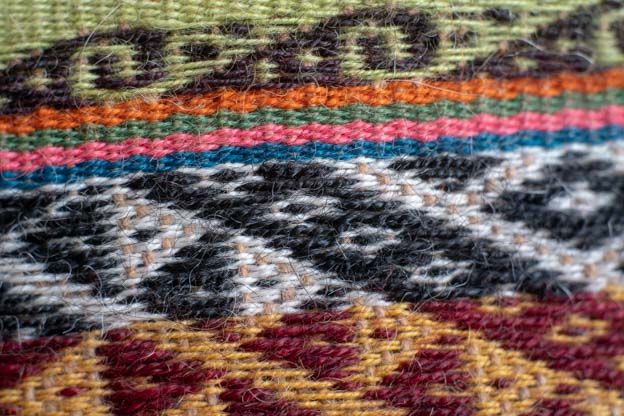
Not far from Cusco city, Chinchero is a great village to discover more about Andean weaving. The Centro de Textiles Tradicionales del Cusco (The Cusco Textile Center) is one organization that helps bring weavers together by empowering traditional weavers. The artisans receive training and a platform to sell their art. Nilda Callañaupa Alvarez, who helped start the collective, has written several books about weavers in the Sacred Valley, including one about the weavers of Chinchero.
How to get there and when to go
Chinchero is located about 45 minutes from Cusco. Since Chinchero is on the way to Urubamba, visitors can take any colectivo going in this direction. Ask your driver to advise you when the Chincero stop is near. Private taxis are also available
Baratillo Saturday Market, Cusco
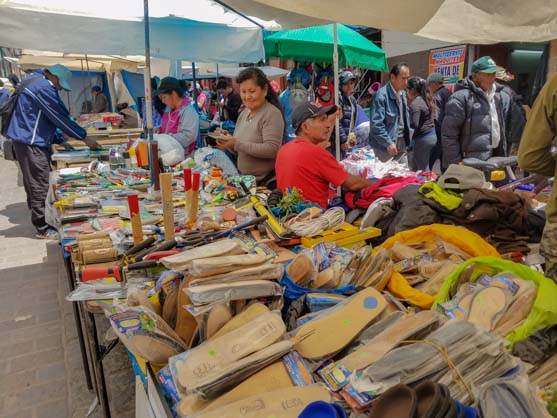
For a historically rich experience, this is a great destination. The huge market takes up more than 15 city blocks, and there are four streets dedicated exclusively to textiles.
You’ll find a wide variety of garments: from handmade and naturally dyed clothing, to machine made synthetic sweaters. If you are not experienced at telling the differences between high-quality and low-quality Andean textiles, bring a knowledgeable friend or ask a local to accompany you.
How to get there and when to go
The market is located on Prolongación Pera street, along Ejercito Ave, and near the Santiago Bridge. It is a five-block walk away from the San Pedro market. There is a market every Saturday.
Cover photo: Scott Montgomery
This is an edited version of the article originally published on September 12, 2019.

