
Let’s Celebrate Peru’s National Coffee Day by Exploring the Unique Coffee Regions
Every last Friday of August, Peru joyfully celebrates its National Coffee Day. This year, we invite you to embark on a flavorful journey through some of Peru’s enchanting coffee regions, each offering its distinctive character and taste.
Amazonas: Where the Andes Meet the Rainforest
Region Amazonas is nestled in the northeastern corner of the country. It’s where lush rainforests and rugged Andean landscapes coexist harmoniously. To the north lies Ecuador, while Loreto and San Martín embrace its eastern borders. You’ll find La Libertad in the south, and to the west, the region shares its boundaries with Cajamarca. Amazonas boasts seven unique provinces, with its capital, Chachapoyas, at its heart.
The coffee from Amazonas is exceptional because of its full-bodied character, complemented by lively acidity and sweet, fruity notes. As you savor this coffee, you’ll experience the essence of the Amazon rainforest.
Ayacucho: Delicate Elegance from the Andes
Region Ayacucho, situated in the central southern Andes, is a treasure trove of coffee that captures the essence of its picturesque surroundings. Bordered by Junín to the north and Ica to the west, this region invites you to explore its eleven provinces, with Ayacucho City as the epicenter.
In Ayacucho, coffee cultivation thrives primarily in La Mar and Huanta provinces. This coffee is known for its delicate profile, offering mild acidity, a harmonious blend of fruity and floral notes, and a gentle, balanced sweetness.
Cajamarca: A Symphony of Sweetness
Located in the northern reaches of Peru, Region Cajamarca is a land of extraordinary beauty and rich coffee traditions. Sharing its northern border with Ecuador and the eastern boundary with Amazonas, it extends southward to La Libertad, and the west; you’ll find Lambayeque and Piura. With thirteen provinces, Cajamarca shines brightly, with its capital, Cajamarca City, as its cultural hub.
The coffee from Cajamarca is renowned for its sweet and bright acidity, often featuring delightful floral notes. You’ll journey through a symphony of flavors and aromas as you savor this cup.
Cusco: Home to Machu Picchu and Exquisite Coffee
Cusco, nestled in southeastern Peru, is a region of immense cultural significance and breathtaking landscapes. It shares its borders with Ucayali to the north, Arequipa and Puno to the south, and Madre de Dios and Puno to the east. To the west, it’s flanked by Arequipa, Apurímac, and Ayacucho. With thirteen provinces, it’s a treasure trove of history and nature, with the iconic city of Cusco as its heart.
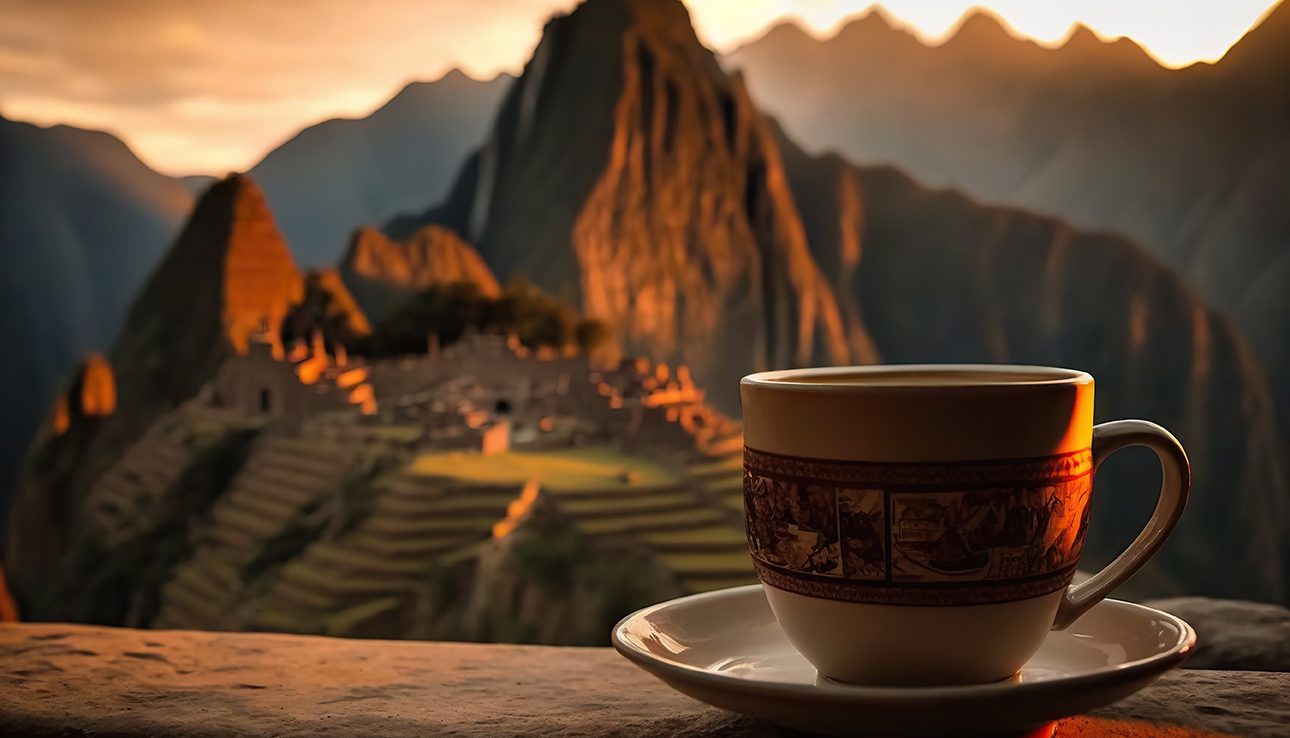
The coffee from Cusco, particularly from the La Convención province, is a true gem. Here, you’ll discover the Machu Picchu-Huadquiña Coffee, celebrated for its unique qualities. This coffee offers a blend of fruity flavors, with a medium body and a touch of acidity that harmonizes beautifully.
Huánuco: Where Nature’s Beauty Abounds
Region Huánuco, nestled in the central-eastern part of Peru, is a hidden gem waiting to be explored. Bordered by San Martín to the north, Pasco to the south, Ucayali to the east, and Áncash to the west, this region boasts eleven provinces, each with its own natural wonders. Huánuco city, its capital, is the gateway to this enchanting world.
Coffee enthusiasts will find the Leoncio Prado province in Huánuco a true delight. The coffee here offers a medium body, a mild acidity, and a sweet-fruity flavor profile.
Each sip transports you to the stunning landscapes of Tingo María, with its forests, cascading waterfalls, and diverse flora and fauna.
Junín: Coffee from the Heart of the Andes
Region Junín, located in the Andes heart, offers an extraordinary coffee experience. Bordered by Huancavelica and Ayacucho to the south, Pasco and Ucayali to the north, Cusco to the east, and Lima to the west, Junín is a land of diversity. Its nine provinces are brimming with cultural heritage and natural beauty, with Huancayo as the dynamic hub.
Coffee from Junín, particularly from the Chanchamayo and Satipo provinces, showcases a unique profile. It’s a coffee with more body, marked by a high malic acidity that complements fruity notes of green apples, pears, and red berries, all wrapped in a medium sweetness.
Pasco: The Essence of Central Peru
Region Pasco, situated in central Peru, is where the essence of the Andes blends seamlessly with the Amazon rainforest. Bordered by Huánuco to the north, Junín to the south, Ucayali to the east, and Lima to the west, Pasco is known for its rugged terrain and captivating landscapes. Cerro de Pasco, its capital, is a testament to the region’s rich history.
Pasco is home to the Villa Rica Designation of Origin (DOC), a prestigious mark of quality for its Arabica coffee. This coffee showcases a delightful range of fruity flavors, from strawberries to tropical fruits, with medium-high acidity, a sweet honey finish, and a balanced body.
Piura: Crisp and Vibrant Flavors from the North
Region Piura, located in northwestern Peru, is renowned for its crisp and vibrant coffee. Tumbes and Ecuador border it to the north, Cajamarca and Ecuador to the east, Lambayeque to the south, and the Pacific Ocean to the west. Piura offers eight diverse provinces to explore. The bustling city of Piura is its capital.
Though Piura may not produce vast quantities of coffee, its quality is unparalleled. Expect a crisp acidity and a symphony of citrus, peaches, plums, and other fruity notes. This acidity is beautifully balanced by sweetness, ranging from carob and molasses to honey, all wrapped in a medium body.
Puno: Coffee from the High Andes to the Amazon Region Puno, situated in the far southeast of Peru, is a region of contrasts and diverse landscapes. Bordered by Madre de Dios to the north, Bolivia to the east and south, and Moquegua, Arequipa, and Cusco to the west, Puno boasts thirteen provinces, with Puno city as its cultural center.
The coffee from Puno, particularly from the Sandia province, offers a unique perspective of Peru’s coffee heritage. Due to its high-altitude location, expect delicate and crisp acidity along.
All these flavor profiles can be enhanced in roasting, grinding, and pouring. Each roaster decides how to make its mark on the beans, from meticulously fermenting the beans on the farm to controlling the roasting temperatures. This artistry adds an extra layer of depth and uniqueness to each cup, allowing coffee lovers to explore a wide spectrum of flavors and aromas.

