
As a UNESCO Intangible Cultural Heritage, Puno’s Virgen de Candelaria festival is one of Peru’s most jovial and colorful celebrations. This is why.
Held every year in February, the Virgen de la Candelaria (also known as the Virgen of Candlemas) festival is everything you would expect from a Peruvian folkloric celebration. Dancing, colorful costumes, music, with food and beverages flowing for days.
The southern Peru city draws some of the best dance troupes from around the region, around 170 groups and 40,000 dancers. It is the third largest festival in South America, with preparations starting a year in advance, involving thousands of costume makers, choreographers and sponsors.
The festival’s history
The history of the festival dates back to Peru’s Spanish Viceroy of the 16th century. Devout Christians emigrated to the region from the Spanish Canary Islands, where the veneration of the Virgin of Candlemas first began. She became the patron saint of the entire region spanning most of the southern Andes in Peru and Bolivia.

Photo: CHIMI FOTOS/Flickr Photo: CHIMI FOTOS/Flickr
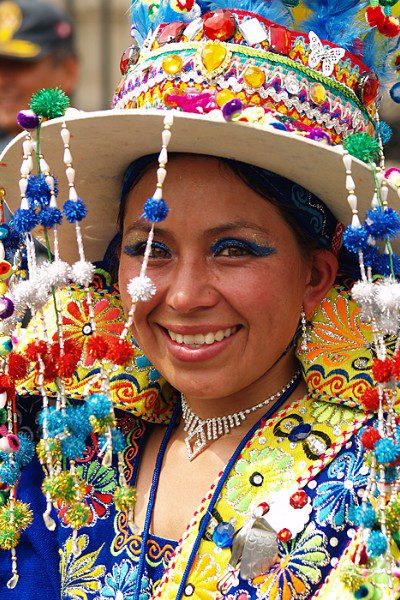
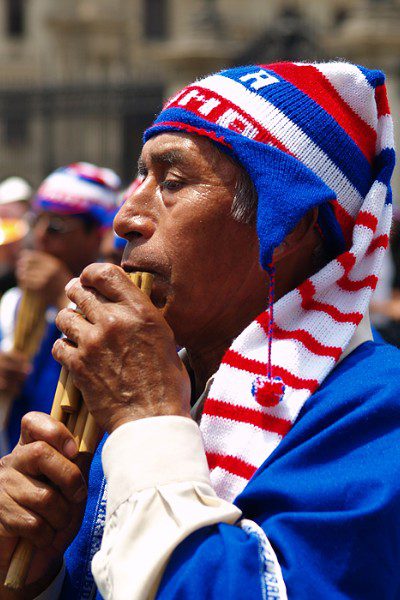
The veneration of the Virgen de la Candelaria in Puno is a fusion between Catholic and Indigenous cultural traditions of the region. The festival has morphed into a celebration of life and Pachamama (Mother Earth). For the residents of Puno, Mamacha (mother) Candelaria is the patron and protector of the city.
In 1781, the Virgen de la Candelabria became a beacon of perseverance and faith during the attempted siege of city by the Indigenous revolutionary army led by Tupac Amaru II. The legend goes that the Spanish colonists of Puno, outnumbered, surrounded, and discouraged, brought out the Virgin’s statue and walked in procession throughout the city. After day and night veneration, the rebels retreated, as if in answer to the prayers of the people.
The agenda for the Virgen de la Candelaria festival
Preparatory masses are celebrated nine days before the central day of the festival, February 2, culminating with a daybreak mass on February 1st. In the afternoon, an ancient ceremony of annunciation is carried out, consisting in the gathering, transport and burning of bushes (qhapos) as a manner of purification.
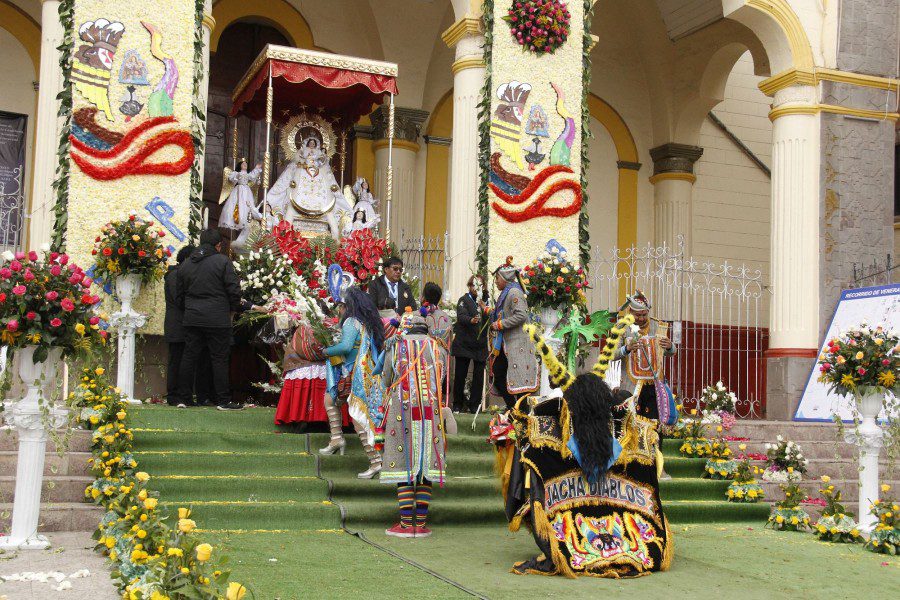
On Feb. 2, the Virgin is taken out for a long procession around the town, as in the legend, followed by a large band and a huge crowd. That morning, all the streets along the route are prepared for the event with huge images constructed out of colored wood and sawdust, or for greater respect and impact, completely out of flowers and chopped up plants.
As the statue of the Virgin passes over each image, flower petals are thrown over the statue for good luck. Some people had even constructed special boxes on the end of ridiculously long poles, so they could drop the flowers directly over the virgin herself from the first floor windows and balconies along the route.
Approximately 5,000 people are immersed in the procession, a fraction compared to the main event, which completely takes over the town and is just incredible.
The grand parade
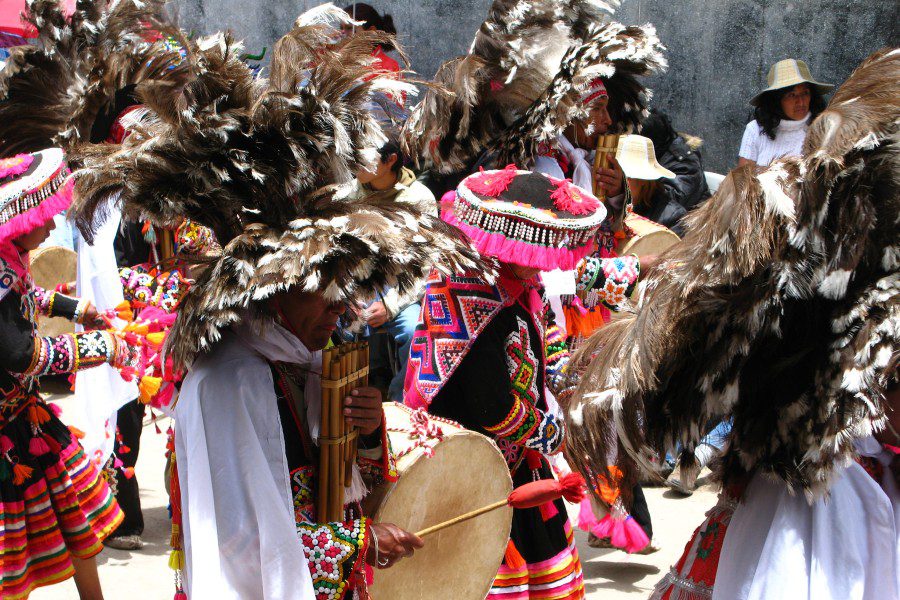
The grand parade of the Virgen de la Candelaria festival takes place seven days after the main day, and is the height of the festivities. The dance troupes, the bands, and neighborhood groups return for a street procession in front of the Virgin, who will watch over them from a small tent erected especially for her, on the main street.
The entire city turns out, either taking part in, or watching over the 5 km parade through the city, starting from the shores of Titicaca and ending at the city’s cemetery. The competition between troupes starts early at 7 a.m. and ends, officially, just after 6pm in the evening (though people continue to celebrate well into the dawn).
Puno’s La Diablada dance
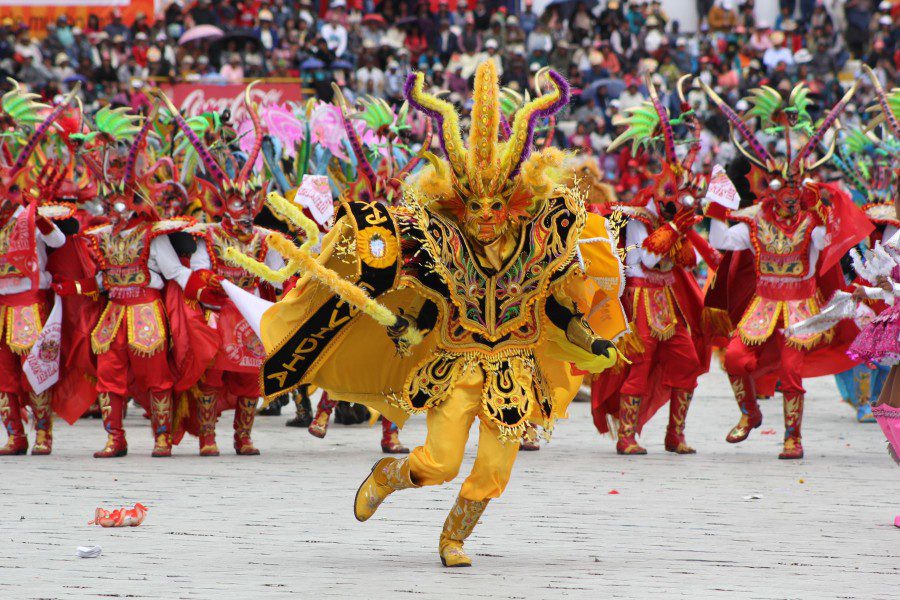
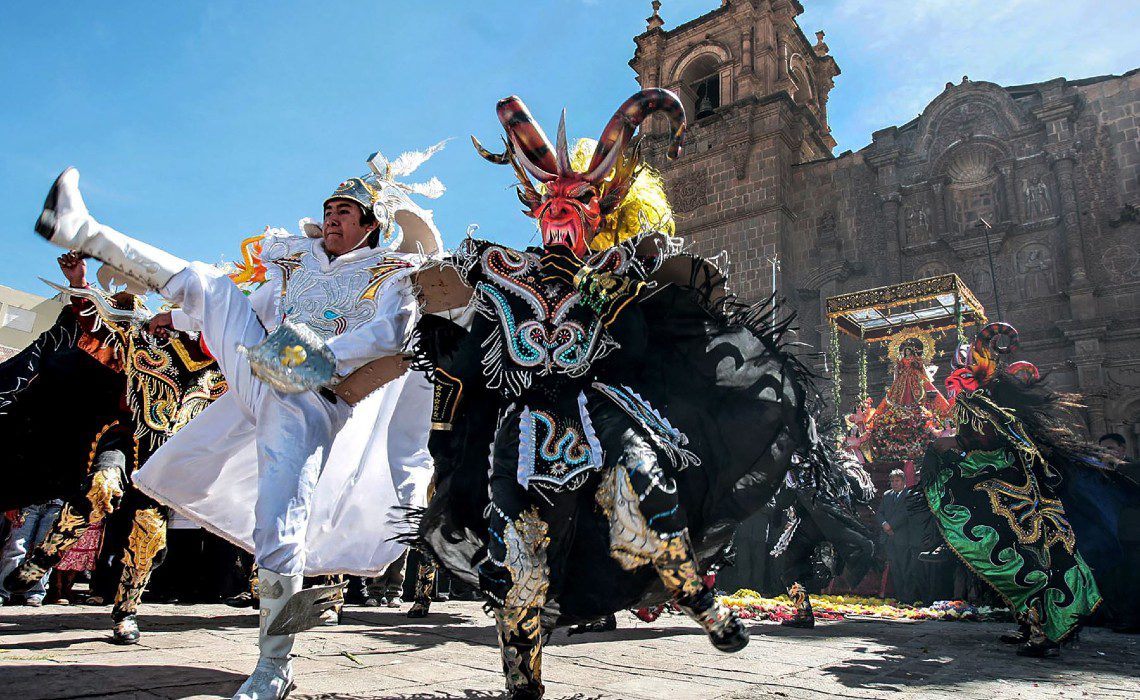
One of the most popular and colorful troupes to participate is the group behind the La Diablada dance. It is a dramatization of the legend between good and bad, infused with Catholic and Indigenous elements. The performers, dramatic devil-faced metal masks, act the battle between the archangel Michael and the Devil, his army and the chinasupay (the devil’s woman).
Records of the pre-Hispanic elements of the dance can be found in Bolivia, and the dance is also performed in Chile.
How to get to Puno
- By plane: Lima to Juliaca, it’s about 1.5 hrs. From Juliaca to Puno by car it’s 45 minutes.
- By land: From Lima to Puno it’s about 22 hours.
- From Arequipa to Puno by land it’s about 6 hours.
- From Cusco to Puno by land it’s about 8 hours.
- From Tacna to Puno by land it’s about 9 hours.
- Moquegua to Puno by bus it’s about 4 hours.
- If you’re in Bolivia, the journey by land is about 3 hours.

Cover photo: Andina

