
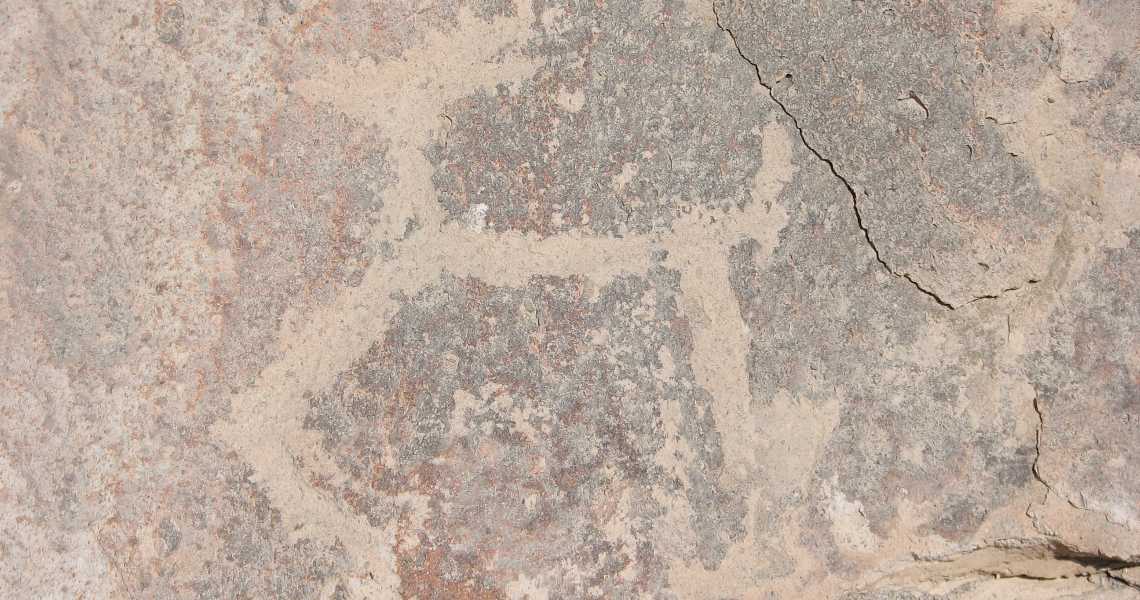
Archaeologists led by Luis Villegas found a group of 34 geoglyphs in Pampa de Majes in the department of Arequipa in Peru.
Geoglyphs are drawn figures on hillsides or plains. Archaeologist Luis Villegas is the director of the research project that made the discovery of the Pampa de Majes geoglyphs.
“We have found 11 types of geoglyphs […] The most abundant are those that have a zig-zag shape, although there are also zoomorphic, anthropomorphic and swept fields,” Villegas explained.
Swept fields are the larger geoglyphs his team has found. These geoglyphs have a different color and texture from the surrounding territory, as those who make them remove existing stones from the area. Some of them can have an extension close to 100 meters long by 20 meters wide.
Current theories
Villegas believes the purpose of the geoglyps was to mark places of worship for pre-Hispanic cultures.
“In the pampa there have been about 200 archaeological sites identified, including roads, petroglyphs, geoglyphs, agricultural terraces; and the most prominent has been a set of 34 geoglyphs (…) that we believe were executed as a way to worship water”, Villegas said.
According to the archaeologist, these figures played a role in how the Majes culture dealt with the forces of nature. Specifically, water. Due to their location in the dry ravines of the Pampa, nearby rivers could overflow due to climatic phenomena. This meant that the Majes could have used these geoglyphs to both attract or repel water from the pampa. However, this is still only a hypothesis, he said.
An accidental discovery
This location, Pampa de Majes, is a desert in the coastal area of the Arequipa department. Villegas has been doing working there since 2015 as part of the environmental impact study of the Zafranal mining company.
The government of Peru started developing the Majes irrigation project 48 years ago to bring water to part of the pampa area. With such an objective, it did not contemplate the study of archaeological remains of any kind. As a result, Villegas considers that we may have lost many other geoglyphs during construction.
“At the time of the Majes project there were no regulations on archaeological remains and it is likely that more geoglyphs would have been found to make this area comparable to the Nazca geoglyphs,” said the expert.
Cover Photo by AgainErick, Wikimedia.
Don’t Miss:
There is more to Nazca than just the lines
1 Week-Tour Option In Peru To Visit Nazca, Colca Canyon And Lake Titicaca

