

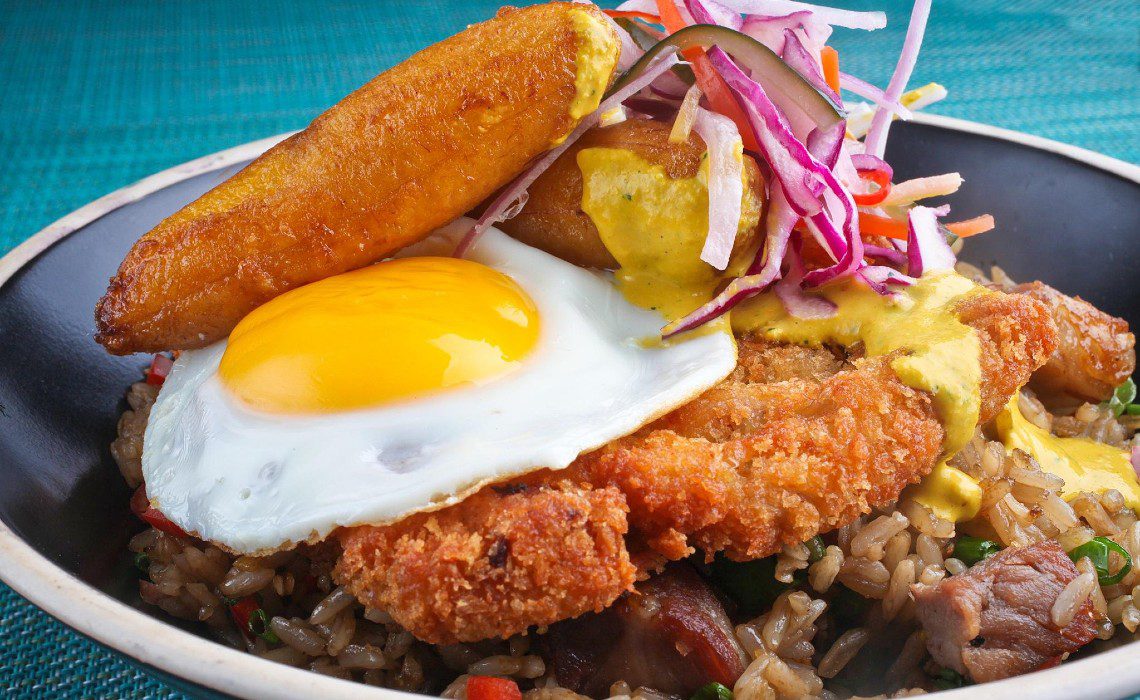
What makes a dish a lo pobre in Peru? The story behind the phrase is fuzzy but the dishes that are upgraded as such are nothing short of over-the-top.
A lo pobre translates to poor man’s, or in the style of a poor man. With just a simple addition of a fried egg, fried plantains and/or rice and french fries, traditional dishes in Peru are taken to another level of tasty.
Indeed, dishes made a lo pobre have become staples in Peruvian cuisine in their own right. For Peruvians, making or ordering lomo saltado a lo pobre, for example, isn’t just out of caprice, but in fact they’d find themselves with an imperfect meal sans a lo pobre.
Bistec a lo pobre, or poor man’s steak, was the dish that started the movement in Peru and Chile. One theory states that the dish was named as such back in the 19th century out of irony: poorer classes would eat similarly abundant dishes at a high cost. Others believe that the term refers to the meals that were eaten by working-class residents in Lima: combining protein with loads of carbohydrates.
The negative connotation to a lo pobre is far gone, and you’ll find the below dishes in all kinds of restaurants around Lima and beyond. They are testament to Peruvians’ love of food and outrageous creativity.
These are the dishes you should try:
1. Arroz chaufa a lo pobre
The classic Peruvian Chinese fried rice is given a sweet note with fried plantains. Have your first bite covered with the runny yolk of the egg.
2. Hamburguesa a lo pobre
Popularized back in the 90s by the Peruvian fast food chain Bembos, this hamburger is packed to the max.
3. Bistec a lo pobre
The dish that started it all. A simple yet hearty meal.
4. Tallarines verdes a lo pobre
Pesto wouldn’t be complete without steak and an egg in Peru.
5. Lomo saltado a lo pobre
As if lomo saltado needed anything else to make it a complete meal. But, once you see it a lo pobre, you wonder how it could go without.
6. Tacu tacu a lo pobre
This dish is stacked. Created, so the story goes, for drivers in the city, this dish has become a popular staple in Peruvian cuisine. We recommend sharing this colossal of a dish.
Cover photo: Gaston Acurio Twitter Page

