

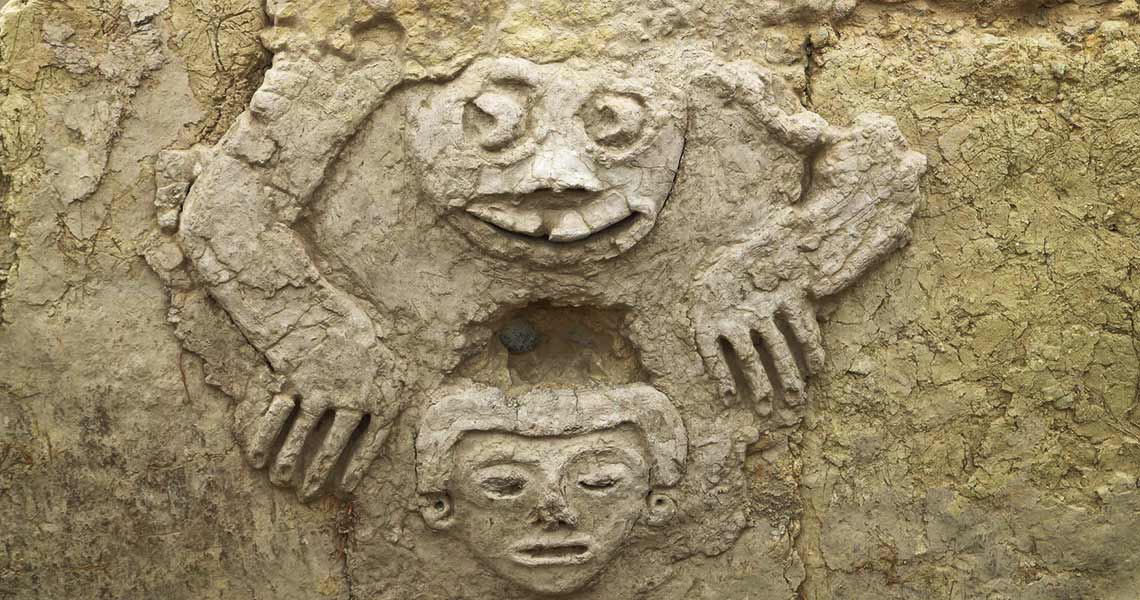
A mural, thought to be 3,800 years old, was unveiled at the Vichama archaeological site, north of Lima.
The finding occurred inside what scientists believe was a ceremonial building on this complex. It had carved scenes that depicted iconography, including a human-like toad being and representations of people.
“Dr. Ruth Shady Solís, director of the Caral Archaeological Zone (ZAC), believes the scene represents the ‘arrival of water’ through rainfall,” BBC News explained.
According to Shady, in Andean civilizations, toads represented water and the face below could be the humans waiting for rainfall to come and give life its continuity.
“Another depiction found nearby shows four human heads with snakes encircling them and what appears to be a seed with a face,” the aforementioned media said.
The Vichama site is located in Huaura province, about 150km (90 miles) north of the capital Lima. Excavations have been taking place here since 2007.
Cover Photo ANDINA/Josue Ramos.
Don’t Miss:
Archaeologists found a group of 34 geoglyphs in southern Peru

