
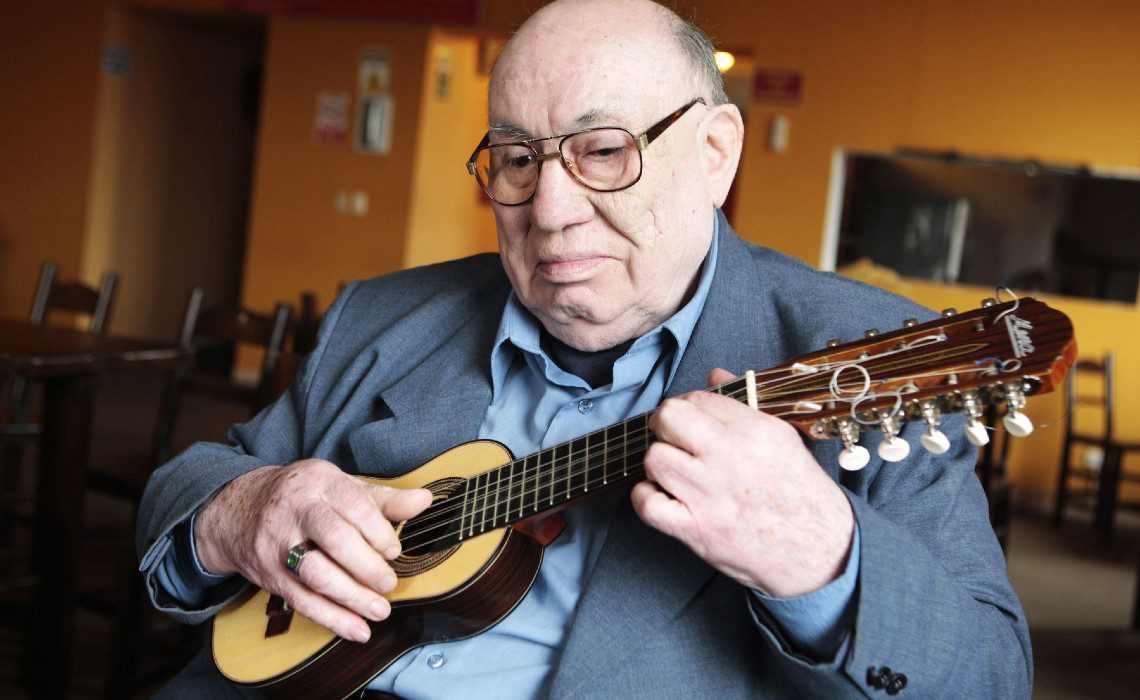
What is the charango? Without it, Andean music would not be what it is. This fascinating stringed creation, often referred to as the instrument of the angels, has a story that is just as rich and fascinating as the story of the Americas.
When I first moved to Peru back in 2013, I was in the beginning stages of an immense transformative process of opening to my deeply seeded life callings. At the time, I held strong (and often limiting) beliefs about who I was and what I was capable of. One of these beliefs was that I was a writer, not a musician. I thought that was something that was fixed; not worthy of investigating whether it was true or not.
My relationship with the charango: love at first sight
And then I encountered the charango. It took my breath away. I was immediately drawn towards the instrument for its harp-like qualities, which in Andean music is so often juxtaposed with a somber moods of sadness and longing.

The charango changed my life
I was transfixed and mystified. Not only did I want to know more about the charango, but a voice emerged in my head that told me: you need to get a charango, and learn how to play it. Never before did I see myself capable of being a musician, so I was shocked by what my own mind was telling me.
The voice was so strong that I knew I had to follow it, so the next day I set out for the city of Cusco to purchase my first charango. Over the last four years, I’ve continually gone deeper into my explorations of this incredible instrument, having played it almost daily, and having learned under three different maestros, or teachers, of the charango.
The mysterious history of the charango

The history of the charango has everything to do with the history of the Americas. Though there are several stories accounting for how and why the charango was first created, at essence, each account shares one thing: indigenous origins rooted in the need for creativity and community.
When Euopean’s began colonizing the New World, they brought their instruments along, including an instrument known as the vihuela, which was popular in Spain at the time. As these instruments were owned and played by Spanish conquistadores, indigenous people could only watch and listen; they did not have the opportunity to learn or to play.
According to one account, this is why indigenous Andean people began to create their own versions of this instrument by using materials and construction styles embraced by their ancestors, along with lots of creativity. Instead of using wood to make a base, they used armadillo shells. And they made strings out of animal sinew.
Another popular account offers an explanation for the charango’s very small size. It’s said that during the colonial period, the conquistadores prohibited indigenous people from gathering and playing music. Therefore, Andean people wisely made the charango very small so that they could hide it under their ponchos while they were not playing it.
The many types of charango

Over the centuries, the charango has evolved in many fascinating ways. It is now very rare to find one made from an armadillo shell (and with good reason, since it is an endangered animal).
Also, there is a lot of regional variety to the instrument. The most common type you’ll find is the Bolivian charango, which is made with a rounded base. This is the most common type that you’ll find in Peru, despite the fact that there are many interesting regional varieties. For example, charangos made in the area of Ayacucho are built with a flat base, giving it the appearance of a ukelele or of a small guitar.
The charango also comes in many varieties of sizes. The largest is known as the Ronroco, which is about the size of the guitar. Though it is tuned to the same notes as a typical charango, the tuning is set to a lower mode, thus giving it a more baritone sound.
But for me the most fascinating varieties of charango are the very small versions, which are usually strung with steel strings, creating a distinct sound. In Peru you’ll find many people playing the chillador, which is so small that you might confuse it with being a toy. The Bolivian style of this instrument, with its own unique characteristics, is known as the waylache.
The charango at its best: here are several masters of the charango
This is the great Bolivian musician Luzmila Carpio playing on the waylache, a smaller version of the charango.
Freddy Torrealba is recognized by many as being
Jaime Guardia was one of Peru’s most important traditional charango players.
Where and how to get yourself a professional-quality handmade charango

The best place to get a charango in Peru is in Cusco city. Within the city, you’ll find an entire street that is filled with dozens of artisan-made instrument shops. As long as you know some Spanish, you can easily visit one of these shops and request to have an instrument made for you. To find out more about charangos in Cusco, check out this article.
If you are interested in getting a charango but are located outside of Peru, I’m happy to help you out. I can work with you and with local luthiers in order to create a custom-made instrument and ship it to you anywhere in the world. And if you find yourself in Cusco, I can happily be your guide and translator in Cusco. Please send me a message at scott@voyagewithscott.com if this is of interest to you.
Cover photo: Andina
YOU MIGHT ALSO LIKE
CUSCO’S ARTESAN INSTRUMENT MAKERS: FOR THE LOVE OF ART
CELEBRATING THE LIFE OF JAIME GUARDIA, ONE OF PERU’S MOST FAMED MUSICIANS
THE MAGIC AND INFLUENCE OF A FAVORITE PERUVIAN SONG: THE CONDOR PASA


