
Peru is a country known for its three distinct regions. The coast stretches along the western part of the country, where two Pacific Ocean currents merge. The Andean hills encompass the Andes mountains, reaching over four thousand meters above sea level. The jungle descends from the Andes and connects with the Amazon rainforest. Each of these regions has unique geographical characteristics that contribute to the development of different climates, allowing diverse flora and fauna to thrive.

Jaime Pesaaque, a renowned Peruvian chef, has spent years exploring and showcasing the diversity of this territory. Mayta, meaning “noble land” in Aymara, reflects his vision. Over the years, Mayta has gained recognition and currently holds 9th position in Latin America’s #Latam50Best list and 32nd in the #Worlds50Best list, both in the 2022 edition.
TWO PROPOSALS UNDER ONE ROOF
While Jaime Pesaaque doesn’t wholly identify his cuisine as Fine Dining, it is a product-driven cuisine that presents itself differently. On the one hand, a menu primarily caters to local consumers, offering dishes interpreted through the chef’s vision. One of the most well-known dishes is the “sartén de pato,” based on a traditional dish from northern Peru called “arroz con pato norteño.” It has remained on the menu since its inception, with slight variations. It is served in a skillet, resembling a paella, with skillfully executed techniques. Another example is the grilled Paiche (Lau Lau) with shiitake mushrooms and chorizo, featuring ingredients sourced from the Amazon rainforest. On the other hand, Mayta offers a 12-course tasting menu experience named Yachay.



KNOWLEDGE AND FLAVOR
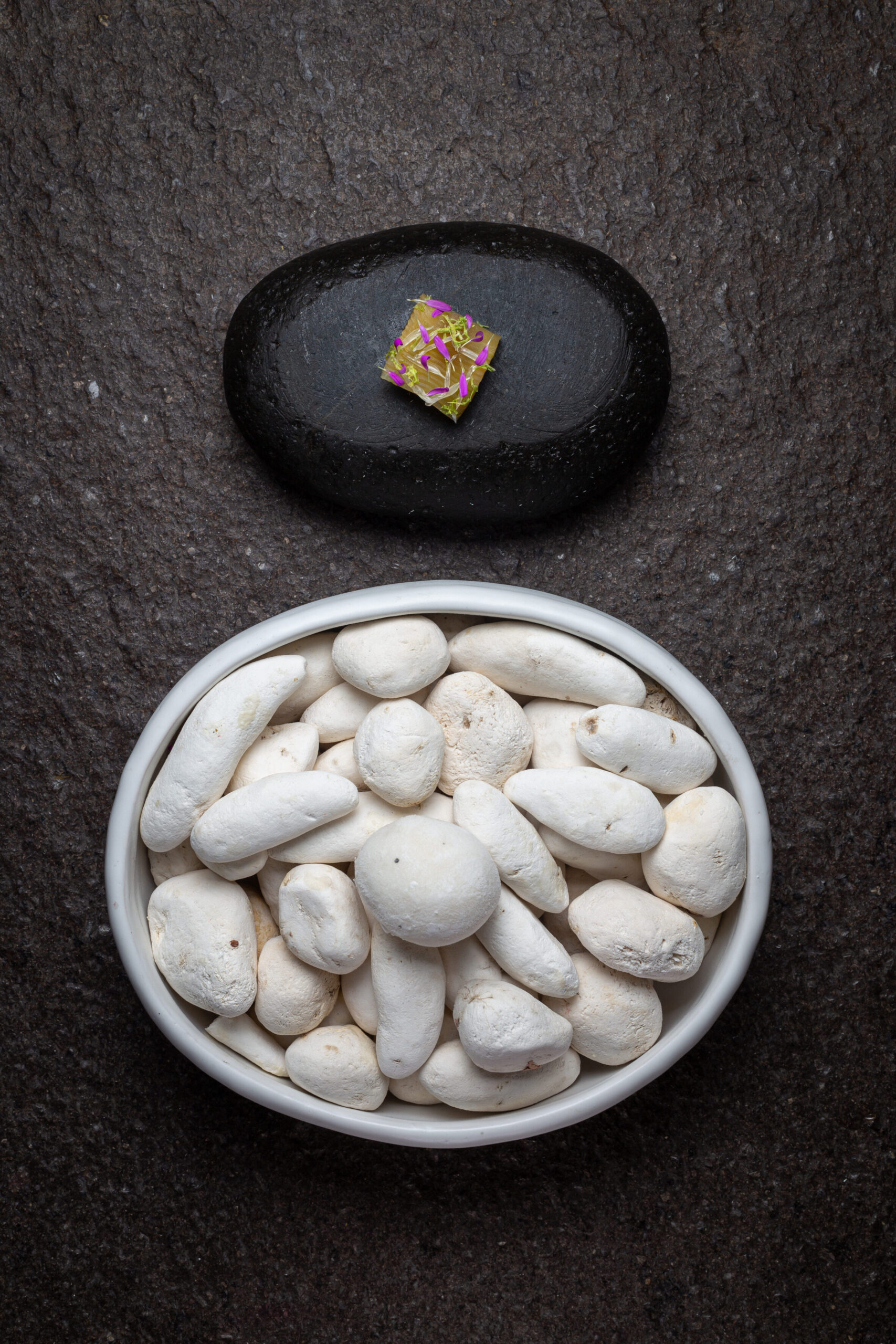
What has led Mayta to be recognized as the best in the world according to the World Culinary Awards 2022, and to be included in the 50 Best lists, is its recent Yachay menu, which means “knowledge.” This menu has been developed through continuous learning on a small plot of land within a farm shared with a Pisco distillery. The premise is flourishing in a desert, with crops such as beets, sweet potatoes, corn, lettuce, and eggplant, among other agricultural products. Jaime and his kitchen team frequently visit the farm, observing how the plants grow and how they can make the most of the diverse plants they cultivate. A few kilometers away from the farm, within a protected bay of a national park, the Paraíso Project produces, harvests, and preserves scallops, octopuses, sea urchins, and crabs. The crabs come to the area and patiently wait for the scallops to open, ready to devour them, so they must be kept at bay, as explained by Pablo, the master scallop farmer.
With this “knowledge” comes flavor. The 12-course menu changes four times a year, offering beautiful presentations and distinct flavors, using a high percentage of the vegetables they grow.
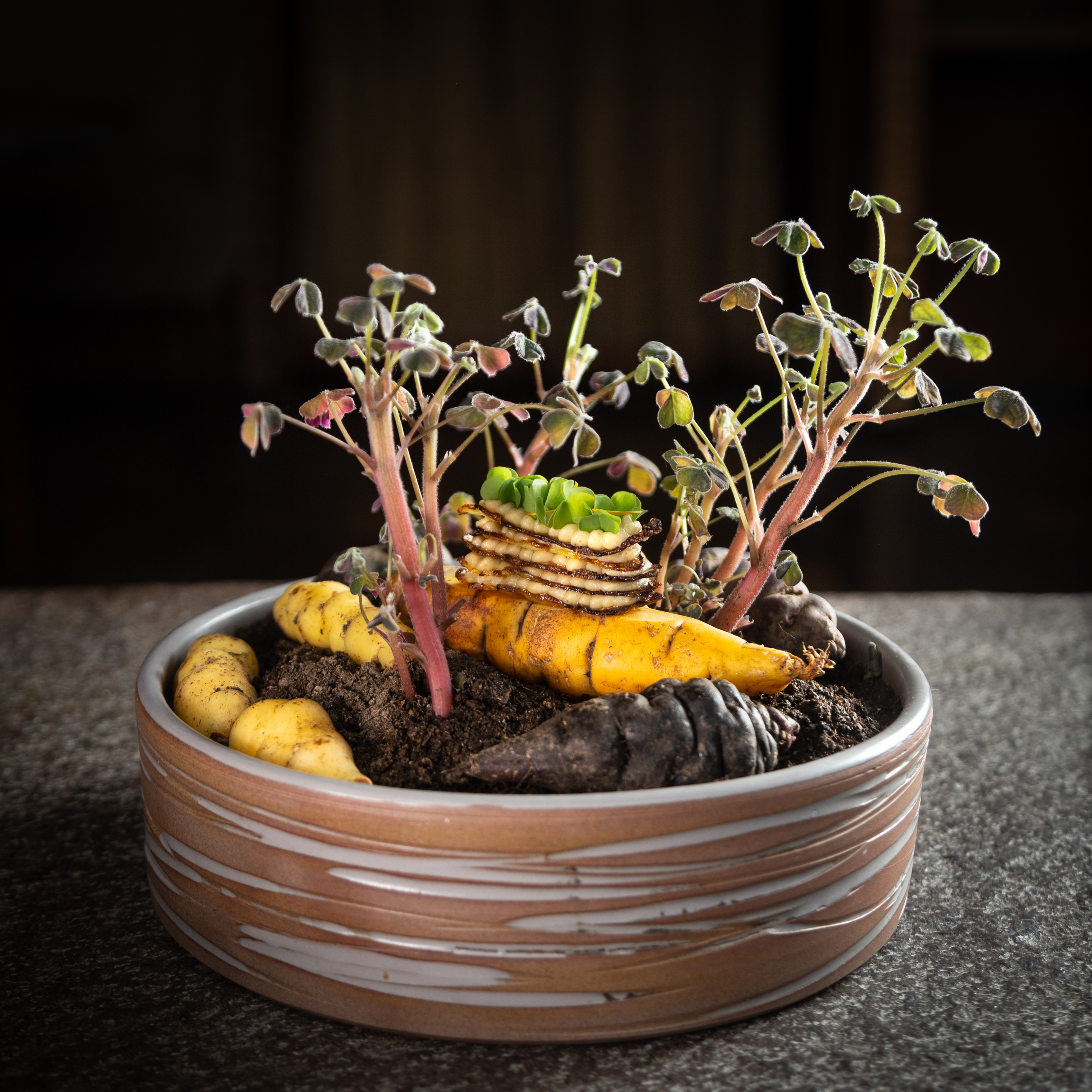
A menu includes appetizers made with products such as oca (a tuber), potatoes, and fava beans, where every part is used, creating a kind of oxalis dulce de leche (a caramel-like spread). They also make crispy snacks using the skin of the fava beans and fresh pea creams accompanying scallops or barnacles from the southern seas.
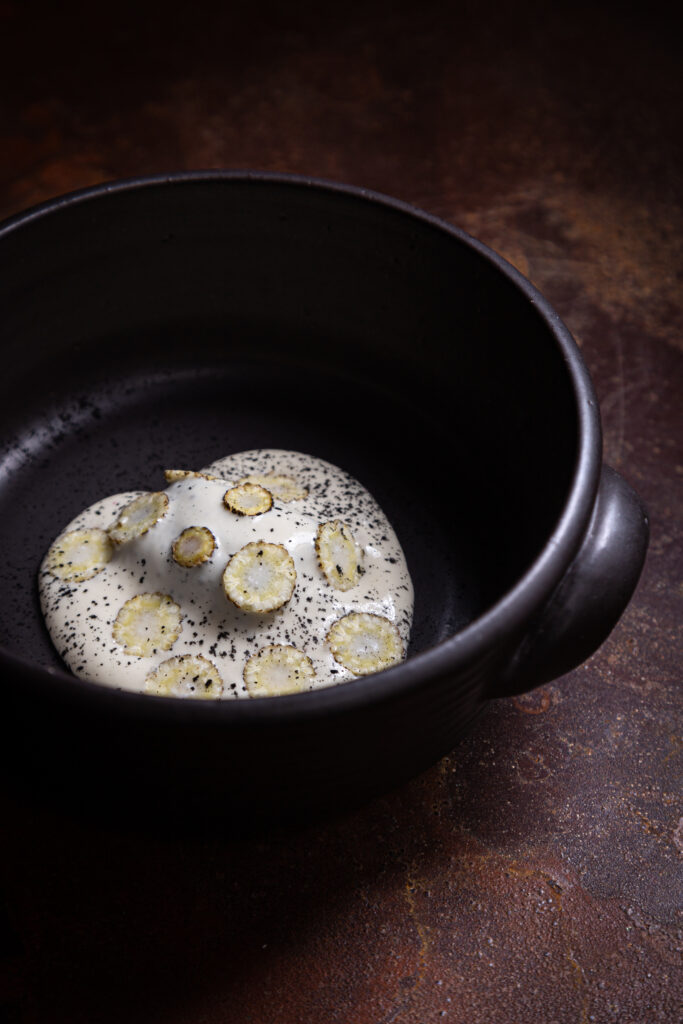
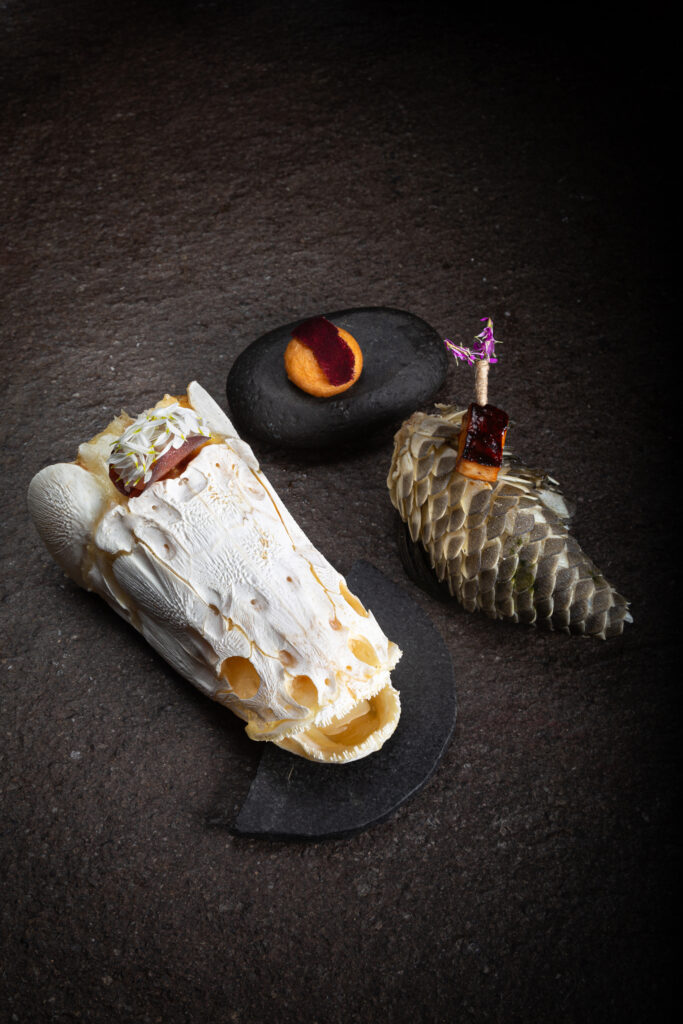
Different types of squash are employed to make fettuccine with cream made from the same vegetable. They use two local varieties: Loche, a squash with thick skin and low water content, and Macre; it’s opposite—a large squash with a high water content that can only be used when it’s green, as it collapses upon ripening. One of my favorite dishes is a small roasted eggplant with a luscious broth made from the same vegetable, rich in umami and texture. They also connect with other regions, such as the Andes, through a tamal with quinoa and lamb covered with sweet corn cream. They dedicate considerable attention to the Paiche, a river fish that can weigh up to 100 kilograms, served using its skull. The menu concludes with refreshing desserts that are not overly sweet.
THE PAIRING
The pairing for this menu can be of three types: wines from around the world, where the sommelier selects European and American wines to complement the dishes; Latin American wines, where the selection highlights wines from the southern region of the continent; in both cases, some labels of minimal production Peruvian wines are also used.
Additionally, they have gradually worked on and improved the non-alcoholic pairing, using preparations based on vegetables, fruits, herbs, ferments, and even coffee when the dish calls for it.
The service is a continuous improvement, with the staff trained to provide an A1 hospitality experience from the moment guests arrive at the restaurant until they leave the parking area.
THE LOCATION
This is the second version of Mayta. After moving to this new location, everything fell into place. The design of the space aligns with the concept of the food—a dining room that is enclosed but with natural ventilation, good lighting that creates an intimate experience, and an ambiance with suitable sound and acoustics.
This combination of hospitality, concept, connection with the land, ambiance, pairing, and service makes Mayta’s experience a highly elevated cuisine without being a fine dining establishment, which undoubtedly earns it worldwide recognition.
IN THE KNOW: Mayta is located at Av. Mariscal La Mar 1285, Miraflores, Lima. Their tasting menu ranges from USD 180 for a non-alcoholic pairing to USD 280 with alcohol. À la carte options are also available, with an average cost of around USD 50 per person. We recommend making a reservation.

