
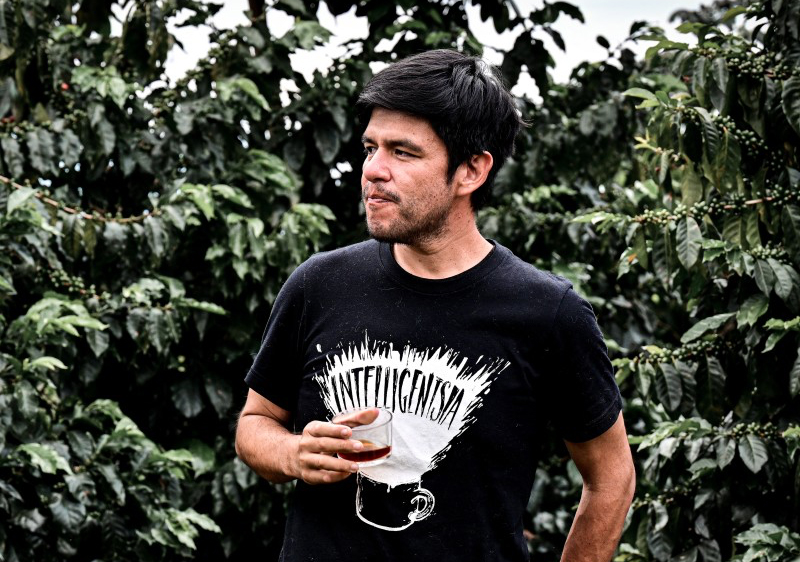
A few weeks ago Jose Rivera CEO of Origin Coffee Lab, a coffe trader from Jaén in the Cajamarca region was awarded with the Specialty Coffee Asociation on the individual category for his work with coffee producers in different regions of Peru.
The award was presented during RE:CO, an annual symposium organized by the Specialty Coffee Association where the world’s top coffee experts gather. Trends for the following years in the industry are defined there, and with that know-how, people return to their countries to lead new projects.
Empowering Coffee Producers through Financial Education and Optimization
Those within the local and international specialty coffee world recognize Origin Coffee Lab as one of the main providers of Peruvian coffee worldwide, with a presence on almost every continent. José “Pepe” Rivera, in charge of this company, is recognized as the recipient of the 2023 Sustainability Awards in the individual category. Each year, more than 200 projects from around the world are nominated, and this category aims to highlight individuals who have made significant contributions to the advancement of the coffee industry. “We are a low-profile company, and I am the same way. We like to do the work without needing it to be something media-oriented,” says Pepe as he enjoys a coffee he categorizes as “regional,” called Estrella Divina, from the Gallito de las Rocas group of producers in the La Coipa area in Jaén. It’s a double fermentation coffee with a profile rich in fruit.
“The coffee industry has two sides: a beautiful one that tells a romantic story and a darker one of inequity, where ethnicity and poverty are the main actors. It is an industry that generates billions of dollars annually and is produced in areas of greater social inequality, where most conventional sustainability programs come hand in hand with giving an additional material benefit to the producer, but they do not make the field efficient, and ultimately the producer remains trapped in the cycle of poverty,” explains Rivera.
José proposes a different approach to the toxic environment in which only “paying more” is encouraged as a synonym for support, but then the same industry tries to cut corners, and even though they pay more than the commodity price, it does not cover the work in the field. “They encourage planting low-yield varieties and buying at international prices, which is fine, but no one tells the producer that these plants require much more work in the field, and the investment is higher than the premium paid.”
Expanding Global Networks: Fairs, Generational Involvement, and Market Access
For José, paying a high price is not the solution. The problem in the field is one of productivity and farm profitability. Direct trade must go beyond dealing with the producer, visiting them once a year and taking a selfie to tell a romantic story. “A visit to the producer once a year doesn’t really mean much because it’s a snapshot, and it creates in producers the vice of always wanting more money, leaving quality aside. Direct trade is the best thing we have at the moment, but what we do is an evolution of the concept to empower the producer.”
At Origin, they take this direct approach to a second level: they provide financial education to producers so they can manage their farm and business, creating agronomic production plans with optimized labor. This empowers the producers and allows them to feel equal to international buyers in terms of language, ethnicity, culture, gender, and work. “We go together to fairs in other countries so they can see what is being done in the world, and we involve multiple generations, including the younger ones. This allows them to open markets, develop better quality, and access sources of financing for a healthy business.”
Many producers have been empowered in this way and have real direct contact, without translators or third parties involved. “Now when buyers visit the fields, we don’t even go; our information is transparent, and they can handle themselves.”
Origin Coffee Lab: Connecting 500+ Producers, From Peru to the World
This type of empowerment allows a “small” group of approximately 350 producers to have an impact, improving their quality of life. They no longer solely rely on farming, so conditions beyond their control, such as rain or drought, do not affect them as much.

