
As The 50 Best Restaurants came to Lima, the celebrations spread through dining rooms, university halls, artists’ studios and the streets of Barranco. For those of us who call this city home, it was a chance to see familiar places through fresh eyes—and to welcome the world to our table.
By the time chefs reached the airport, many were already bound for new corners of Peru, Cusco, Arequipa, Tarapoto, where more kitchens, ingredients and stories awaited. Others continued on to Colombia, Chile, Brazil or Argentina. After days spent eating, talking and celebrating in Lima, these departures felt less like an ending and more like the start of something unfolding.
That sense of possibility lingered with me after The 50 Best Restaurants 2026. Asador Etxebarri claimed the world’s No.1 spot, but beyond the ceremony, it was Lima’s open doors and Peru’s invitation to keep exploring that left the deepest impression.
The week’s story began long before the red carpet was rolled out.
Before the official welcome
On Wednesday, October 28, Leo Lanussol brought Ness, his restaurant in Argentina, to Rafael. His Nordic-inspired cooking offered an early taste of the collaborations about to sweep through Lima. Chefs, writers, diners and familiar faces from the city’s social scene gathered to discover his food or reconnect with it. As happens so often at Rafael Osterling’s tables, a dinner became an occasion.
Thursday morning, I was making the last adjustments to my suit. The Municipal Theatre ceremony called for a touch of elegance, and London House made sure the fit was just right. Measurements, fine fabric, a few final corrections—then it was time to step into the week ahead.
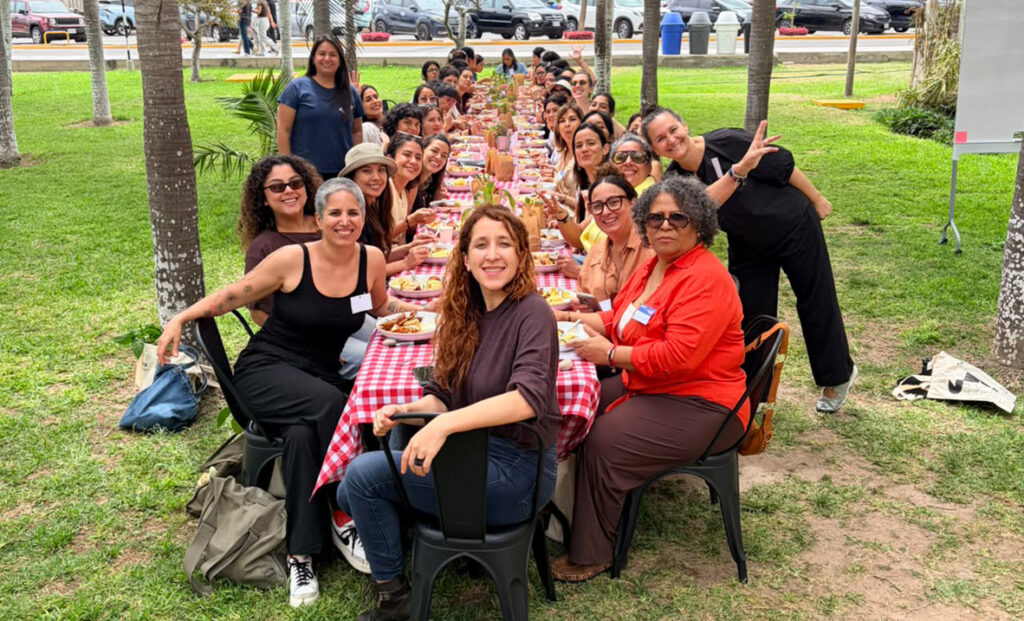
Elsewhere, women working across Latin American gastronomy were gathering at PUCP’s Faculty of Gastronomy, Hospitality and Tourism. Chefs, bartenders, coffee roasters, brewers, corporate marketing professionals and opinion leaders exchanged experiences about women’s place in the industry. Part of an annual effort to document their roles, the gathering brought different professions into a conversation that needs all of them.
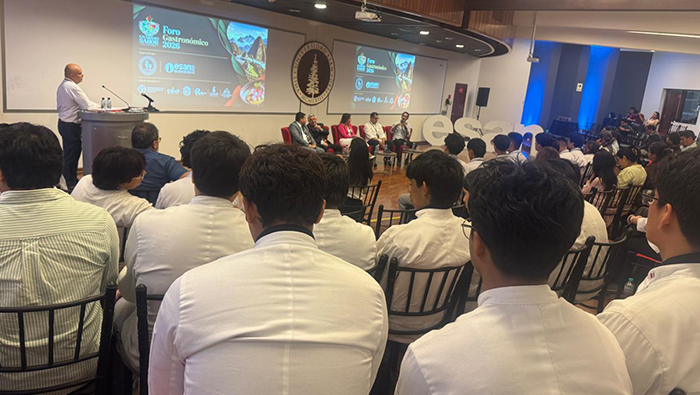
In parallel, Universidad ESAN hosted Un mismo sabor, mil cocinas, a forum connecting culinary heritage with the questions facing its next generation. Researcher Isabel Álvarez Novoa and chef Aldo Vargas addressed identity and tradition; Flavio Solórzano, José del Castillo and Aldo Yaranga brought perspectives from the Andes, coast and Amazon. Sustainability, hospitality and food communication also entered the discussion. Even before the international arrivals peaked, Lima’s classrooms were busy asking where Peruvian gastronomy should go next.
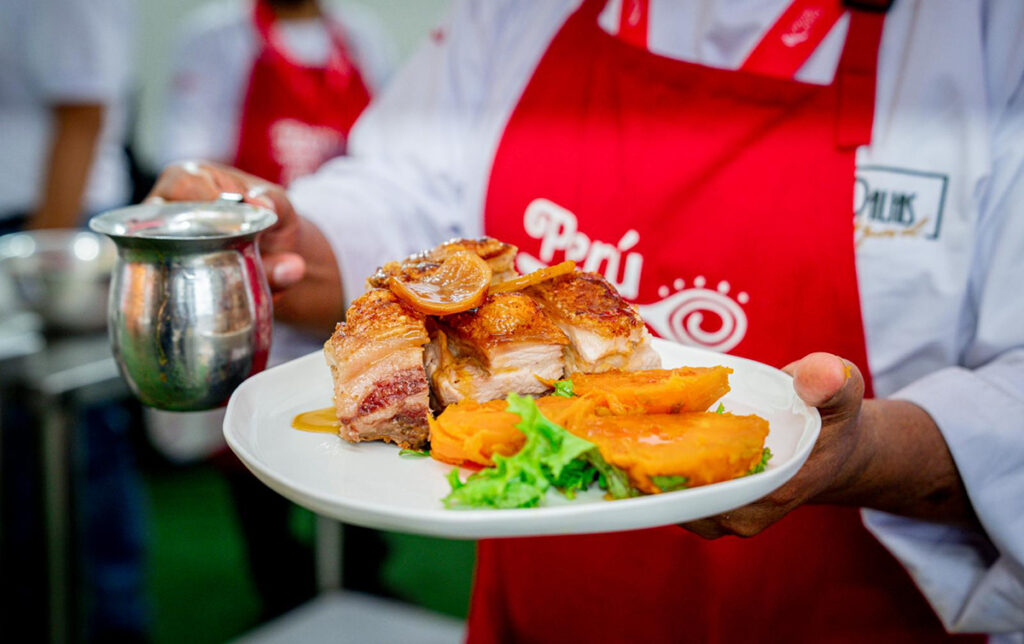
Friday, October 30, brought Perú, Mucho Gusto to Magdalena’s Costa Verde, and with it, the flavors of the country’s regions arrived in the capital. It was a chance to travel Peru by eating—regional dishes, Amazonian fruit drinks, wines, chocolate, and conversations with the people who make them possible. The fair’s awards later honored everything from Ica’s culinary heritage to innovation in Cusco and sustainability efforts in Ucayali and Áncash. As visitors arrived for the world’s restaurant list, this gathering reminded us how much of Peru’s food story is written far from the spotlight of celebrated dining rooms.
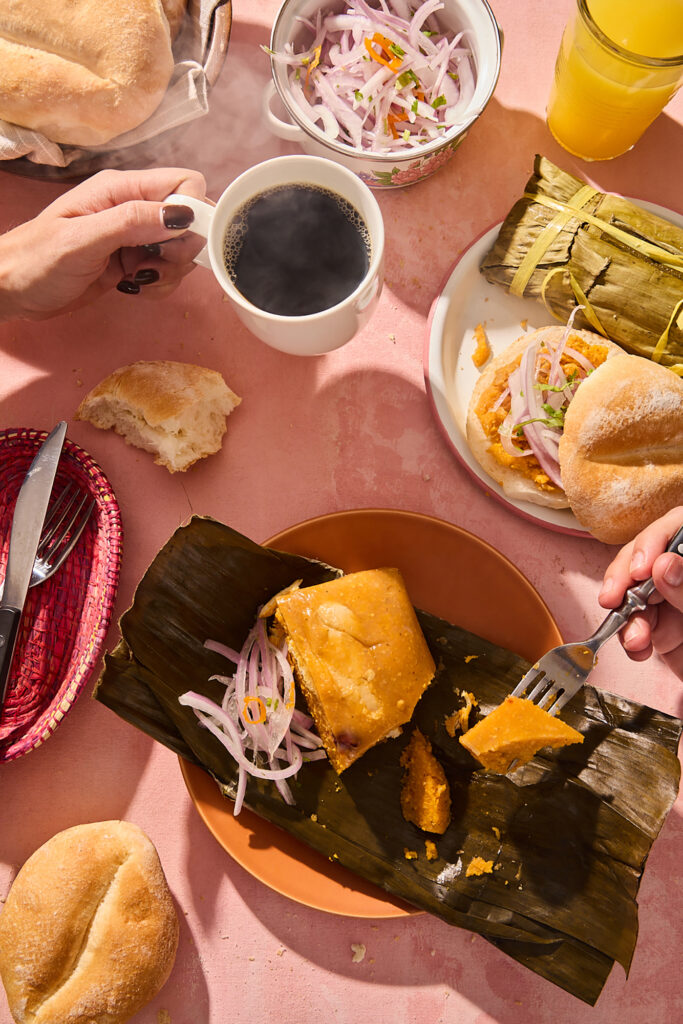
That same day, Matutina, postales de una mañana, opened at Casona Ofelia in Barranco. Through Jimena Agois’s photography, Paloma Nieri’s art direction and Patricia Rivero’s food styling, the exhibition explored breakfast, inherited rituals and the memories woven into the everyday table. It set the stage for Off the Menu, the open-studio route that would soon invite visitors behind the scenes of Lima’s restaurant world.
IN THE KNOW: Matutina remains open through November 22 at Casona Ofelia, Jr. Pérez Roca 244, Barranco. Admission is free; visiting hours are Tuesday to Sunday, 9 a.m. to 7 p.m.
Saturday began with a direct route from the airport to El Mercado. Osterling’s cosmopolitan cevichería welcomed El Tigre Silencioso from Mexico City and Arca from Tulum for a collaboration that moved easily between plates and cocktails. Here, the seating mattered as much as the menu: tables arranged by the host team brought Lima diners together with guests from across continents. Introductions unfolded naturally over lunch.
Sunday began in the historic center, on an unofficial outing carefully curated by editor – food writer Paola Miglio. Around San Francisco, carved wood, tiles and Moorish-influenced ceilings offered visitors another way into Lima. The walk connected churches, convents and the Plaza Mayor with the city’s colonial history, including the site of Pizarro’s residence, now occupied by the Government Palace. For people who had come to know Lima through restaurant reservations, it was a chance to encounter the streets and buildings around its tables.
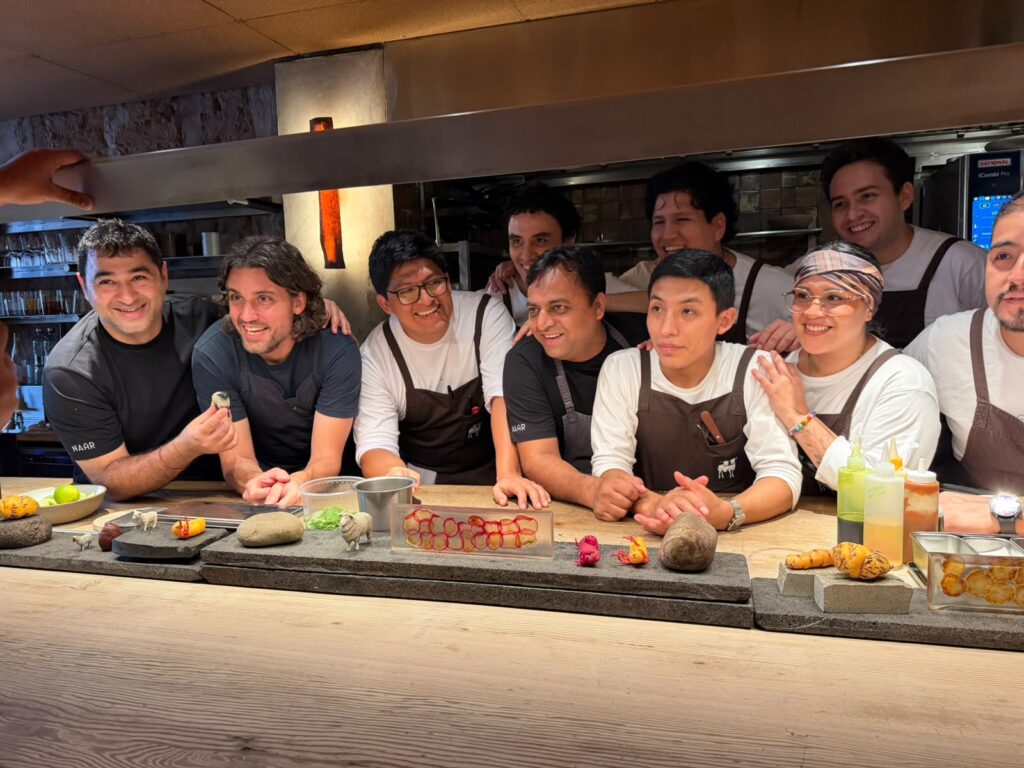
By lunchtime, the city was pulling everyone in different directions. In Barranco, Clon welcomed Prateek Sadhu of Naar, whose cooking draws on the flavors of the Indian Himalayas. Shizen, in San Isidro, hosted a dinner with Alejandro Chamorro and Pía Salazar of Quito’s Nuema. Both collaborations were part of The 50 Signature Sessions, bringing new culinary perspectives into Lima’s kitchens. Others made their way to La Mar, where the cevichería’s energy and welcome have long made it a gathering place in its own right.
That night, Florence arrived at Rocco. The team from Locale Firenze took over the bar at Osterling’s trattoria while the host himself played records as DJ Rafa. Italian cocktails moved between plates of pasta, and dinner acquired its own soundtrack. At 10 p.m., there was still another reason to keep moving. Miami’s Panamericano Bar joined Sastrería Martínez for a surprise takeover at Sapiens. Hugs, cocktails and conversations carried Sunday into Monday. The week was only beginning.
Alongside the guest-chef dinners, Pepe Moquillaza had mapped out a journey through Peruvian wine and pisco. His program, The Language of the Land, connected bottles with the places and people behind them: Sunday at Contraste with Angelo Aguado, followed by Pacific omakase at Ototo with Toño Palma on Monday. It gave visiting diners another way to explore Peru, this time through the glass.
Monday: ideas, lunch and a very long night
Monday began early at PUCP’s El Sabor del Futuro, a morning devoted to regional gastronomy, its products and its markets. Micha Tsumura opened the conversation, followed by voices from India, Ecuador and Japan. Later panels brought together women building businesses in Arequipa, Cusco, Ucayali and San Martín, alongside discussions about tradition, investment, heritage and identity. (Full conversation here)
I had the opportunity to moderate a conversation on connecting producers, kitchens and markets, with Alfonso Rebaza of La Estampida, Kent Zúñiga of Kao, Arturo Rivas of Wawki and Nancy Rodríguez of Acurio Restaurantes. Beef, Majes River shrimp and Amazonian vanilla gave us concrete starting points for discussing the relationships that allow regional products to reach restaurant tables. It was a useful place to begin a week in which those ingredients would receive so much international attention.
After feeding the mind, it was time to feed the body. At Cosme, James Berckemeyer and his team welcomed Sergio and Javier Torres of Barcelona’s three-Michelin-starred Cocina Hermanos Torres for a Signature Session. Outstanding ingredients, precise cooking, thoughtful wine pairings and a beautifully paced service made it one of the week’s memorable lunches. Meanwhile, Central hosted the official welcome lunch for sponsors, chefs and Academy chairs from around the world.
That afternoon, Limaná hosted The Next Era of Sustainable Hospitality, organized with The Sustainable Restaurant Association and consultancy A2G. Billy Wagner of Berlin’s Nobelhart & Schmutzig joined Limaná founder Anita Belaunde and Cindy Reátegui of La Patarashca to discuss sourcing, waste, working conditions and relationships with producers. The Food Made Good framework gave the conversation a practical basis: how ingredients are purchased, how people are treated, and how resources are managed. Limaná holds the framework’s highest three-star rating. The discussion connected the week’s ambitions with the daily decisions needed to sustain them.
Photos: This is Lima
By evening, the mood had shifted. “This Is Lima” was S.Pellegrino’s welcome at Amador, the rooftop bar in San Isidro. Osso, Cosme and La Mar joined Bogotá’s El Chato and São Paulo’s Nelita to feed a crowd that ranged from Félix Yong of El Chinito to Massimo Bottura. There were cocktails, plenty of water, and the easy pleasure of seeing cooks who rarely share a room catching up in Lima.
As some guests arrived on the rooftop, others left for Avenida La Mar. Francesca Ferreyros and Jorge Muñoz opened the doors of SON, their new restaurant, alongside Aldo Yaranga’s Awa. Later, Damián kept the celebrations going, with Limaq, Muna, Bijou, Booze Bar and Chakana preparing cocktails well into the early hours.
Monday demanded a good deal of stamina.
Tuesday: Running, talking and dancing through Tuesday
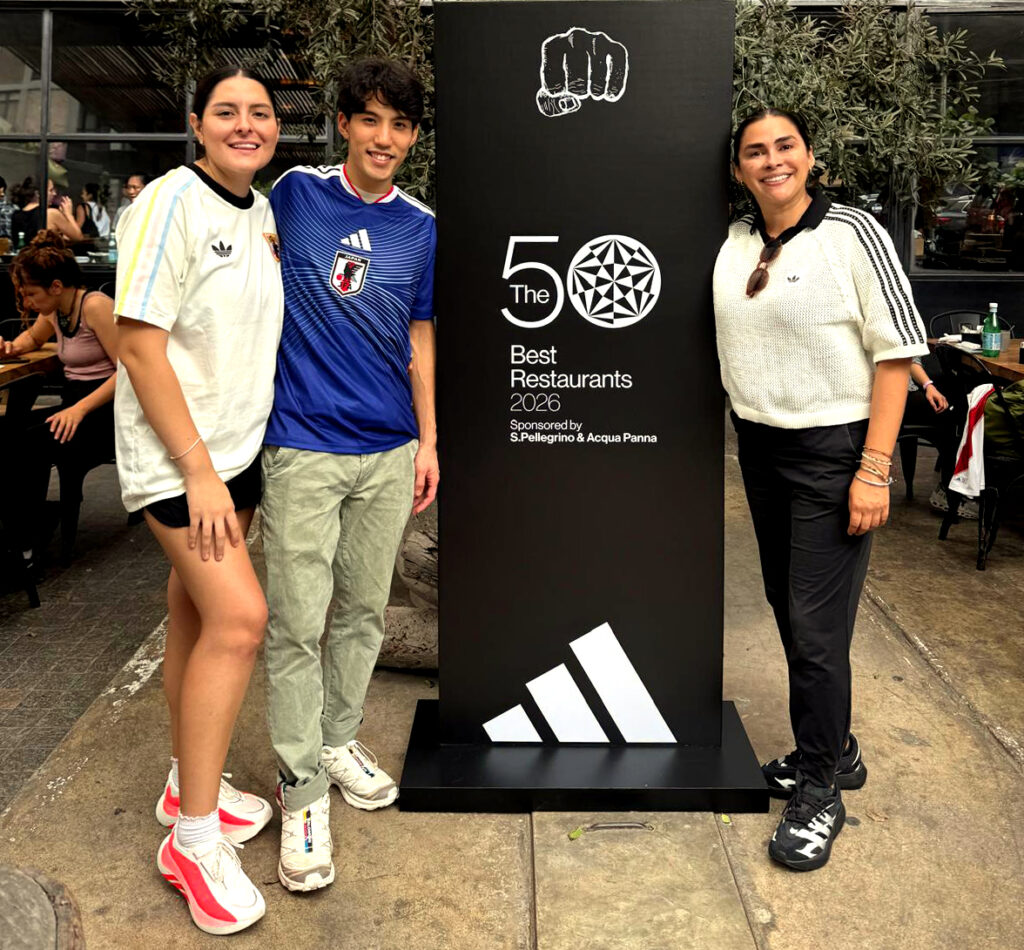
Those who went to bed early had a head start on Tuesday’s bRUNch. Organized by Brunch Social Club with adidas, The 50 and El Pan de la Chola, the morning began with a three-kilometre social run and ended at the bakery’s La Mar pizza-and-brunch spot. Tokyo-based chef Yuya Nakamura brought a special sando pop-up. Running and sandwiches felt like a perfectly reasonable way to prepare for another day of eating.
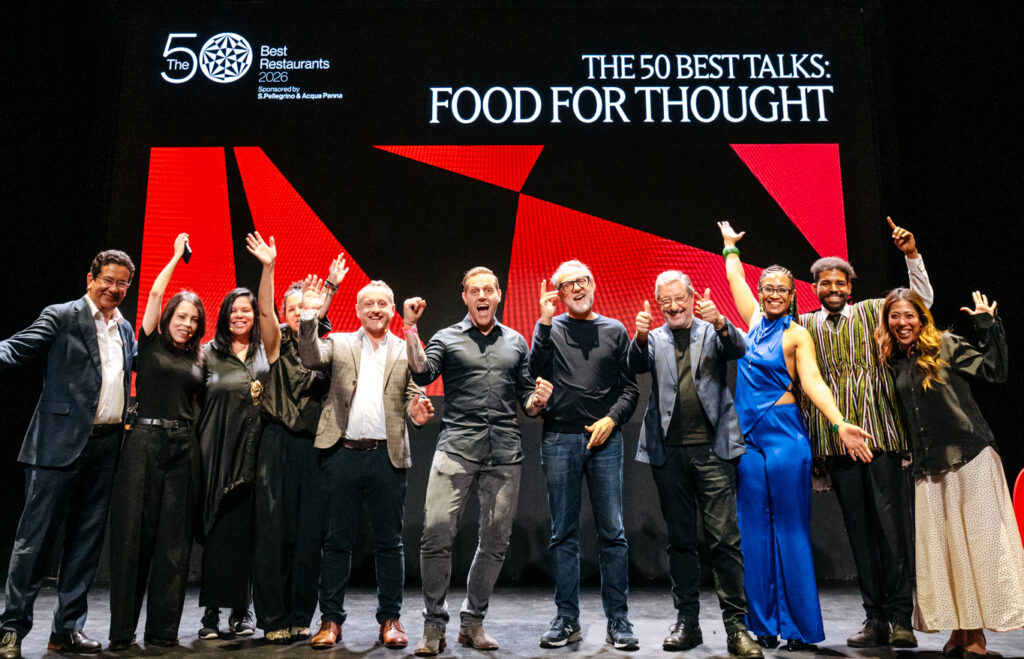
The 50 Best Talks followed under the theme Food for Thought. The program brought together Joan Roca, Massimo Bottura, and Geranium’s Søren Ledet, with voices including Ghana Food Movement, Karissa Becerra of La Revolución, and hospitality professionals from Masque, Palacio Nazarenas, and Trèsind Studio. Composer and sound artist Maribel Tafur added another perspective. Together, the speakers broadened the conversation around culinary excellence to include education, community, service, and how a dining experience is created.
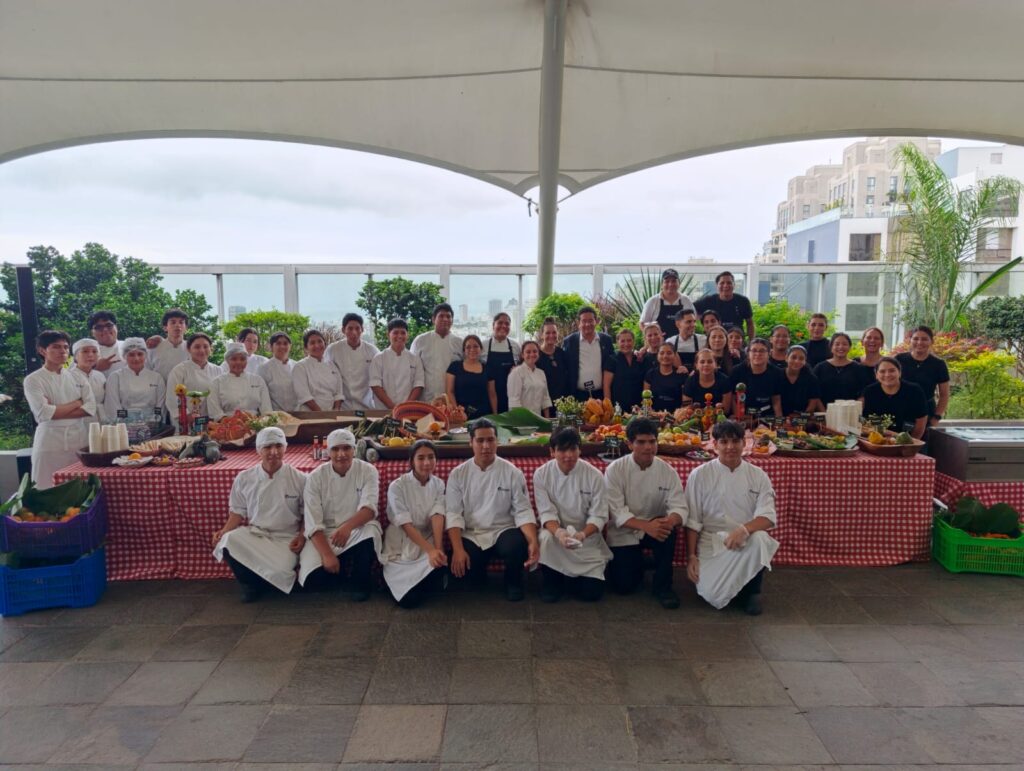
In Barranco, Off the Menu wrapped up two days of quiet discovery. Sixteen studios and workshops, spread across twelve stops, welcomed visitors into the spaces where restaurant ceramics, furniture, interiors, identities and photographs are shaped. Here, a plate, a chair or a photograph was not just an object but an invitation to meet its creator. For many, it was the first time they could connect the names and faces behind the work that diners see every day, often without a second thought.
At Villa Barranco by Ananay, Moquillaza and Patricio Zucconi offered another stop along that route, with Peruvian wines, water and cheeses, plus an afternoon pisco masterclass. Between talks, studio visits and restaurant reservations, the gathering made room for visitors to discover the country’s drinks and the stories behind them.
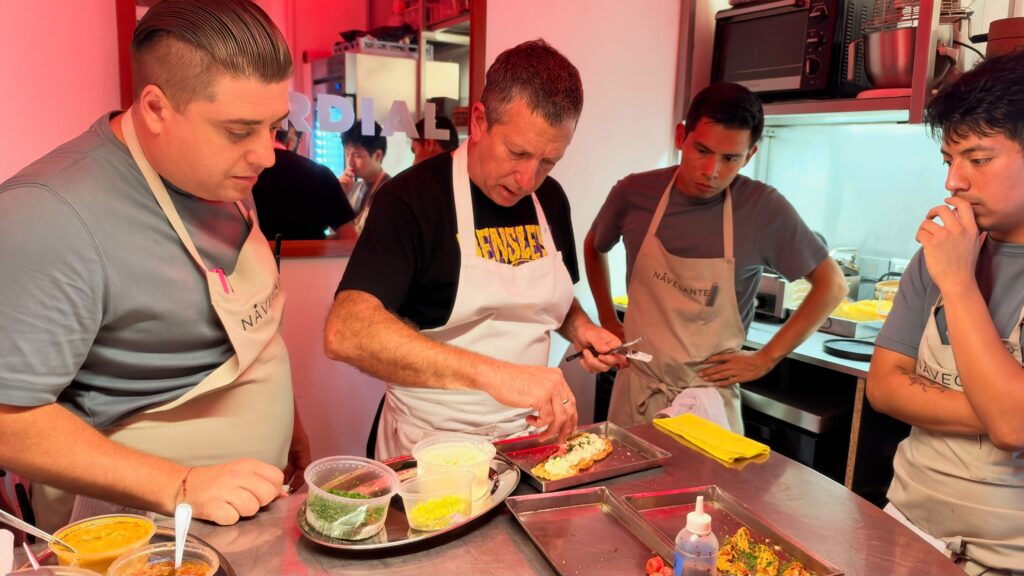
Elsewhere in the neighborhood, Navegante made the journey from Punta Hermosa to Cordial, bringing their own approach to cooking and wine. In Barranco, another table was always waiting to be found.
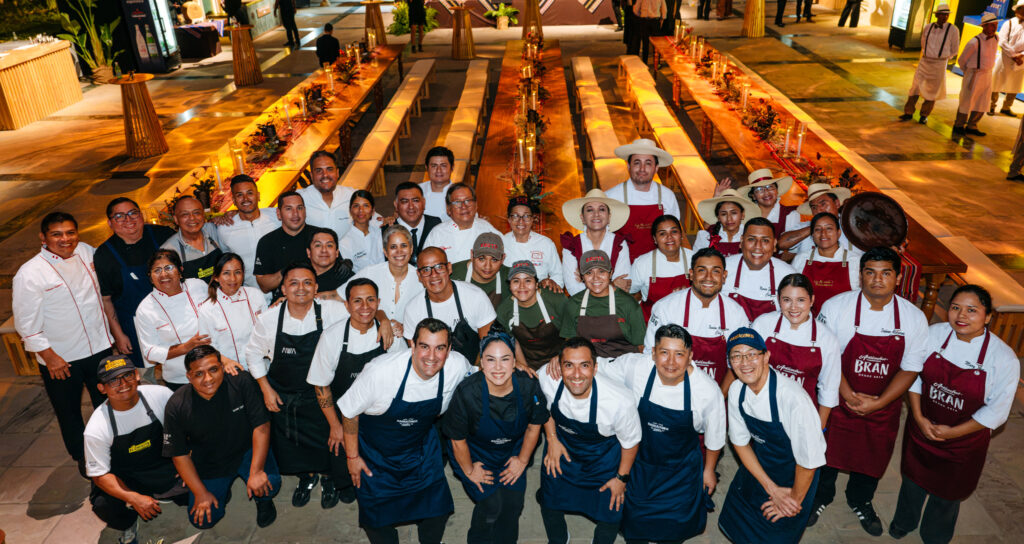
For the visiting chefs and their teams, the Chefs’ Feast at the Pedro de Osma Museum offered a generous cross-section of Peru on every plate. Arlette Eulert’s Bruto, La Nueva Palomino, Barracones Cebichería, Awa, Anticuchos Bran, Cumpa Taberna Criolla, Picarones Mari and El Chinito each brought their signature dishes. The north, Amazon, coast and Andes all spoke through their food. Arequipa, as always, stood apart with its own distinct voice.
Soon, the celebrations spilled out into Barranco’s streets. On Domeyer, Mauricio Mesones set the rhythm while FILO helped transform the neighbourhood into a party. Isolina, Siete, Demo, Indio Pizza, Alanya, Awicha and La Mona Rosa opened their doors. Residents, diners and visitors found themselves dancing shoulder to shoulder with chefs from across the globe. After days of reservations and invitations, the street itself became the place where everyone met.
The day of the ceremony
Wednesday began on a quieter note. Early risers found their way to local cafés, while lunch brought another remarkable collaboration: Josh Niland of Sydney’s Saint Peter cooking at Rafael.
For the author of The Whole Fish Cookbook, it was a chance to offer Lima the whole fish and a new way of thinking about it. His philosophy of using every part of the catch met Osterling’s kitchen in one of the week’s most memorable Signature Sessions. Even on awards day, lunch held the spotlight.
Then it was time to change into the suit.
For our coverage, we gathered chefs at Casa de Aliaga shortly before the red carpet. Outside, the Municipal Theatre and that stretch of Jirón Ica had become a stage in their own right. Traffic had stopped, and people could watch the arrivals of a very particular kind of celebrity: the cooks whose restaurants had brought so many visitors to Peru.
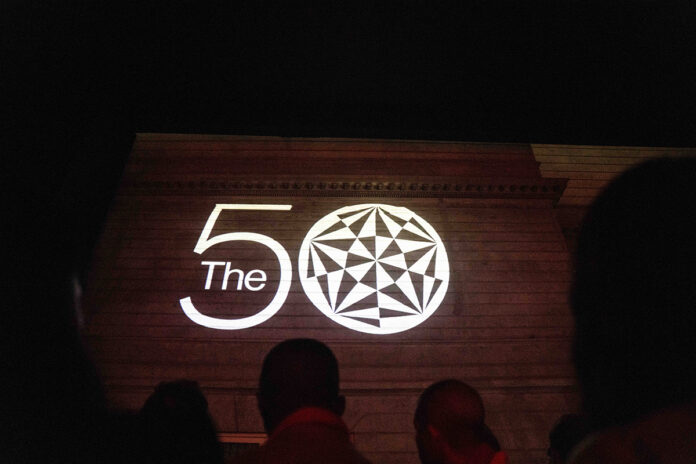
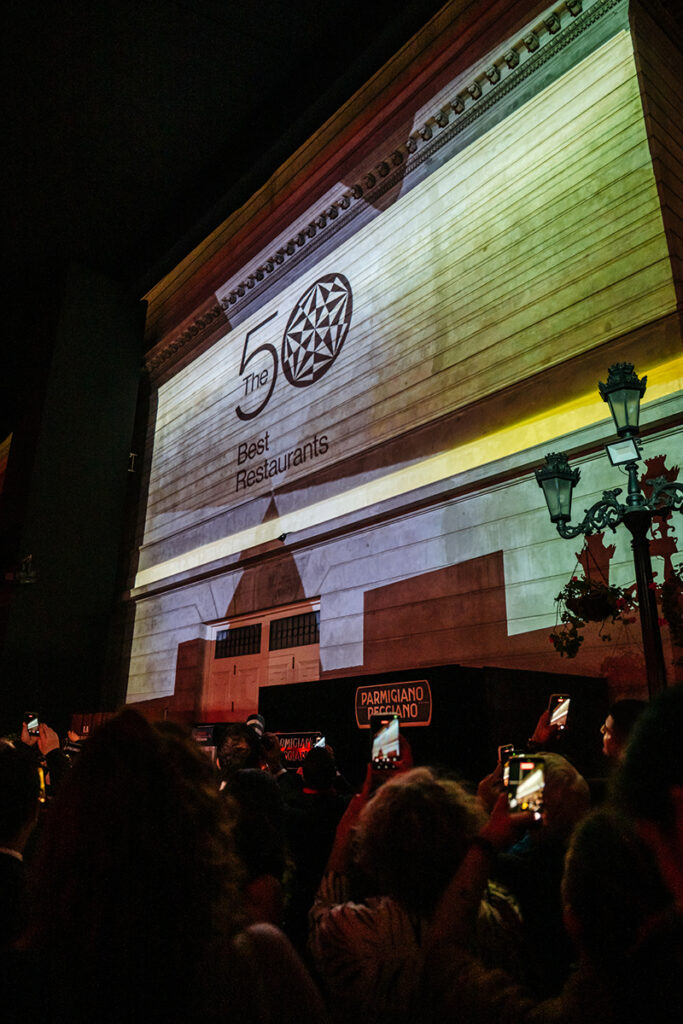
After accreditation, we stepped into a courtyard reception where food and drinks welcomed the guests. As the lights dimmed, a video mapping projection appeared on the wall, inviting us to take our seats.
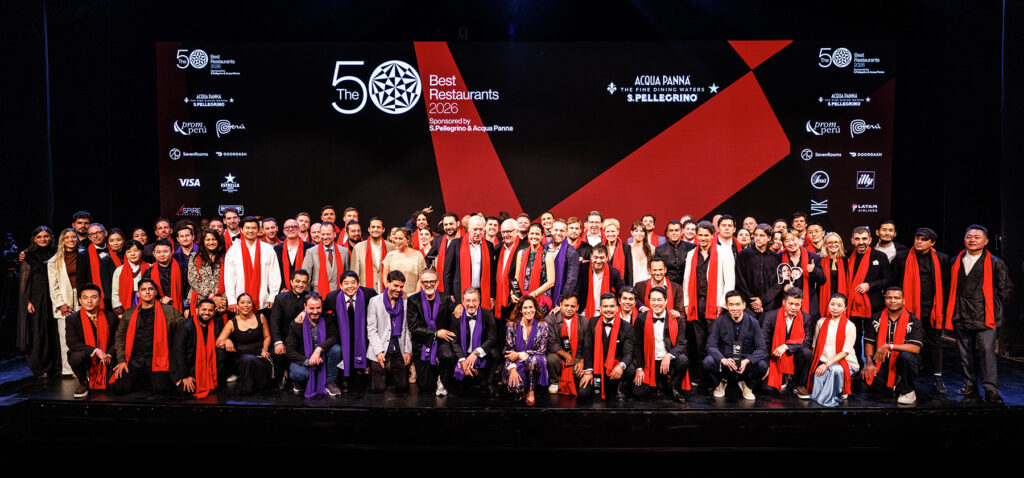
Inside the theatre, chefs filled the main floor while friends, writers, and guests looked on from the balconies above. From that vantage point, we watched the announcements unfold, our cameras catching every angle of the reactions below. Special-award recipients took the stage; as the ranking advanced, restaurant teams rose to accept the room’s applause.
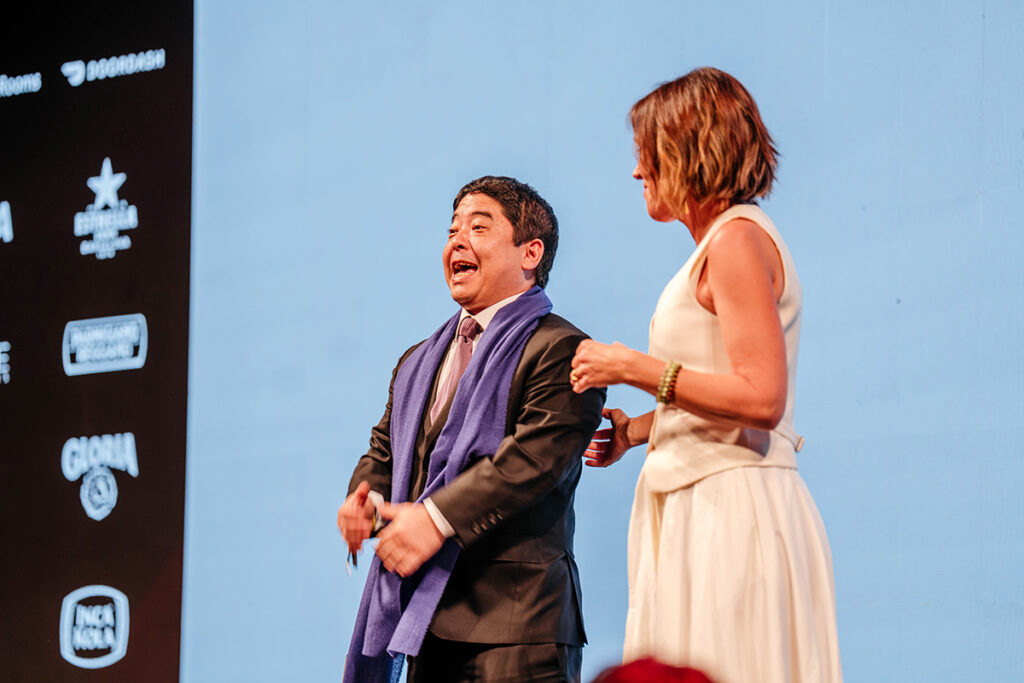
For me, one of the most moving moments belonged to Mitsuharu Tsumura. After Maido’s No.1 win in Turin the previous year, Micha was welcomed into Best of the Best, the group of former winners whose restaurants no longer compete in the annual ranking. He received that recognition at home, in his own city, surrounded by those who had witnessed Maido’s journey. Sixteen years after the restaurant opened its doors, there was a quiet satisfaction in seeing this chapter celebrated in Lima.
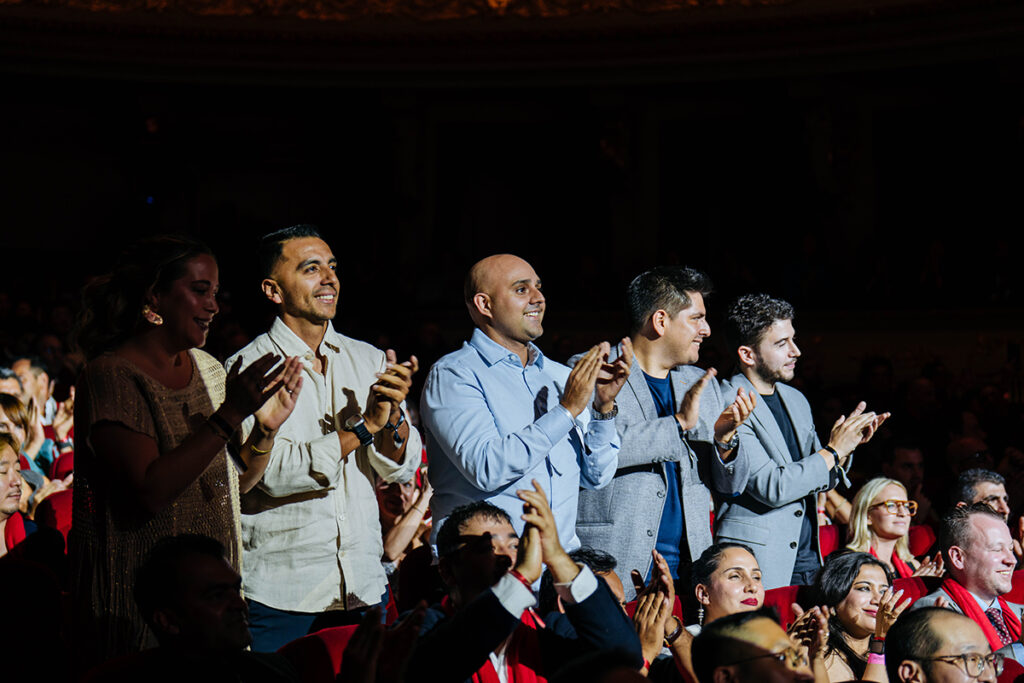
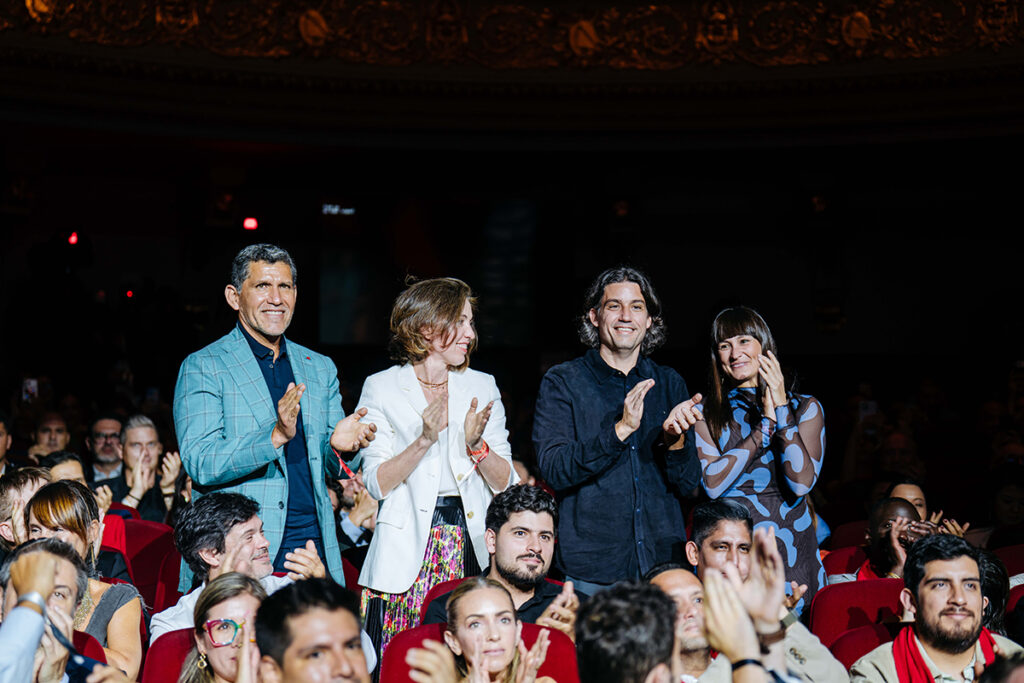
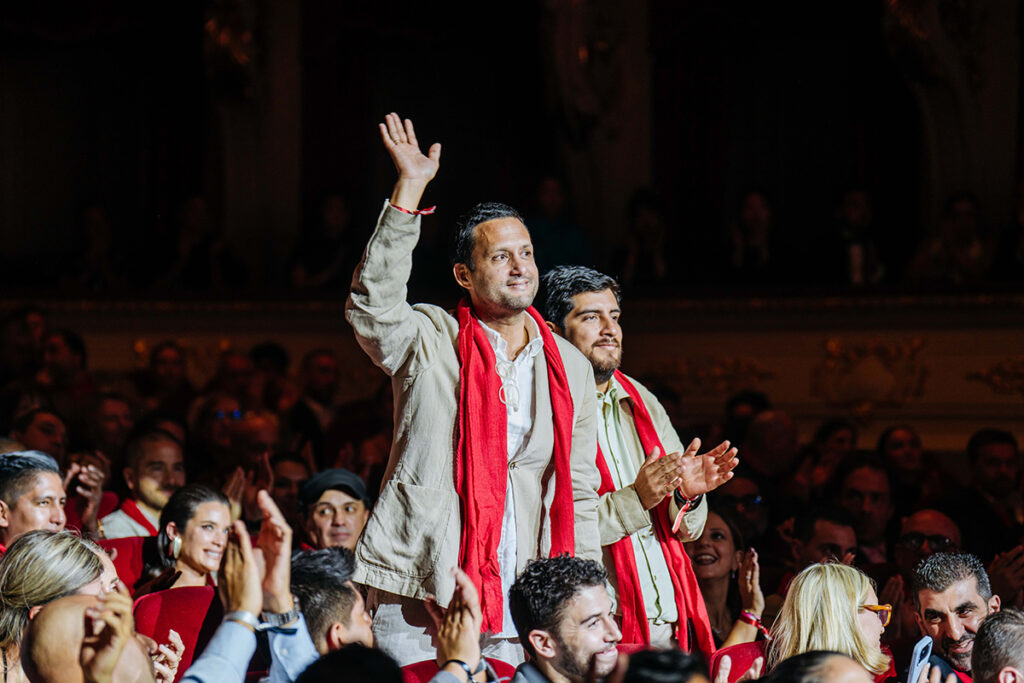
The city had more reasons to celebrate. Kjolle reached No.7, Mérito No.13 and Mayta No.45. Across Latin America, eleven restaurants earned a place in the top fifty, with Quintonil from Mexico City at No.4 leading the region. In the end, Asador Etxebarri from Spain’s Basque Country was named the world’s No.1.
One last welcome, and the journeys ahead
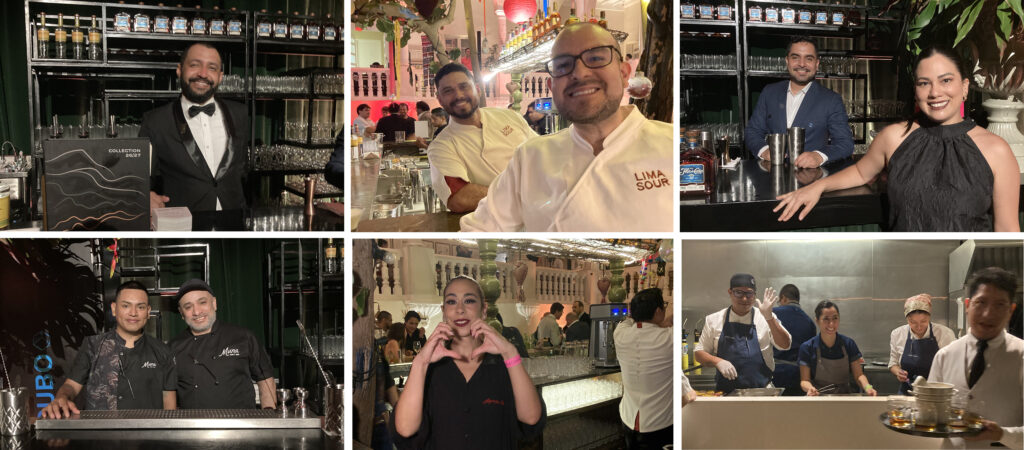
After the ceremony, we made our way to Astrid & Gastón, where Casa Moreyra had transformed into a farewell party for the international guests. More than twenty restaurant teams joined the celebration, sending cooks and service staff from all corners of Lima to assemble a brigade.
Bite-sized dishes made their way through the crowd, each restaurant’s name projected on the walls as their food arrived. Three bars poured cocktails from Sastrería Martínez, Muna Craft Bar, Lady Bee, Lima Sour, and Astrid & Gastón, alongside Flor de Caña and Pisco Barsol.
Astrid Gutsche and her team laid out a dessert table that ran the length of the room, anchored by an enormous turrón de Doña Pepa, slowly sliced and shared. In the garden, Tori, Micha’s chicken spot, served up pollo a la brasa for anyone seeking a late-night boost. Those who stayed say the party lasted until sunrise.
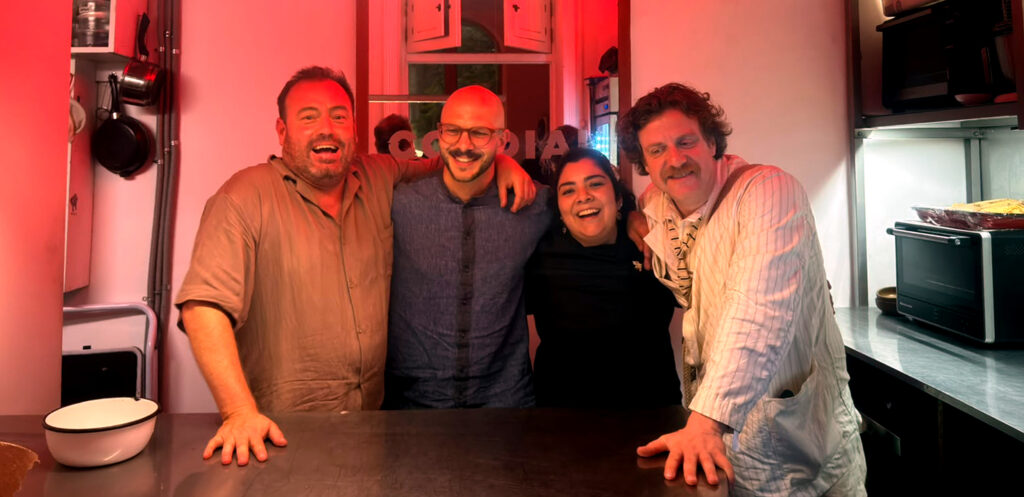
Casa Moreyra was not the only address keeping the evening going. In Barranco, Cordial’s Andrés Marroquín joined of Berlin’s Nobelhart & Schmutzig and Pepe Moquillaza for a late-night encounter billed as a wine bridge between Berlin and Lima. Wagner, who had joined Monday’s sustainability conversation at Limaná, now appeared in another setting, with wine bringing the two cities together.
Thursday: One More Round, One More Table
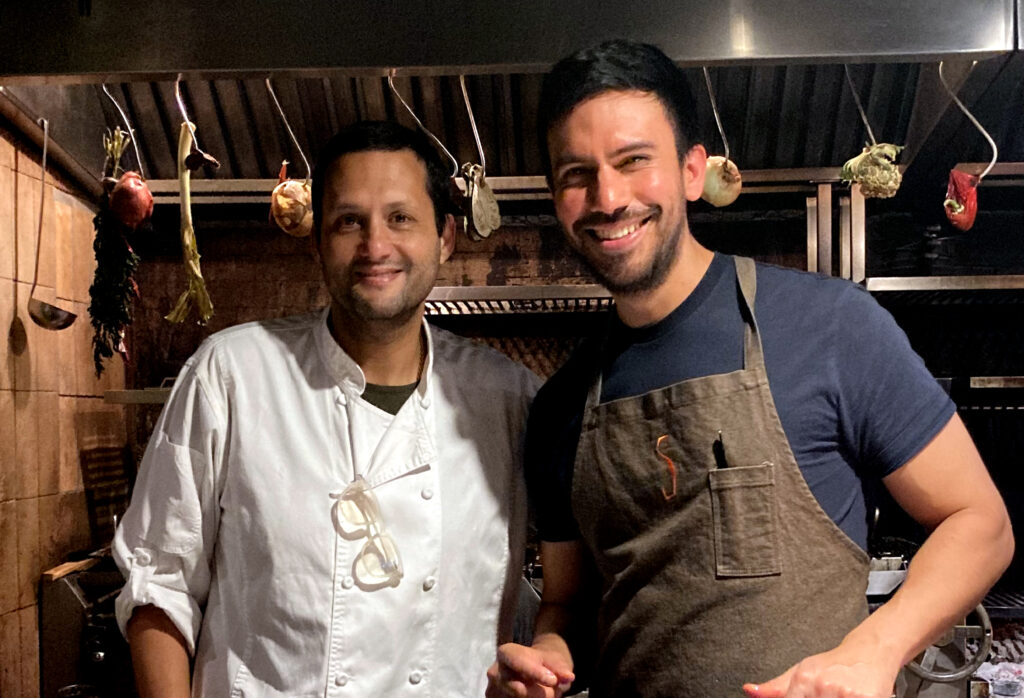
Thursday still had more to offer. Moquillaza’s route continued over lunch at Los Cuchitos with Cucho and Bernardo La Rosa. That evening Sapiens welcomed London’s KOL for a final Signature Session. Mexican and Peruvian influences met through local produce, seafood and bright citrus flavors, with Sapiens’ wood-fired cooking at the centre.
Friday: Don’t Say Goodbye. Say Good Journey.
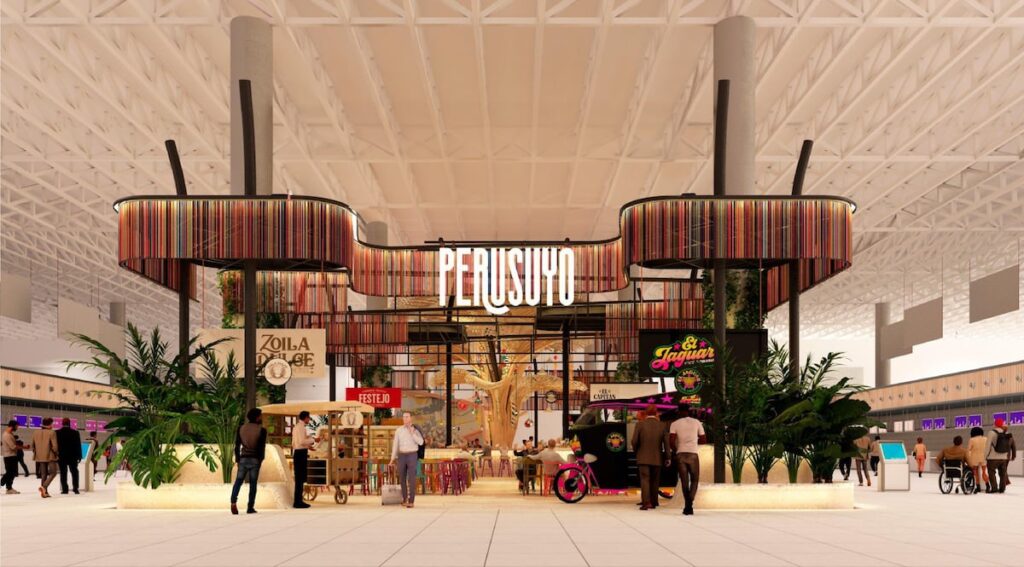
Live the journey, for every destination is but a doorway to another. By Friday, the wine itinerary had reached Huayoccari in the Sacred Valley, where Pepe Moquillaza and Patricio Zucconi’s program included a private visit to Casona Pisonay’s hotel-and-vineyard project. The week was already moving beyond Lima: in Tarapoto, La Patarashca welcomed an all-female lineup of chefs. At the same time, other international guests traveled with Belmond to explore Cusco and Machu Picchu. Peru’s tables, landscapes, and people gave visitors every reason to stay a little longer.
The airport became another meeting point. Some goodbyes took place at international departures; many encounters happened on the domestic side, as guests headed to Cusco, Arequipa and Tarapoto. Others continued to Chile, Colombia, Argentina and Brazil, carrying fresh curiosity about a region some were discovering for the first time.
They had come for an awards ceremony. Along the way, they had met cooks, producers and craftspeople, explored neighborhoods and shared tables that gave the journey far greater reach. Lima had brought them together. Now, each departure opened a door to somewhere new.
For the record, Asador Etxebarri took home The 50 Best Restaurants 2026 title. For those of us who were here, the week opened up possibilities that will take time to measure: friendships, future collaborations, return visits and the stories these travellers will share when they return home.
The world had looked to Peru. We had pulled up a chair.
And for everyone still traveling and living in Peru, plenty more was waiting at the next table.

