
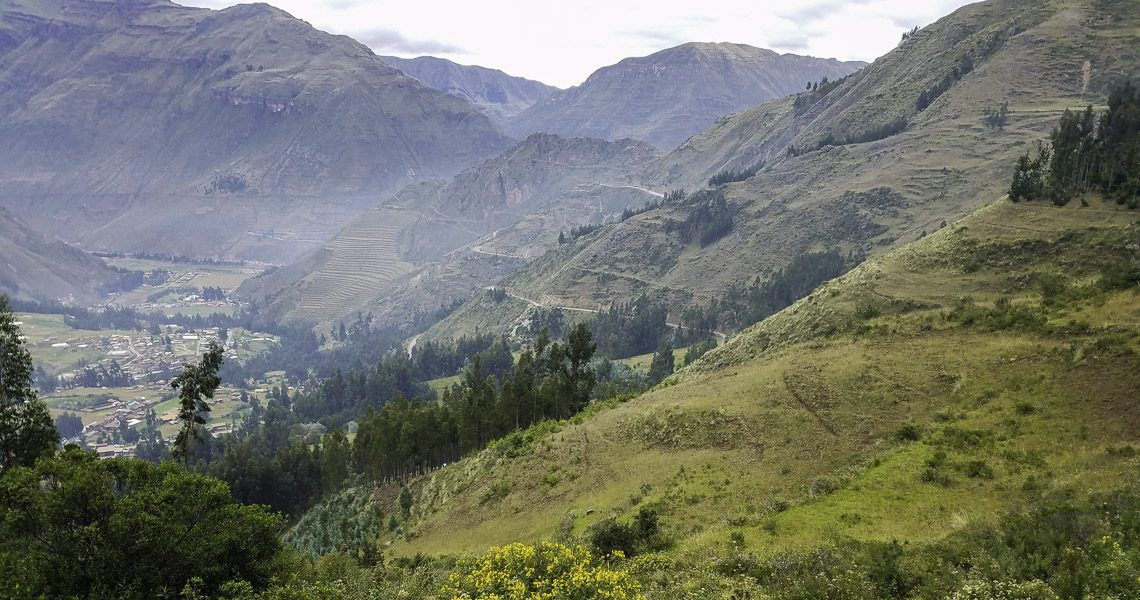
Yes, Cusco is the best place to be, even more so now that it is possible to return to its beauty. And in Cusco, the Sacred Valley is inevitable, especially because of such magnetic spaces as Andenia, El Albergue and the Andean Distillery.
The Pandemic in Cusco
Cusco must be the region of Peru that has suffered the most from the effects of the pandemic, not only because of the number of Cusco residents who died but also because of how it affected one of its main economic activities: tourism.
Frequent visitors to Cusco were witnesses its bustle characterized by its life, by its joy, by its numerous and varied citizenships, one that allowed us to hear languages as diverse as English and Russian, German and Spanish in a few meters, Quechua and Japanese, Mandarin Chinese and Swedish, Aymara and many more. Cusco, as its name implies in Quechua, is the navel of the world.

All that changed from one day to the next in March 2020. Due to the total quarantine decreed by the Government to control the pandemic: from receiving 2,265,219 foreign visitors in 2019, by 2020, it went to receiving zero tourists, beyond some eventual visitors.
For lovers of calm and the pleasure of traveling without tumult, when at the end of 2020 we were allowed to move through some regions of the country, including Cusco, it was surely a greater pleasure to know or revisit the wonders than in that area of Peru exists, not only in terms of Inca vestiges but also its people and culture. Thankfully this relieved the Cusco tourist industry, but it was evident that the number of visitors needed to increase.
Since March of this year, this has been happening, still without the dynamism of the past, but, little by little, as more Peruvians are vaccinated and, above all, foreign travelers, and our borders reopen completely, this will increase the number of tourists and will help to recover the necessary and very dynamic tourism sector.
Perhaps this is also the time to rethink what type of tourism Peru needs and let’s not despair, for more than a year without resources, prevail. The Cusco tourist places, especially the pre-Columbian ones – Machu Picchu, Ollantaytambo, Tipón, Pisac, etc. due to their antiquity, are very fragile. Then, it is time to establish a management policy that regulates the number of visitors that can be received per day without affecting them and, of course, without ceasing to give resources to citizens dedicated to tourism and to companies in the field. As in everything that is healthy, you have to find balance.

Andenia, a place to return and return again
Cusco is still our favorite destination. The city, especially in its historical part, is beautiful, and the Sacred Valley, a marvel that, until now and despite a poorly understood modernity, man has not been able to destroy.
We have just spent some splendid days there and we have seen with hope and enthusiasm how, little by little and with a lot of work, people are recovering the old joy and dynamism of their region.
We have a routine: we get off the plane and go directly to the Sacred Valley. Although we are Andean, acclimatizing to the more than 3,000 meters of Cusco costs us, therefore, we better go straight to the 2,600 meters of the Sacred Valley to enjoy its benefits and, already made at the height, we close our journey in the capital of the Tahuantinsuyo.
In 2019, in the town of Huarán, in Calca, between Pisac and Urubamba, Andenia was opened, a beautiful boutique hotel with only nine rooms, ideal to get away from the routine of the city and find peace and harmony, the one that only bestows the beauty of nature.
The best accomodation
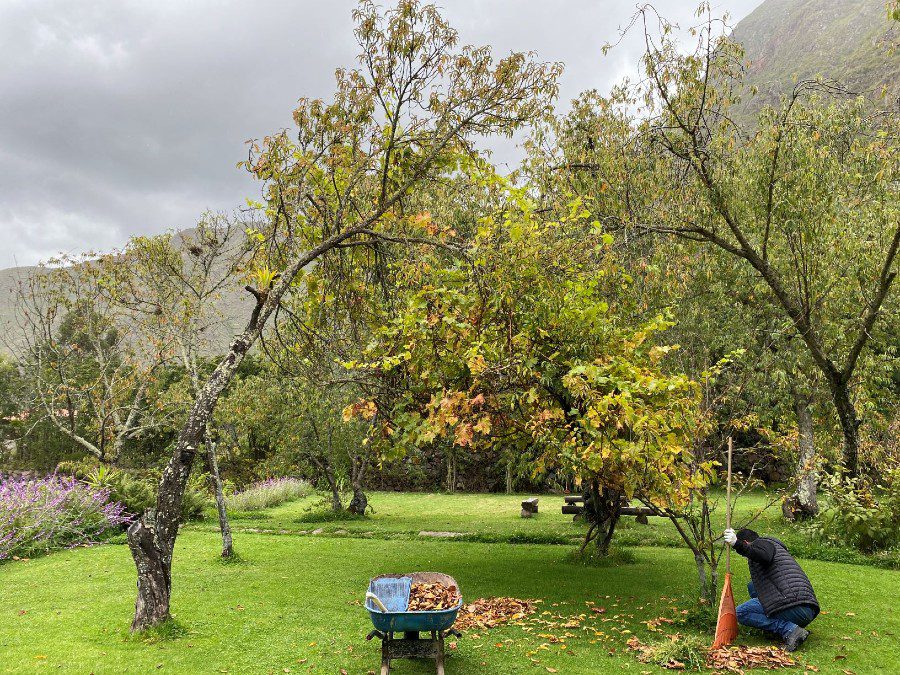
Andenia has only nine rooms (King beds, shower with panoramic views of the gardens and mountains, wooden floors and furniture, colorful textiles, lots of ceramics and elegance), but it has plenty of space since it is on a 6 thousand square meter lot, full of gardens, vegetable garden, and fruit trees.
The three beautiful buildings that make up the place, with two floors each, have been built with local materials – mud and wood, above all – and with an architectural design that does not break with the symmetry and aesthetics of the landscape. Cusco. All the rooms have a terrace and, from them, you can admire the grandeur of the Andes which, believe us, in the Sacred Valley is more beautiful and awe-inspiring.
Activities on site
Strolling at dawn through its gardens, with the dew bathing the leaves of the plants and the nascent aroma of the flowers, plus the smell of citrus and apples thanks to the fruits of its garden, is an almost priceless pleasure, worthy of the most loved ones. Snatched away.

But the activities that Andenia offers do not stop there. For their visitors, they have multiple programs, all personalized. Do you like adventure sports like cycling or mountain biking? Or do you like the most challenging hikes? Well, Andenia organizes the trip to nearby portents such as Pisac, Calca itself, Huayllabamba, Yucay, or the Baños de Machacancha. Do you like kayaking? Dare to cross the imposing Urubamba River and its radical variants.
Horse-back riding
Do you like horseback riding? Andenia is a great option because, with the help of Retreat in the Woods, a company owned by Fernando Pezo-Silva from Cusco and Yessenia Angulo from Iquitos, you can have a wonderful day of riding on Peruvian Paso horses, more than educated, conceited by Fernando and Yessenia.
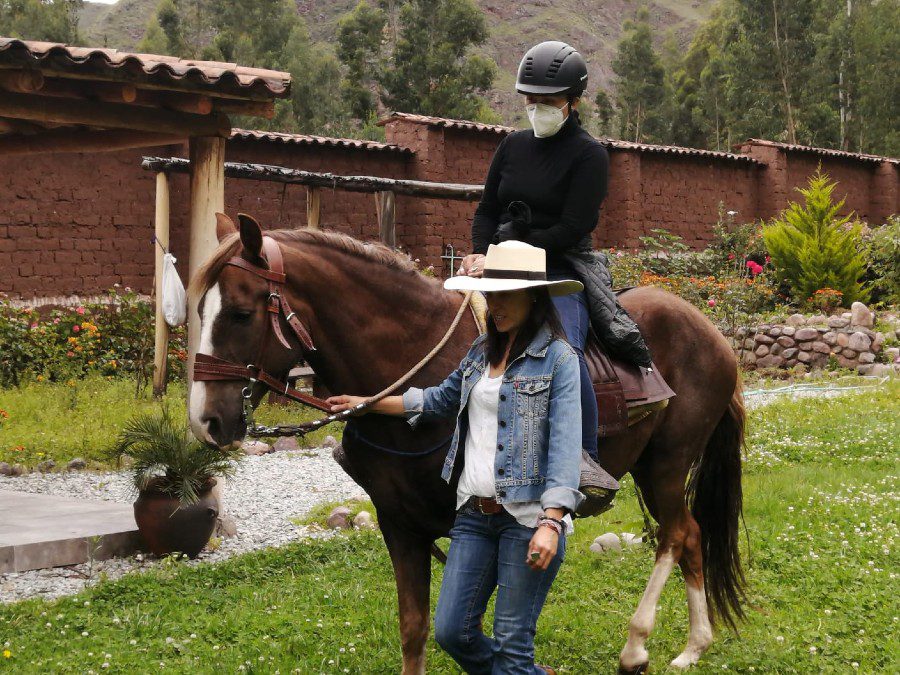
The day begins at Fernando’s hacienda house, located a few minutes from Andenia. After the reception and a short instruction session, you will choose the horse that you like the most or with the one that has developed the most chemistry, and then take a horseback ride of about 45 minutes, to one of the beds of the Urubamba River. The landscapes traveled will dazzle you. After a few minutes of gathering and hydration, the way back will be made. The day ends with a cold beer sheltered by the splendor and kindness of our hosts.
Cooking classes
Do you like to cook? Be careful, in alliance with Aulita, a beautiful Cusco cafe, and bar, you will have very educational classes on Peruvian cuisine, regional cuisine and cocktails with inputs from the area, with herbs such as muña and chincho, and spirits such as Matacuy and Caña Alta, made by Distillery Andina in Ollantaytambo. There are also workshops of cocoa and chocolates of origin with guests as competent as the Vanadis Phumpiu cape.
Pottery classes
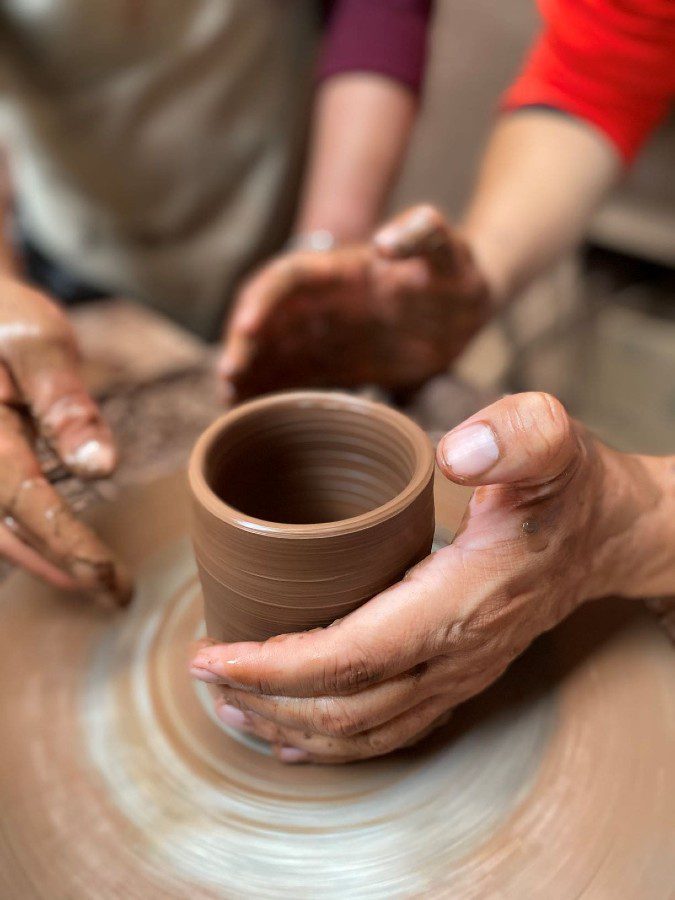
Are you an admirer of Andean pottery? Andenia offers you a master class with one of the most important ceramic families in the area: the Ramos Kintu. His workshop is in Huayllabamba, and there the whole family – mother, father, and son – introduces us to the design of beautiful pottery pieces, all of them masterfully painted and decorated with the colorful flora and fauna of the place. Feeling the primitive clay in our hands, giving life to an object, undoubtedly refers us to the first day of creation, the one when God created man. That’s how dazzling the Sacred Valley is.
Bonfires at night
At night, the option of building a bonfire is unavoidable. The Andenia team arranges the ceremony: a circle of fire made with Andean plants, with intense aromas, healing, and benefactors, which warms us and shelters us. A good read, pisco with punch, or a comforting warm blanket is the perfect complement. In the sky, the stars; in the soul, joy; in the Valley everything, harmony.
The more Andes, the better
Two of the inevitable and emblematic spaces of the Sacred Valley are, without a doubt, the El Albergue hotel and the Andean Distillery, where the famous Matacuy is produced.
Both places have as one of their promoters the great Joaquín Randall, a Cuzco of gringo parents who, out of pure love, decided to make a homeland in the house where he was born, in the beautiful Ollantaytambo.
The Hostel is a hotel, a cafe, and a restaurant. Their cafeteria is called Café Mayu, and there they drink a wonderful coffee of Peruvian origin, with their own blends (blend, they say) with beans from the coffee regions of Cusco, beans that are roasted and ground right there, which ensures complex drinks, almost always balanced, always delicious.
The hotel is old, surrounded by gardens, charming, one of the favorites by foreign travelers for its romantic atmosphere. One of its pluses is that it is located in the Ollantaytambo station, from where the train that goes to the most impressive human construction that exists: Machu Picchu departs.
Pachamanca
There, as well as preparing various regional dishes and the classics of international cuisine, they serve a delicious Cusco-style pachamanca. The ceremony impresses, not only because of the snacks served but also because of the ritual it involves, including payment of the land. More than a cook, the pachamanquero is an Andean priest: in the heart of the earth, on hot stones, in addition to lamb, alpaca, pork, chicken, Andean tubers, broad beans, corn, and more, he places sacred local herbs that They not only season the ingredients but also convey the soul of the Andes, of the Apus, of our millenary history.

Andean distillery
Next to the inns where, as a community, you can enjoy the pachamanca, are the gardens where the Andean Distillery has been installed since 2015. The master distiller is Haresh Bhojwani, the alchemist who created irreplaceable drinks like Matacuy and Caña Alta. When life prevents him, due to a global pandemic, for example, he is replaced by André Querol, a super capo bartender, perhaps the most creative in the country, who today is also a gifted alchemist.

The Matacuy is based on redistilled sugar cane and a mix of Andean botanicals, from Cusco, whose formula is secret and, like all self-respecting creative distillers, it changes from year to year.
At Distillery Andina they receive the cañazo from nearby Apurímac and redistill it to ensure greater purity and quality. Then they add different botanicals with which they create products such as Caña Alta Joven (in green and blue versions) and Reposado, botanized with extracts of herbs such as Salqa, and a splendid corn whiskey (distilled from jora and barley, they call it ) of very little production baptized as Quarries.

The experience is enhanced as visitors have the possibility of creating their own organization, their own Salqa. In the orchard and herbarium that surround the distillery facilities, you can harvest, with your bare hands, the botanicals you like best – such as grass, chamomile, marjoram, lavender, fennel, wormwood, citrus peels, and so on — and Assemble your mix, a drink that, yes, you must let rest for at least 30 days so that the ingredients transmit all their virtues to the alcoholic base.
Come and visit
This is the Sacred Valley, a generous and blessed place where one can transform the elements of nature into something unique and unrepeatable… like the Andean world, that wonder.
All text photos sourced from Gonzalo Pajares
Cover photo sourced from Scott Montgomery

