

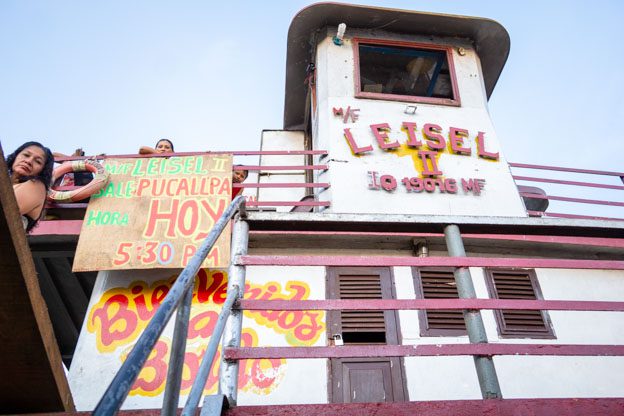
With a craving for adventure, I drove my motorcycle aboard the Leisel II, and settled in for a boat trip from Iquitos to Pucallpa. Little did I know that this trip, which usually takes four days, would take nine days to complete. Here are some highlights from this epic adventure.
Day 1: False start, still at the port
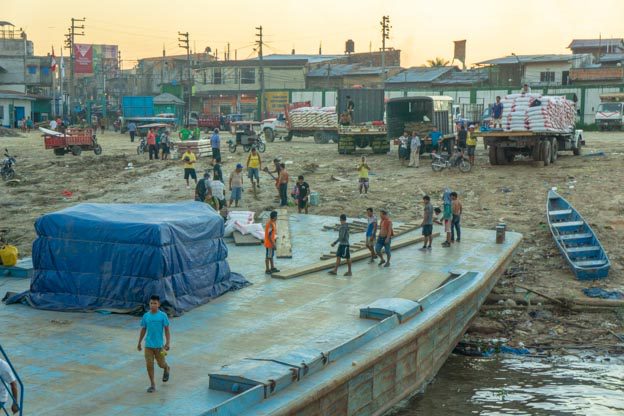
“Boom, and we’re off. This boat’s like a bullet, we’ll be flying to Pucallpa in no time,” said the captain when I approached the ship. “We’ll take off at two,” he told me.
I buy my ticket, roll my motorcycle onboard. And then I make a quick dash to town in order to stock up on last-minute provisions: food to supplement the low-quality meals to be served for breakfast, lunch, and dinner; a hammock;
Day 2: Another false start, why are we still at port?
“Yes it’s true,” the cooks and the passengers tell me, “this trip will take 6 days, not 4 like the rest of the ships.”
We were supposed to leave yesterday, but we don’t actually leave until this afternoon.
Day 3: Initiating daily art classes with children
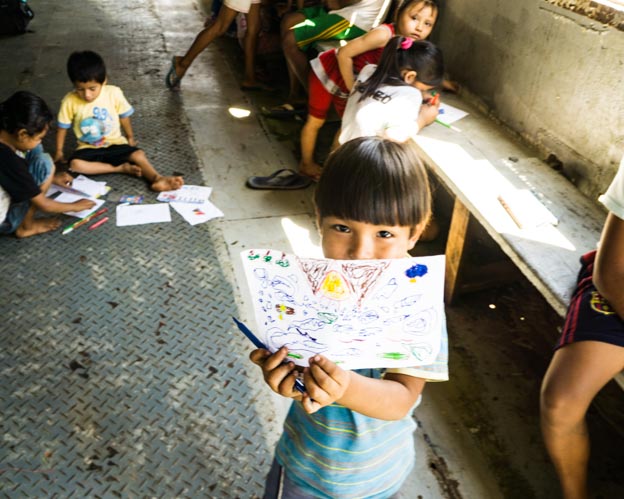
I’m glad that I stocked up on art supplies before boarding the
But this isn’t what matters. When I pull out the markers and paper, the children know that it’s time to start making lots of art. And the parents on the ship seem relieved to be free of the responsibility of watching their children in the afternoons.
Day 4: Making friends with (everybody) along the way
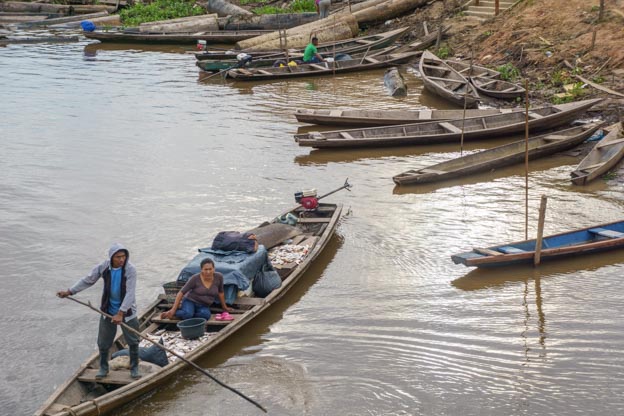
We bounce from port to port in the boat. We make stops every two hours at a different community along the way for 1-2 hours at each stop. The ship’s laborers unload mounds of soft drinks. Villagers board the ship to load burlap sacks of dried fish, 30 in all, onto the ship. I watch while the other cargo ships that left two days after we did zoom past us, not making stops at any of these villages.
Day 5: I make friends with the bridge crew
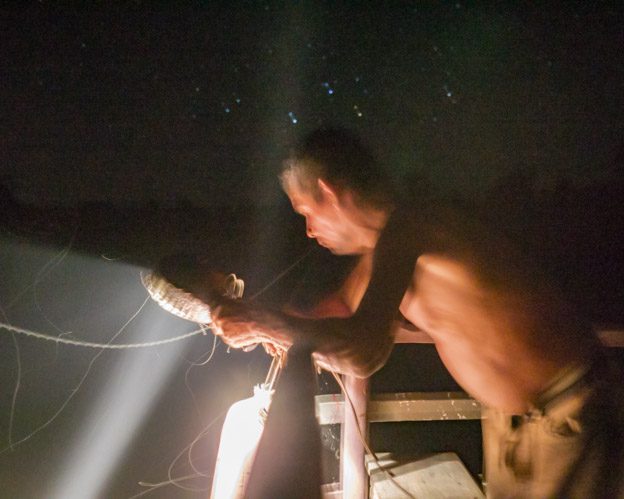
I sit through the evening with Juan “the owl,” who is the night watch spotlight guy. He sits on a wobbly bench just outside of the ship’s cockpit, occasionally telling the captain “
Day 6: This boat is falling apart
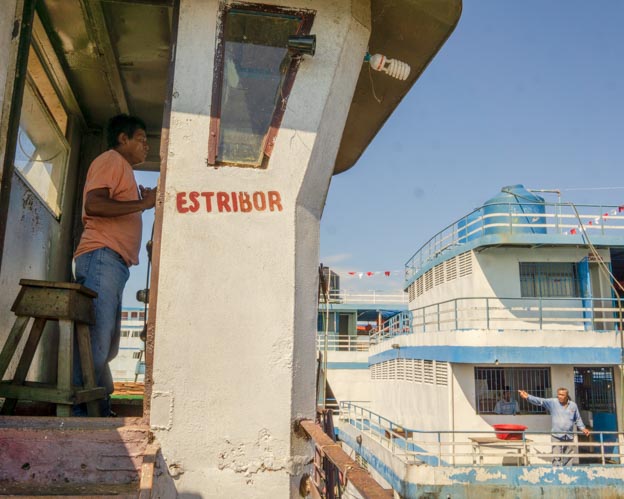
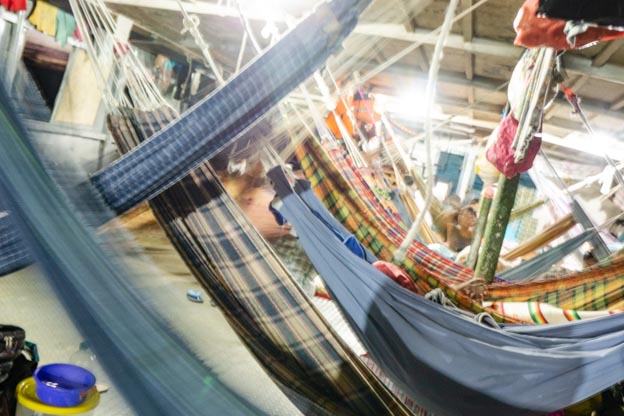
During a deeper inspection of our boat, I realize the flaws. The tarp on the roof that should be sturdy against the inevitable daily rain is frailed with gaping holes. There are no life jackets. In the main cabin, the designated sleeping area where we hang our hammocks, there’s no way to escape the television on one side and the bone-rattling vibration of the engines directly below.
Day 7: One more day?
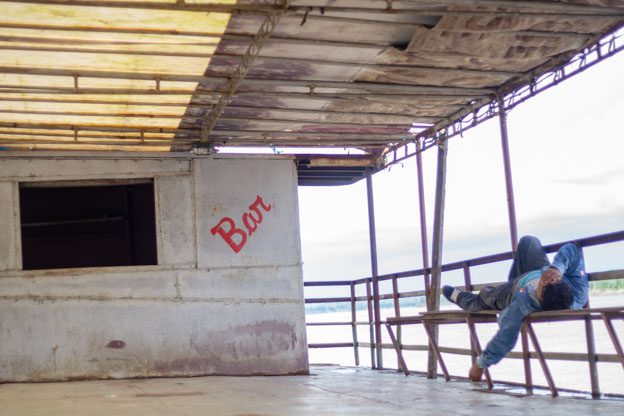
After the morning’s art class I hold with the children, I do what I do best, and wait patiently. I sit with my legs crossed in meditation on the far end of the ship’s top deck. I know I’ll need a lot more patience, because we just found out that our arrival to Pucallpa is delayed yet again, because one of the two engines has broken, meaning that we’re traveling at half speed.
Day 8: Weren’t we supposed to be there by now?
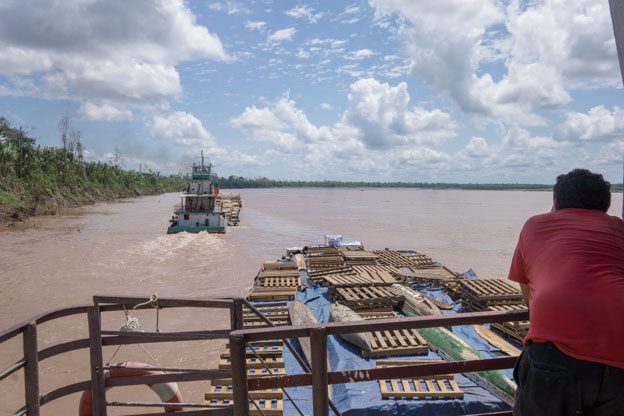
Yesterday was their real promise that we’d arrive, but we didn’t arrive. And then they promised that today would be the real day, but the ship broke down again. Despite this, the captain has promised to all that we will arrive
Day 9: Total breakdown. Abandon ship.
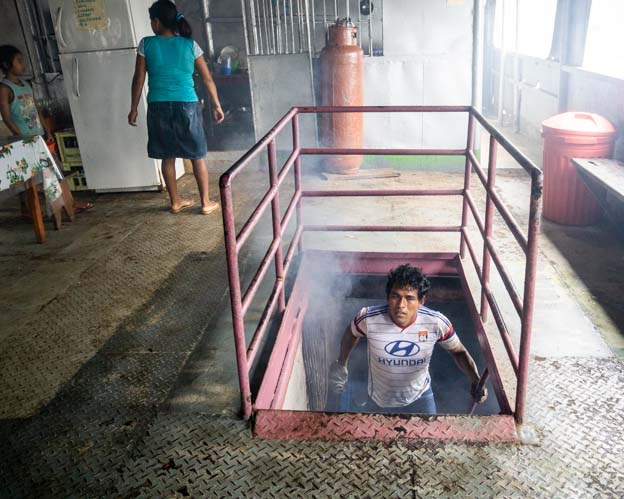
I wake up and expect to see ourselves docked at Pucallpa’s port. Instead, we’re ancored along the side of the river in the middle of nowhere. With curiousity of why we haven’t gotten there yet, I head to the captain’s hut just when the boat’s crew are waking up.
“The waters are too shallow and it was too dangerous to pass at night. But don’t worry, we’re only three hours away,” said the captain who was in the middle of preparations for starting the ship. And right before he turned the ship’s ignition, he added, “maybe we should have started calling this ship “Never… never to arrive,” which brought chuckles from the other crew members at knowing what a disaster this trip had been.
And then he struck the ignition. All of a sudden, black thick smoke started billowing from underneath the ship. A
As it was clear that our ship would be stranded for an unknown amount of time, I joined several other passengers in flagging down a passing motorized canoe in order to transport us on the final leg of our journey to Pucallpa.
YOU MIGHT ALSO LIKE

