
At the beginning of the year, we revisited Mayta, Recently placed on the 41 position on The World’s 50 Best Restaurants List. Chef Jaime Pesaque introduced us to his new tasting menu. This menu extends beyond Yachay, the plot of land that supplies much of the menu’s ingredients, which is gradually growing. It now also incorporates the Amazon to combine the coast, highlands, and jungle of this “noble land.”
THE COLORS OF THE LAND (AND THE SEA)
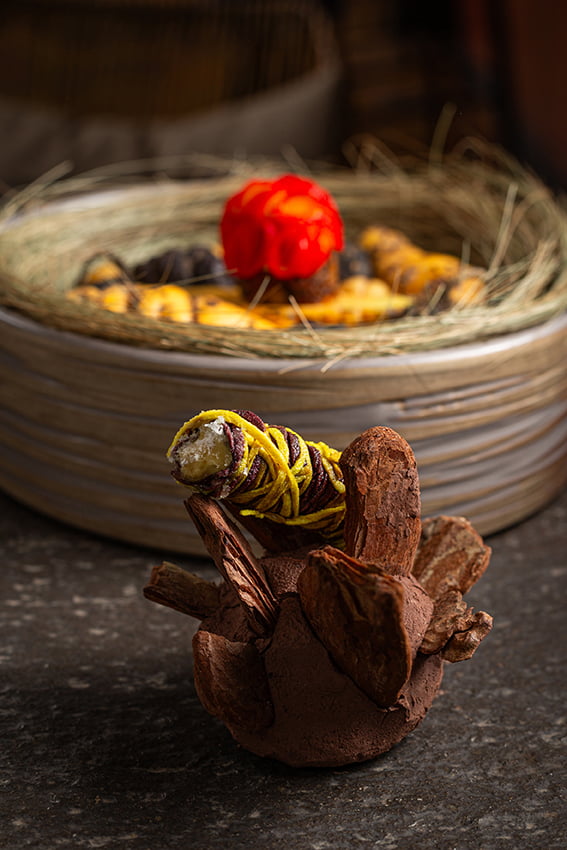
The menu begins with Tubers in two bites. On one side, crispy arracacha with purple potato, filled with an egg yolk emulsion with rocoto, decorated with tunta powder (a dehydrated potato from the Andes), giving it a cheesy touch, and mashuas and ocas with a flower of pickled ollucos. Each bite is a play of textures and flavor contrasts. The next group of bites connects us to the southern coast of Lima, in the Bay of Paracas: a clam tart, sliced asparagus, and broccoli couscous; a crunchy fava bean with fresh fava beans; a codium algae cylinder with Popeye crab and razor clams colored with purple corn, and a scallop in the center, covered by its dehydrated coral with a citrus sauce.
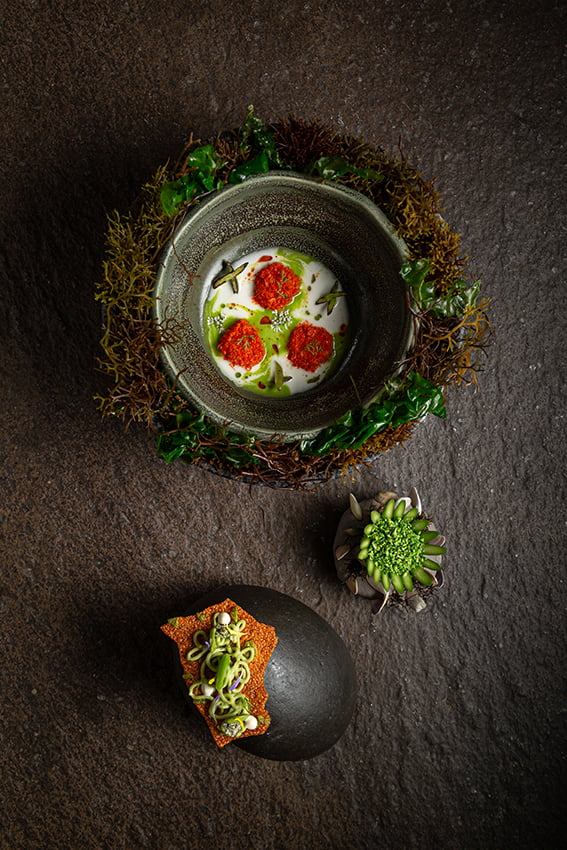
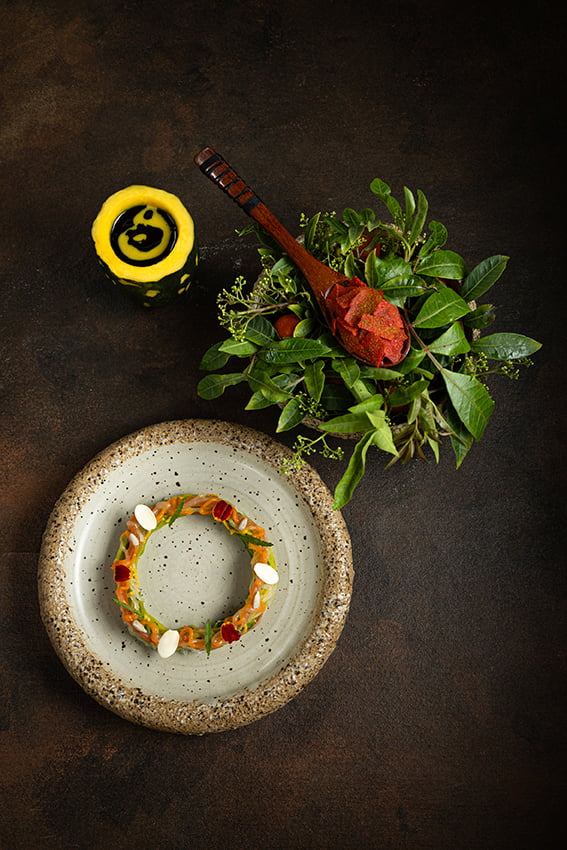
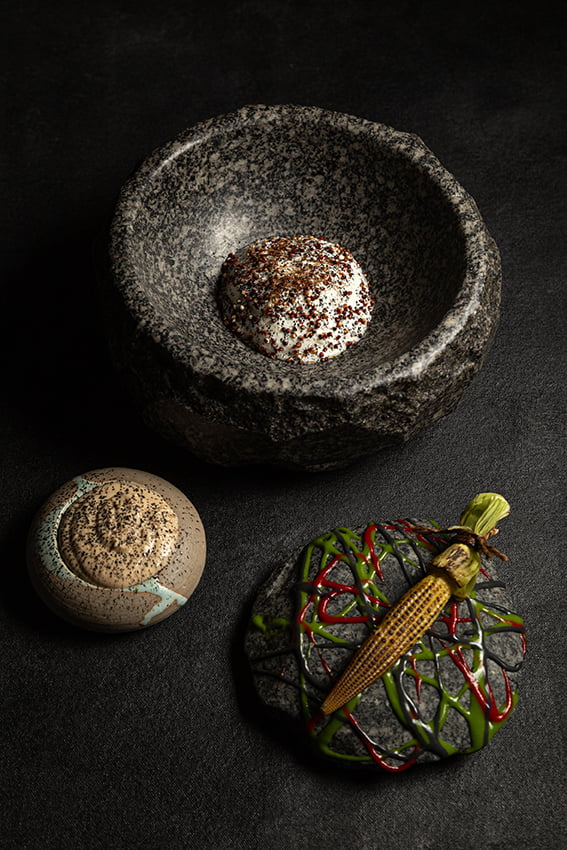
The next course comes from the coastal desert: tomato, pecans, a citrus air, and a luscious apple consommé, accompanied by a crispy made with tomato and apple skins with dots of a homemade sauce. Following this is a version of the classic squash pasta: strands of loche and macre squash with a yellow chili and huacatay sauce, climbing the northern highlands. This step is followed by corn textures, starting with roasted baby corn with three creams of red quinoa, corn husk, and sprouts, accompanied by a pecan emulsion and a quinoa escabeche and corn textures.
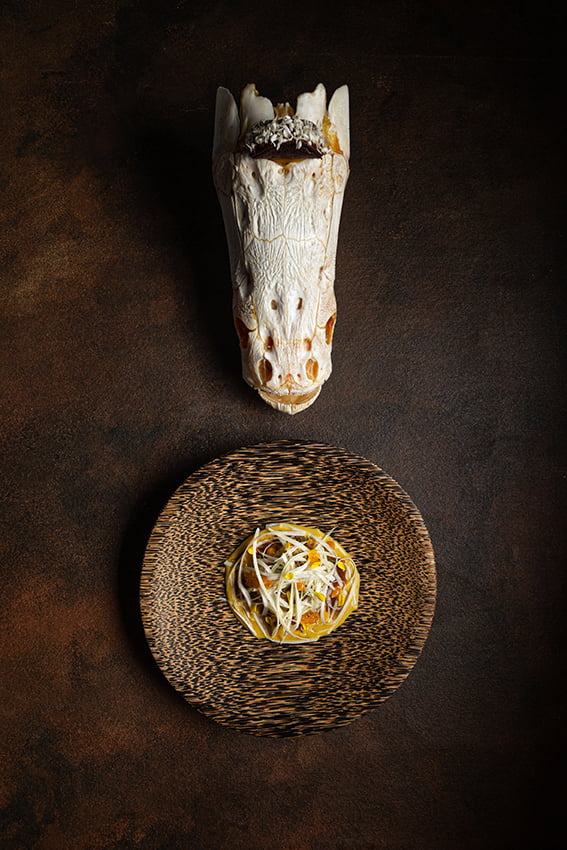
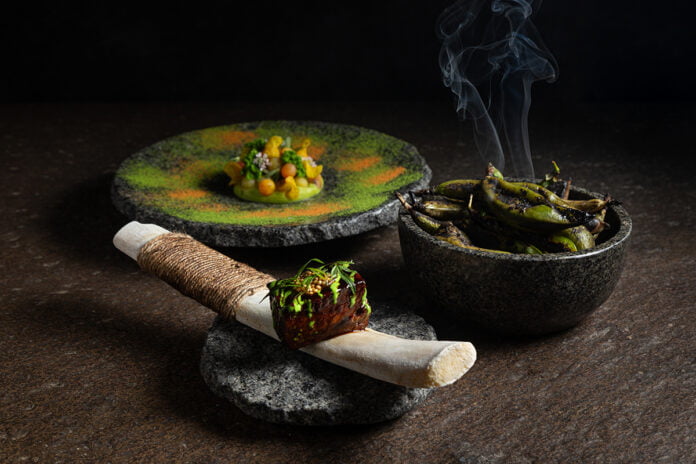
After crossing the highlands, the Amazonian sequence with Amazonian fish begins. Three bites: crispy plantain, paiche neck in a pintxo dipped in tucupi, a carachama fritter filled with its roe with Amazonian dressing and carachama tail ham, and braised and glazed gamitana loin with tucupi. Served on a plate with native potatoes and inside an alpaca potato, different types of potato, chili, and kushuro bathed in a pachamanquero consommé with muña, chincho, payco, and huacatay, accompanied by a rocoto uchucuta. The preparation is a mix between the fresh and comforting of a highland meal. The last savory course is a rib that arrives at the table with a smoking plate: a braised Oxapampa rib finished in a Josper oven, accompanied by a legume puree, fava beans, lima beans, and peas, complementing the previous pachamanca.
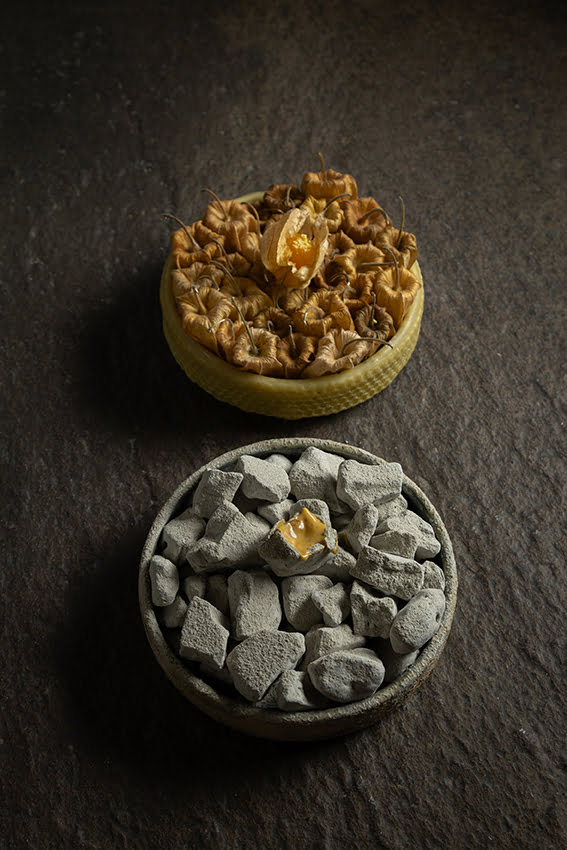
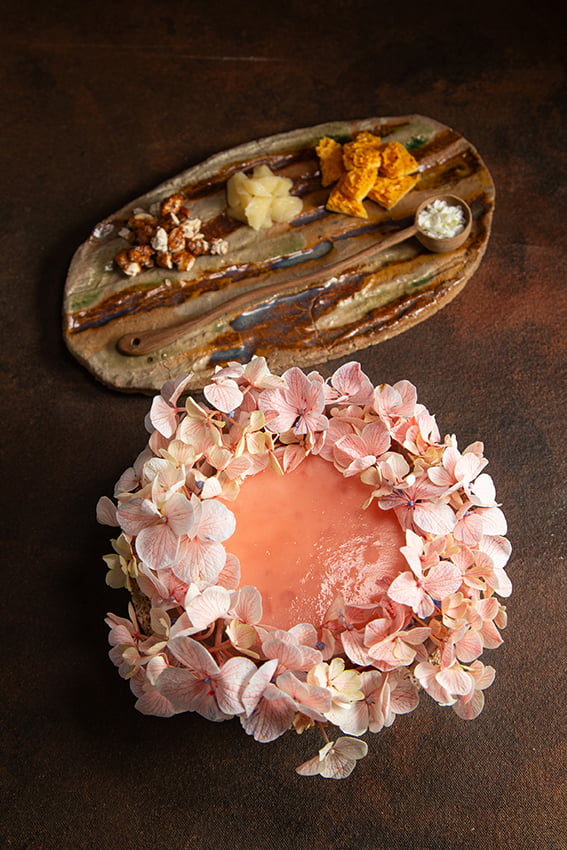
To switch to desserts, three bites: a chincho and huacatay ice cream wrapped in moraya potato ashes with sweet uchucuta, a goldenberry gummy with honey and pollen powder, and a yacón cube. Each texture and flavor subtly transition to desserts, which have evolved after Richard Venegas‘s addition to the team. The first is a tribute to the Amazon: a camu camu cloud covered with a crystal of the same fruit and stingless bee honey. The next is an evolution of corn with cheese: corn textures and a block of fake cheese. The last step is a chaco clay bonbon filled with lucuma and coffee with an infusion of cocoa veins with a cold brew.
THE DRINKS
The pairings of this menu have evolved from previous versions. There are three possible versions: first, the alcoholic pairings assembled by the sommelier team led by sommeliers Arjeta Alimi and Walter Salazar with Marschello Spiridigliozzi and Gerald Bouillet. These include unique vintage versions, a pairing presenting world jewels, many of them natural wines from Peru, such as Manuel Choqque’s Oxalis drink, Intipalka Negra Criolla by Santiago, and Joyas de Murga Italia + Alexandria, and the Quebranta mistela from the same winery and Queirolo. Moving to Vichoqueño, a rosé blend from Bolivia, the French Savagnin and Pulsard from Domaine de la Pinte from Arbois in the Jura region, the Chilean Rojo Loco from Herrera Alvarado winery in Marga Valley, and the Uruguayan Petnat Folklore blend from Castel Pujol winery. The regional version is more interesting because it moves away from the old world to stay on our continent with wines like Ventisquero Sauvignon Blanc, Garage Wines’ Garnacha, or Estampa Riesling from Chile, Argentina’s Piedra Liquida Chardonnay, Casa Boher’s Viognier, the Malbec-Cot from Vinyes Ocults Argentinos, joined by Peruvian options like Oxalis, the ocas drink, Tannat from Don Manuel winery in Ica, and Joyas de Murga Mollar also from that region, keeping the Uruguayan PetNat at the end.
The non-alcoholic pairing is crafted by Jhonatan Alvarez and the bar team, achieving truly exceptional moments: Ocas, an extract of ocas, arracacha, and caramelized onion; Sea Water, served in a ceramic cup, a drink of coastal pineapple, seaweed, and sea salt; Desert Fruits, a drink based on apple skins, tomatoes, and figs; Pumpkin, an infusion of pumpkin pulp with loche seed milk; one of our favorites, Corn, an infusion of corn husks; Amazonia, a drink with yucca whey, Amazonian banana, and a touch of cilantro vinegar; Dried Potato, a honey water of dried potato with herbs; Tumbo Albedo with muña, tumbo, and yogurt; and Mucilage, an infusion of cocoa mucilage and coffee.

