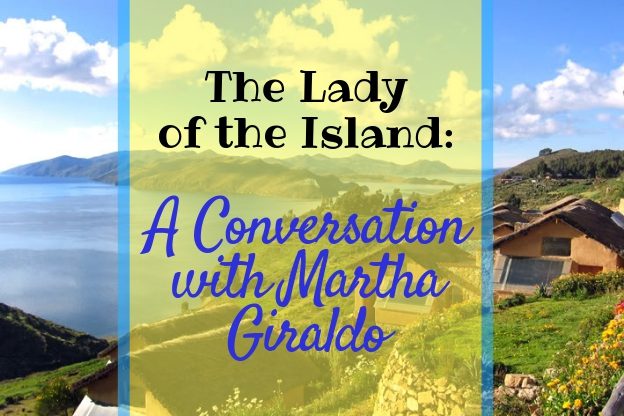
Known as The Lady of the Island, Martha Giraldo is the owner of an island on Lake Titicaca which houses a unique Eco Lodge. Surrounded by a lake that looks like the sea, a visit to Suasi feels as though you are on another planet, with the added bonus that the island is managed with ecological sensitivity.
She bought an island and trusted in everything else. How it came to be.
Photo: Ultimate Journeys Peru
“I jumped at the chance for an adventure. I didn’t imagine that I would buy an island, but I bumped into a man who told me it was for sale, so I did. I knew that I had a huge challenge ahead of me.”
So begins the story of how Puno-born Martha Giraldo arrived in Suasi, a small piece of land in the middle of Lake Titicaca whose vastness cannot be measured by its size, but instead by the magic that captures the traveler as soon as he sets foot on it. Here one can disconnect from the bothers of modern life. You easily lose yourself in the hills among the flowers and the breeze. This paradise, created by Giraldo in Puno, is one of the best-kept jewels in the region. It’s a total privilege to share if you are lucky enough to visit.
“The idea was to buy [the island] and build a home; revive the wild plants, so that the birds and bees would return; so the island would recover its environment. Suasi was a challenge and a costly one”, says Giraldo.
The State wasn’t interested in supporting the project, and neither was the international community. Giraldo realized she needed to develop some sort of business that could generate income. Thus the idea of setting up a very small lodge was born.
Meeting the right people with shared visions to create an eco lodge
Photo: Ultimate Journeys Peru
“I met Javier Diez Canseco when I was working on this project, a very dear friend and idealist who had never been involved in a business. He was attracted to my proposal and we continued together. Thanks to his help, we were able to turn this dream into a reality: twelve beautiful rooms, with an unmistakably rustic feeling and with a very solid environmental focus including solar energy, aggressive recycling to avoid creating rubbish, a ban on the use of washing detergents, a program to replace non-native Eucalyptus trees with native trees and cuisine based on very local foods. We worked very hard on the exterior areas so that the natural landscape could be enjoyed and, at the same time, we decided to create a personalised service for visitors to ensure that each person’s experience would be unique. Our goal? Creating a pioneering adventure experience on a nationwide level in order to incorporate the theme of conservation.“
It’s now more than 30 years since Giraldo purchased the island, and 20 since the project began. The island, which originally belonged to Martha’s paternal grandmother, Candelaria Gálvez Olvea de Giraldo, who in turn inherited it from her parents, is today a proud demonstration of the way tourism and nature can work together. Today, Suasi is part of the Casa Andina Hotel Chain, a strategic alliance that has allowed Suasi to maintain fiscal strength at the same time it secures the environmentally focused parameters around which the project was created.
“It is unusual to have developed this proposal on the island. And beginning here, we have an island that is uncommon; it was the only private island available on the market. If you add to this, the marvellous mirror of the Titicaca, which turns it into an extraordinary viewpoint, we would obviously say that this is also an advantage. And as I have invested so much love, dedication and warmth in each platform, in each stepping-stone, into each reforestation campaign, the result is something that people can feel.”
Has any counting of the different species of plants and animals that exist on the island been carried out?
Photo: Pixabay
“We have registers, which are still unfinished. In terms of wild plants, there are 92 species including herbs, bushes
and trees. There are a lot of plants that we don’t know, have names for or understand their properties. We need a register that contains the scientific name, common name and properties. Regarding the birds, 34 species have been registered both from the lake and also smaller birds that live in the surroundings. We are sure that there are more but we have to carry out the study on a seasonal basis because the birds migrate.”
And in terms of mammals and rodents?
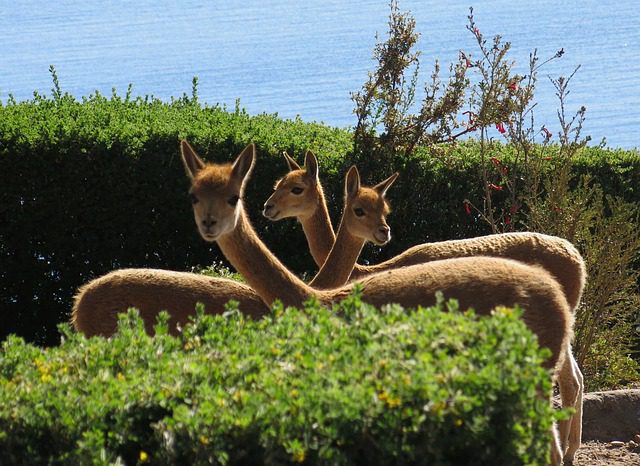
“The truth is that we haven’t found many. We have introduced a flock of Alpaca and Vicuña with the first objective of taking advantage of the manure to fertilise the soil. When we arrived, the soil was very poor and the land needed organic and natural material. We have also introduced Viscachas (a type of Andean rodent similar con Chinchilla: Lagidium viscacia).”
Have you introduced any crops other than flowers?
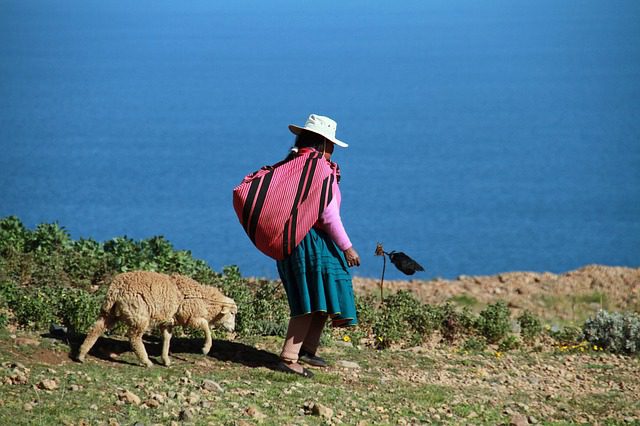
“Potatoes, Oca (oxalis tuberosa), barley, bean, and corn once were grown on the island. We have maintained these crops on a smaller scale. We have very high quality potato seed, which is valued among the neighbouring communities.”
Are you still working on producing potato seed?
We do produce it on a small scale, because our environment has also changed. We live close to the Bolivian border where there has been a significant change in the lifestyle of the communities, because of this, now we can’t find much manpower to work on extensive areas of land.
Is agricultural work still carried out on the coast of the lake and on the island through the use of canals and ridges?
Photo: Pixabay
“No, never on the islands. Canals and ridges are a system used to adequately manage two of the basic elements of agriculture: land and water. This is associated with ancient cultures, like the Pukara. Supposedly, the first phases were before the time of Christ and they later evolved. They are waru waru, or ridges, and what happens is that connected canals are dug out and the earth that is obtained is used to form high planting beds. This type of agriculture has been replaced through time for different reasons. In the seventies, there was a boom to rescue the technology of ridges with the support of the international community.
The first years provided a high performance but the ridges have fallen out of use once again, mainly due to the changes that are currently suffered by rural communities.”
Is there anywhere where this type of technology can still be seen on the lake?
“Yes, it can still be found on the plains of Pomata, Juliaca and Lampa. If you come by plane and look out of the window, you can see that there are still ridges on the high plateau area. Suasi looks to the future. The strength that Giraldo exudes, the drive and dedication that she puts into every details of her project is admirable. This island flourishes, and living there, in this hideout that encourages relaxation and peace, is a special experience. Her small home, the library and the museum, which sit next to the lodges, are surrounded by flowers and aromatic herbs that scatter their scent as a light breeze blows. From here, you can see the intense blue water of the lake, which becomes clearer as it nears the shore. It is Paradise”
We provide safe and exceptional experiences around Peru, partnering with knowledgable and passionate local tour guides! Since 2003, we have led the way as an authoritative and reliable English-language resource and travel agency for those interested in traveling to Peru.