

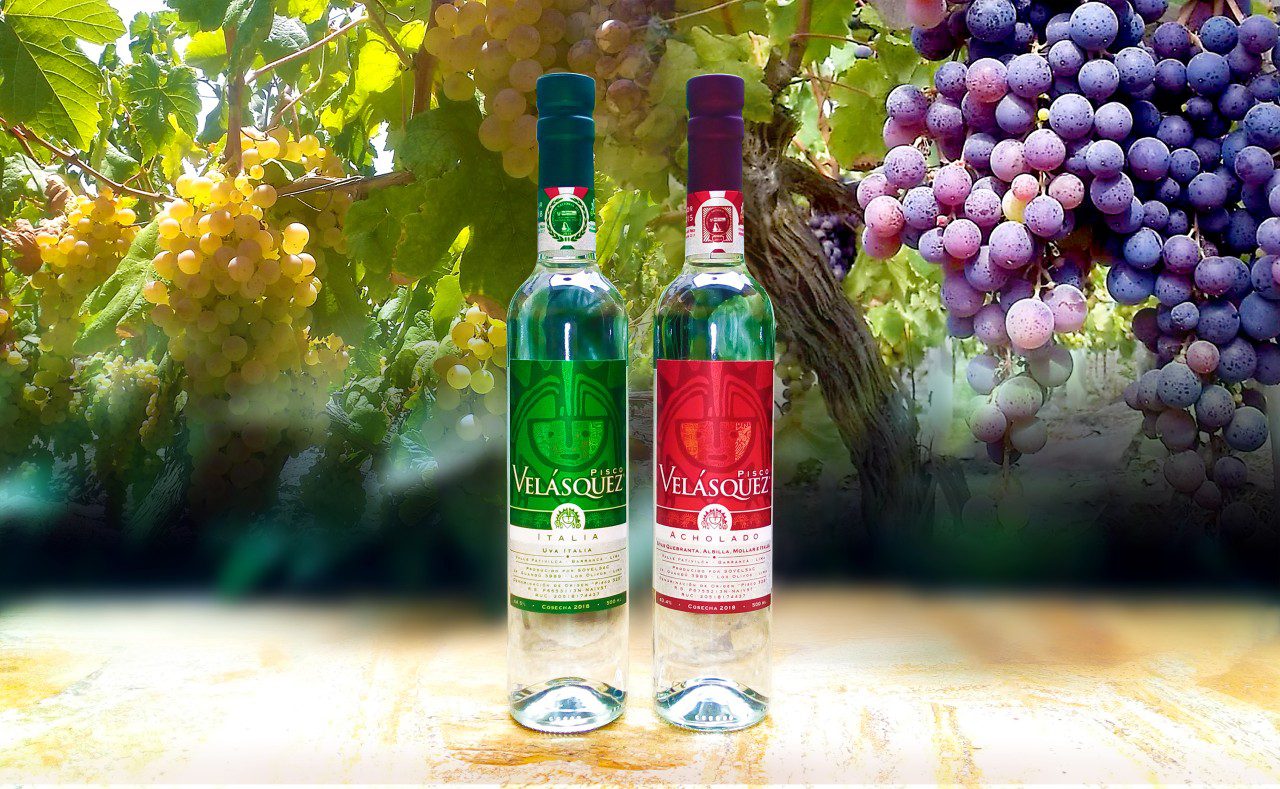
Learn about Pisco Velazquez, a family-owned brand which produces the spirit north of Lima city, and exports to the U.S.
Peruvian Market was founded by Carolina, a fellow Peruvian living in the U.S. Since 2017, the online market imports Peruvian liquors with the aim of introducing them to the American consumer. Here, we share the story and products behind one of their brands, Pisco Velasquez.
The story behind the pisco brand
This is a family brand founded in 2005 in the Pativilca Valley (close to Barranca), north of Lima.
This area has an extraordinary historic, geographic and gastronomic wealth. Due to the remarkable characteristics of the area, Pisco Velasquez became the first winery on the northern part of the Pisco Route.
This farm has twenty-five hectares irrigated by waters that descend from the snow-capped mountains of the Cordillera Huayhuash, providing good conditions for growing vines (especially for traditional and native varieties) die to the combination of good lighting, ventilation and well-drained soils.
The weather, hydric and soil characteristics of the producing area allowed the vineyard to harvest pisco grapes from the very beginning with very remarkable sensory characteristics, full of aromas and sweetness.
They produce six of the eight types of grapes used for pisco: Quebranta, negra criolla, mollar, Italia, torontel and albilla. The vineyard also produces borgoña, malbec and cabernet-sauvignon wines.
Pisco Velasquez also has the privilege of having acquired the first authorization to use the pisco Designation of Origin along the pisco route (from north to south). This, of course, allows them to safeguard the traditions and techniques of the elaboration of pisco in this area. Over the years, the two pisco products they produce have been awarded gold medals in Peru’s National Pisco contests in 2015 and 2018 respectively.
The process of pisco production
- Harvest: Between February to April, when the grape/sugar content has reached the right level of sugar.
- Grinding: The stems of the bunches are removed and the grapes are on the ground. It is treaded in the traditional way and sometimes de-stemmed with a machine.
- Maceration: The must is allowed to rest with the skin and seeds for some hours.
- Pressing: Shells and seeds are separated from the must, which will be carried to fermentation.
- Fermentation: They allow the natural process of the grape occur, where the yeasts transform the must into alcohol and CO2.
- Distillation: Once fermented, the must immediately enters the discontinuous distillation process in a copper alembic.
- Repose: After distillation, Pisco is put to rest inside a non-reactive container for 15 months.
- Packing: Finally, the Pisco is filtered to eliminate impurities, then be packed in bottles.
Pisco Velasquez products:
The brand produces 2 types of pisco from scratch with their presentations of 50ml and 500ml bottles:
- Pisco Acholado: Identified by its red label. Made with 75% of a variety of quebranta grapes must, 15% of Italian grape must that is called “Muscat of Alexandria,” 5% of fresh albilla grapes must and 5% of mollar grapes must. It has a total of 43.4% of alcohol. It’s recommended to conserve at a temperature between 15 – 25°C and a humidity of 50 – 60%.
- Pisco Italia: Distinguished by its green label. Made with 100% of Italian grape must called “Muscat of Alexandria.” It has a total of 44.5% of alcohol. It’s recommended to conserve at a temperature between 15 – 25°C and a humidity of 50 – 60%.
Soon, Pisco Velasquez will launch their new Pisco Quebranta with a blue label.
Tasting review: Pisco Italia
Of their products, I have tried the Pisco Italia. I started with a shot of pure pisco: it felt warm but with a pleasant sweet aftertaste, which is something I love about the Italia grape.
It had some flavor tones of anise, jasmine, azahar and syrup. I’m not an expert on flavors, but I could identify these.
Then, I decided to make chilcanos for myself and my family. The cocktail with this pisco was a big hit with my father, since the taste of the sweetness complimented the flavors of Canada Dry ginger ale and bitterness of the lime.
Why would I recommend this brand?
If you like to enjoy the taste of pure pisco, the Pisco Italia is for you. It doesn’t have a heavy taste of alcohol, and in my opinion, pairs perfectly with the refreshing ingredients of a chilcano. A plus? We felt completely fine the next day, with no headaches or hangover symptoms. I think it’s a new favorite.
Contact information
If you want to contact Peruvian Market in the U.S., you can do so here:
Call, text or WhatsApp: +1 786 416 2125.
Email: peruvianmarketusa@gmail.com.
Instagram: @peruvianliquidsmarketusa
If you want to contact Pisco Velásquez in Peru, you can contact them here:
Call, text or WhatsApp: +51 997 081 072
Email: info@piscovelasquez.com
Instagram: @piscovelasquez_oficial
Facebook: www.facebook.com/Piscovelasquez

