
Surf, relax and connect to nature with eco-tourism in northern Peru. Here’s how to have an adventure-packed coastal getaway that you (and the planet) deserve.
Northern Peru’s beaches are synonymous with relaxation, delicious dishes, hot sand, good waves, and eternal sunshine. In the recent past years, businesses and organizations have come to embrace the boom of eco-tourism in northern Peru, catching up with others who had already been living and operating in a sustainable manner.
From Los Organos to Tumbes, the possibilities for participating in eco-tourism in northern Peru are endless. Here are some of the highlights.
1. Just keep swimming (with sea turtles)
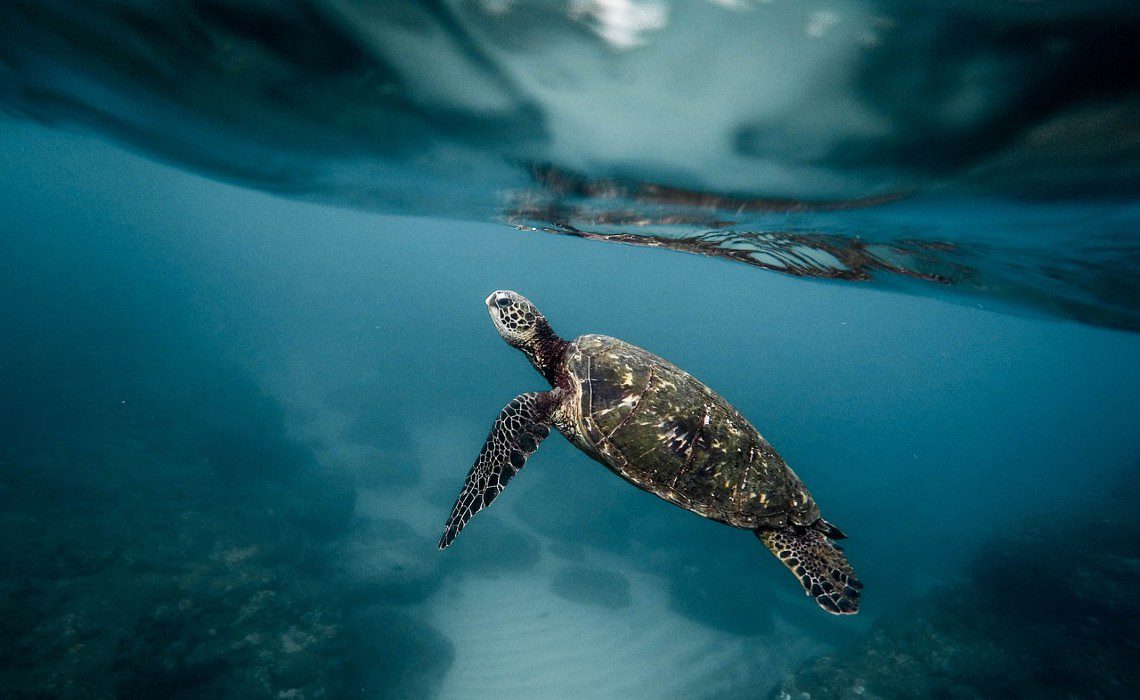
Take advantage of the rare opportunity to swim with the gigantic green turtles that live around the jetties of Los Organos and El Ñuro. Such marine life is protected by initiatives aiming to reduce the threat of extinction. Effortlessly navigating the waters of the Pacific, the turtles are so endearing it will be tempting to reach out for a hug or webbed-five—but please resist. The surrounding communities have an important rule to not touch these sea creatures.
2. Set sail and make ceviche
Even in unexpected places such as old oil platforms, nature takes over. As you coast over the Pacific, you’ll see how the abandoned industrial structures have become something like artificial reefs. You’ll even see seabirds such as blue-footed boobies and tijeretas, as well as seals resting on the steel structures.
For an extra treat, sail between Cabo Blanco, Los Organos and El Ñuro (try socially responsible tour agency Oceanica) while throwing a baited line over the side of the boat. With a bit of luck, you’ll soon be preparing your own ceviche on board the boat while groups of dolphins playfully bob above the ocean’s surface.
3. A whale of a time
Between July and October, off the coasts of Mancora and Punta Sal (Piura and Tumbes), visitors have the chance to experience whale watching. Getting close to these spectacular and massive animals (weighing in at tens of tons) is an unforgettable experience that the whole family can enjoy.
Perhaps one of the most well known (and respected) whale watching operators is Pacifico Adventures. You can’t talk about eco-tourism in northern Peru without mentioning this team of marine biologists.
4. Dive deep
Go deep and explore the richness of the northern Peruvian sea by signing up for some diving lessons in Los Organos. This biodiverse area of the Pacific Ocean is the result of the cool Peruvian Current (also known as the Humboldt Current) and the warm El Niño Current converging; as the cold water of the former rises to the surface (an occurrence known as upwelling), plenty of nutrients for interesting and (mostly) friendly creatures follow.
From open water to rescue diving, Chelonia Dive Center offers a range of courses for all levels, and each are up to the standards of PADI (Professional Association of Diving Instructors). The company was co-founded by a marine biologist and scuba instructor, a powerful pair with a passion for the sea and its inhabitants.
5. Mangrove swamps
Further north, on the border with Ecuador, is the Los Manglares de Tumbes National Sanctuary. One of the planet’s most productive ecosystems, this section of the northeastern coast of Peru is home to the mangrove, a remarkable twisted tree that grows between the sea and the rivers in tropical zones.
Visitors can jump aboard a canoe or kayak for a chance to spot numerous endemic species, such as the American crocodile (currently at risk of extinction) and black scallops (a must-eat while touring this region). This is also a prime spot for some bird-watching and family-friendly adventures.
6. Equatorial forests
The Cerros de Amotape National Park, created to protect the ecosystems of the equatorial dry forest and Pacific tropical forest, lies to the east. This protected area is the best-preserved example of equatorial dry forest in the whole Pacific Region. It forms an oasis for life on the Peruvian coast, extending as far as the foothills of the Amotapes massif. It is crossed by the River Tumbes, the only navigable river in Peru where we can enjoy its unique flora and fauna.
Cover photo: Pixabay
Source: Peru.Travel

