

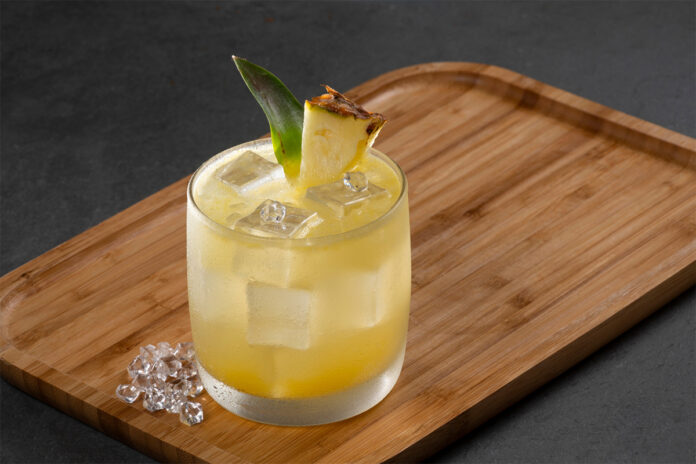
Lima’s bartenders have long paid homage to Peru’s pisco heritage with classics like the Pisco Sour, Capitán, and Chilcano. While the country’s modern cocktail scene embraces a variety of spirits—from mezcal to whiskey—pisco remains the soul of its mixology. Now, a long-lost fourth classic is reclaiming its place: the Pisco Punch.
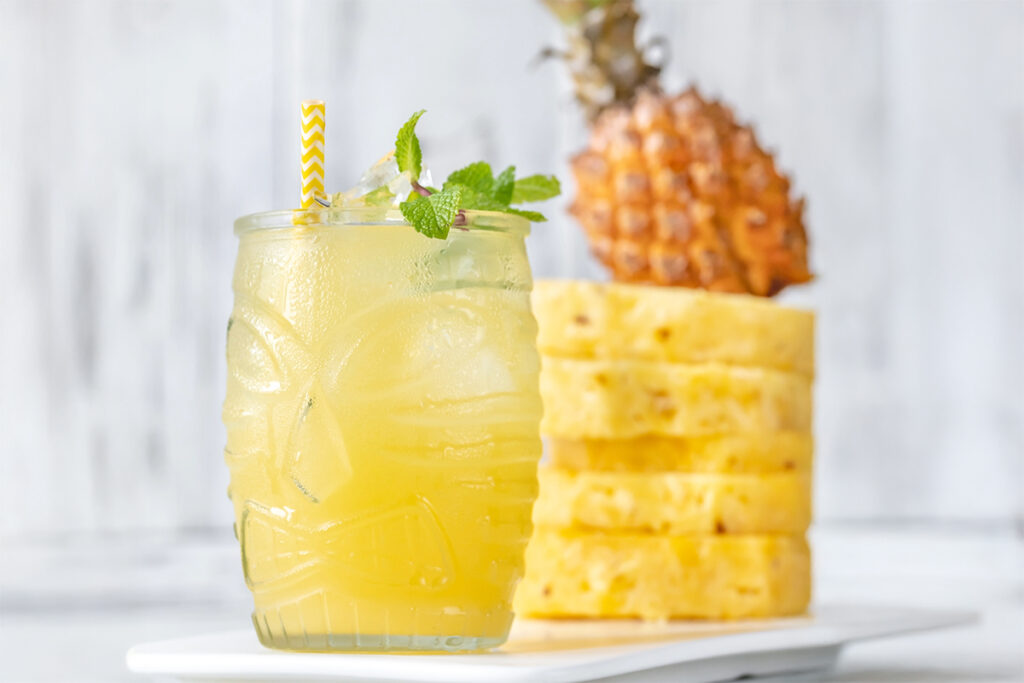
A beloved San Francisco cocktail before Prohibition, the Pisco Punch was notorious for its strength and secrecy. It blended pisco with lime juice, pineapple, sugar, gum-arabic, and coca-infused wine, a recipe closely guarded by its creator, Duncan Nicol, at the Bank Exchange between 1893 and 1919. One patron famously described its effects as “floating in the region of bliss between hashish and absinthe.” When Nicol passed away, he took the original recipe with him. But in 2006, historian Guillermo Toro-Lira uncovered its secrets in Wings of Cherubs, revealing that the drink’s potency came from Vin Mariani, a Bordeaux wine infused with Peruvian coca leaves.
Toro-Lira insists on authenticity when preparing a Pisco Punch, sourcing fresh Hawaiian pineapples, Acapulco limes, and Sudanese gum-arabic. He favors Italia pisco, known for its floral and tropical notes, believing it to be the perfect match for pineapple. But while his work revived the recipe in the U.S., it also sparked a resurgence in Peru, bringing the Pisco Punch full circle.
Lima’s Bartenders Reimagine the Pisco Punch
Thanks to an abundance of fresh pineapples and limes, as well as Peruvians’ love for rediscovering lost traditions, the Pisco Punch has flourished in Lima’s bars. Today, bartenders are making it their own by incorporating local ingredients like agua de piña (pineapple-infused water with spices), experimenting with different pisco varieties, and adding regional spices and garnishes.
At Cruzas, the most recent concept by chef Andrés Orellana, head-bartender Denilson Gavria presents an elegant take on the classic, a clarified and foamy long drink using Pisco Italia Don Amadeo, Golden variety pineapple juice, lemon, and orange blossom, and the foam is a texture produced by the pineapple itself.
At El Bar de Lima, beverage manager Marcos Blas has crafted a refined version using Italia pisco, agua de piña, pineapple syrup, and lime juice. Blas also dusts the rim with dehydrated coca leaf powder, a nod to the cocktail’s original coca-infused past.
At Astrid y Gastón, Carolín Katiuska Ruíz presents an elevated take on the classic. Her version has a base of mosto verde Italia pisco, a semi-fermented distillate with an aromatic subtlety. She infuses her agua de piña and syrup with cinnamon, cloves, star anise, allspice, and molle —an Andean pink peppercorn variety —fresh herbs and flowers from the restaurant’s garden complete the presentation.
By reviving this forgotten classic, a new generation of bartenders is reclaiming history and ensuring that pisco continues to shine in all its complexity.

