

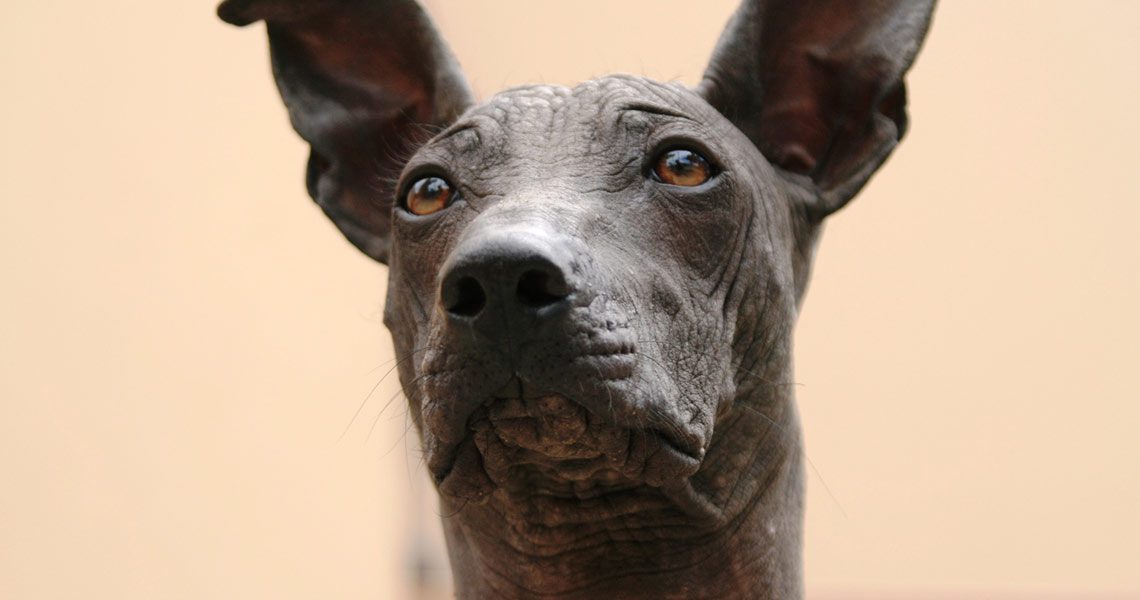
The Peruvian hairless dog (or “perro peruano sin pelo” in Spanish) went from being labeled ‘satanic’ creatures by Spanish conquistadors to becoming a beloved national treasure. Now, you can find a couple of them hanging out at Lima’s Huaca Pucllana.
The BBC recently published a quick history of the Peruvian hairless dog. Its national day, June 12, is now celebrated by many who see the unique breed as a point of national pride.
This wasn’t always the case, however. The breed can be traced back to Pre-Inca times. Imagery of the Peruvian hairless dog can be found in Moche ceramics, dating back to 750 AD. Art from the Wari, Chimu and Vicus cultures also feature the dog. Archeologists found that the breed was “looked after” by these ancient cultures.
The Incas would not allow for the dog to be eaten. However, the Spanish conquistadors saw them as “ugly” and “satanical” creatures. Abandoned, and chastised, it wasn’t until the 1990s that Peruvians came to see the hairless dog in new light.
The Peruvian government passed a law allowing the creatures to stay on archeological sites. The BBC profiled Sumac and Munay, the two Peruvian hairless dogs that are keepers of the popular Huaca Pucllana archeological site. Travelers are greeted by the charming dogs wearing Peruvian flag t-shirts. So, travelers who visit this place, don’t forget to say hi to Sumac and Munay.
Source: BBC.
Cover photo: Carlos Adampol Galindo.
This article was updated from its original version published in September 2019.
Don’t Miss:
Chira, The Dog That Set A Precedent For Peruvian Pets
Project Peru Is Born For Finding Homes For Abandoned Dogs
Wendy: The Peruvian Dog Performer Steve-O Adopted From The Streets

