

Peru has a long list of nicknames that are not seemingly similar to their legal name at all. Author, David Stephens, breaks down the idea of a nickname and what the Peruvian nicknames translate to.
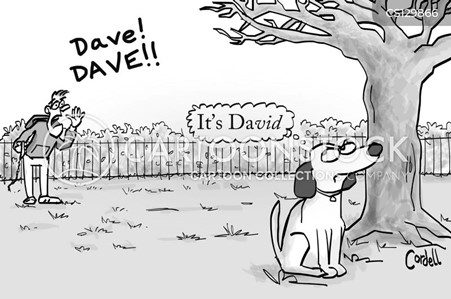
Let’s make one thing clear from the start. My name is David, and I certainly don’t answer to Dave, or worse, Davey. But I think I’m in a minority in that quite a lot of us are better known by their nick, rather than their formal name. My two brothers, Michael and Timothy were known to everyone as Mike and Tim, and my dear daughter Genevieve answers of course to Gen. My second daughter is called Anna, a tricky one to shorten.
What is a nickname?
First, what does nickname actually mean? To be academic for a moment, the word nickname is formed by what they call metanalysis or the changing of the division of words based upon how they sound together. In this case, the Middle English word eke – which means also or in addition was joined with name to make your ekename or alsoname.
So, let’s cast eye over these eke or also names. Some that are popular in England are obvious: Will for William – though that became Bill, and Billy – and we’ve all heard of Will-I-am. Then there’s Rich for Richard, which somehow became Dick, which in turn became Dickie, and let’s not forget Richard Starkey, the Beatles drummer who somehow was known to everyone as Ringo – no doubt a nickname celebrating the many rings he liked to wear.
Nicknames in sports
A particular physical attribute or skill can also be the reason for a nickname. I know of at least one short guy called Lanky and another soccer player who was known to everyone as Boot. And whilst we’re on the subject of football, it seems that any player of repute has to have a nickname. Think of the English player Paul Gascoigne or Gazza, or nearer to home, Ramon Quiroga of the Peruvian team also known as El Loco, the madman. And who can forget Pele, who was actually christened Edson Arantes do Nascimento? Apparently, his original family nickname was Dico but when at school he mispronounced the name of his favorite player Bile, the nickname Pele was born. And to be honest, Pele fits much more easily on the back of his shirt.
English nicknames
Most English nicknames are either a shortened form of a first name e.g. Greta for Margaret or Ben for Benjamin, or names in which one or two letters are changed, for example, Bess for Elizabeth or Meg for Margaret, which has also spawned Maggie, Peg and Peggy. And then you’ve got some popular nicknames that have become names in their own right. James, of course, soon became Jim or Jimmy – Jimmy Carter used his nickname, rather than his actual name of James Earl Carter when inaugurated 39th President of the United States, and Jack is also a nickname of James. Clear? Whilst on the matter of presidential names, for some reason the 45th President of the United States was always Donald, though it appears he preferred the moniker The Donald. Let’s leave it there.
Peru nicknames
But let’s shift our gaze towards Peru and some of the nicknames we find here.

A good friend of mine, Jose, is a lawyer. The other day he wrote to me and signed off his letter with best wishes, Pepe. Whoa! A lawyer with an alias? Doesn’t look good. So, I asked a writer friend here in lima, Charo, who nodded and helpfully reminded me that her actual name was Rosario. And that her father, Francisco was known to everyone as Pancho. The Joses, she said, are always called Pepe. Of course.
We need to delve deeper. It seems that Jose was originally Josepe and Pancho supposedly comes from Pater Comunitatis, the title given to St. Francis of Assisi – do keep up – and while we are at it, Lola is derived from Dolores, Chelo from Consuelo, Maite from Maria Teresa, and Merichel from Maria Isabel. Glad that’s sorted.
Peruvian soccer player nicknames
It seems that every member of the Peruvian soccer team has a nickname. Jefferson Farfan, for example, is known as La Foquita, the little seal, and the team is collectively known as the Blanquirroja or the white-and-red. But it’s not just people who have nicknames. I’m reliably informed that Lima is also known as El Pulpo – the octopus – maybe because its eight limbs like to hold you tight in its icy embrace during the winter months?!

Why do we have nicknames?
So why do we give nicknames and what do they say about us? According to a study by Bellevue University, Nebraska men gave nicknames to male friends without compromising their masculinity. Professor Cleveland Kent Evans of the university says, ‘it’s man’s interpretation of what being friendly is like’. Monikers can also accord someone credibility. Abraham Lincoln was known as ‘honest Abe’ and the Irish premier Garret FitzGerald as ‘Garret the Good’. Nicknames can also inspire fear. Al Capone was known as Scarface and the mobster, Benny Siegal as Bugsy, a slang name given for someone who liked to spill blood.
Leveraging nicknames
Nicknames can also be used for marketing purposes. The most famous example is the Spice Girls – Ginger, Sporty, Baby, and Posh. I’ve forgotten what their real names are, though I think one is married to David Beckham, known in Spain as golden balls. As I said, let’s leave it there.
Use with caution
But let’s end with a caution. Often nicknames are given by children to those they want to humiliate or diminish. At school, I wore spectacles as so was known as four-eyes. Another girl was unkindly called fatso. Psychologists have researched nicknames and point out that these nicknames denote very powerful symbols of how a child is viewed within the inner circle of their peers. The giver of a nickname assumes a role of power in the group, and bullies are often quick to take advantage of that position. But on the other hand, ekenames can also be flattering and recognition of a person’s positive qualities e.g., speed for a runner or in my case professor – I liked books – though I’m never quite sure if the nickname was flattering.
Well, Pancho, Pepe or Charo, I hope you’ve enjoyed this discussion of Peruvian nicknames.
I remain your faithful author,
David.
Cover photo sourced from www.istockphoto.com

