

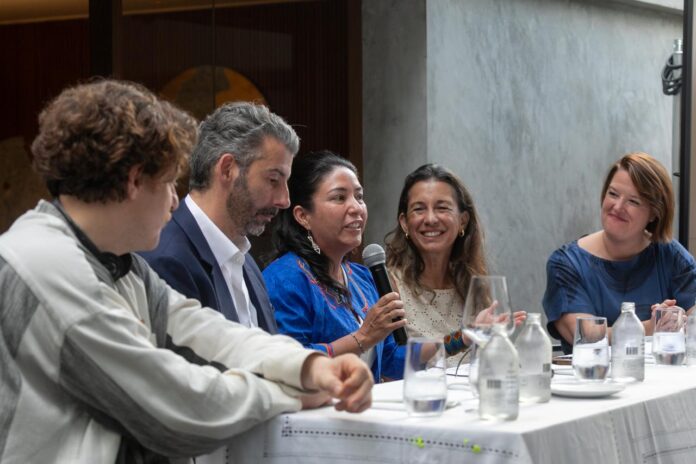
During The World’s 50 Best Restaurants week in Lima, a conversation at Limaná brought together hospitality leaders from Peru, Germany, and Belmond to discuss how sustainability shapes everyday decisions—from paying suppliers fairly to rethinking food waste.
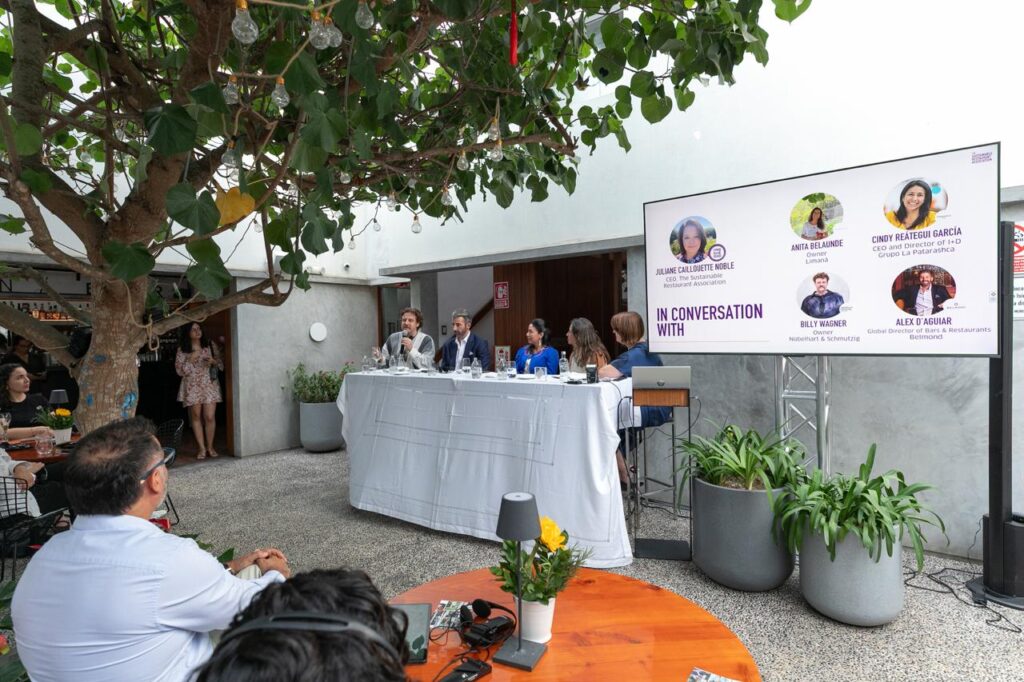
While much of Lima’s attention was on The World’s 50 Best Restaurants program, a conversation at Limaná asked a more practical question: what does responsible hospitality look like after the event ends and a business returns to work?
The Sustainable Restaurant Association, Limaná, and A2G organized The Next Era of Sustainable Hospitality. Before a panel discussion, A2G’s Arturo spoke about the people behind every ingredient: the farmer harvesting native potatoes, the fisher heading out to sea and the family growing quinoa. Knowing where ingredients come from, ensuring traceability and respecting suppliers, he said, are part of building a fairer food system.
Juliane Caillouette Noble, CEO of The Sustainable Restaurant Association, placed those choices within a wider context. Hospitality businesses face climate pressures on supply chains, rising food and energy costs, changing customer expectations, and challenges in recruiting and retaining staff. Sustainability, she argued, is increasingly tied to business resilience.
The Food Made Good Standard offers one way to turn that broad idea into action. Its framework considers sourcing, social impact and environmental practices, giving businesses a structure to assess their work and identify areas for improvement.
A Sustainable Conversation
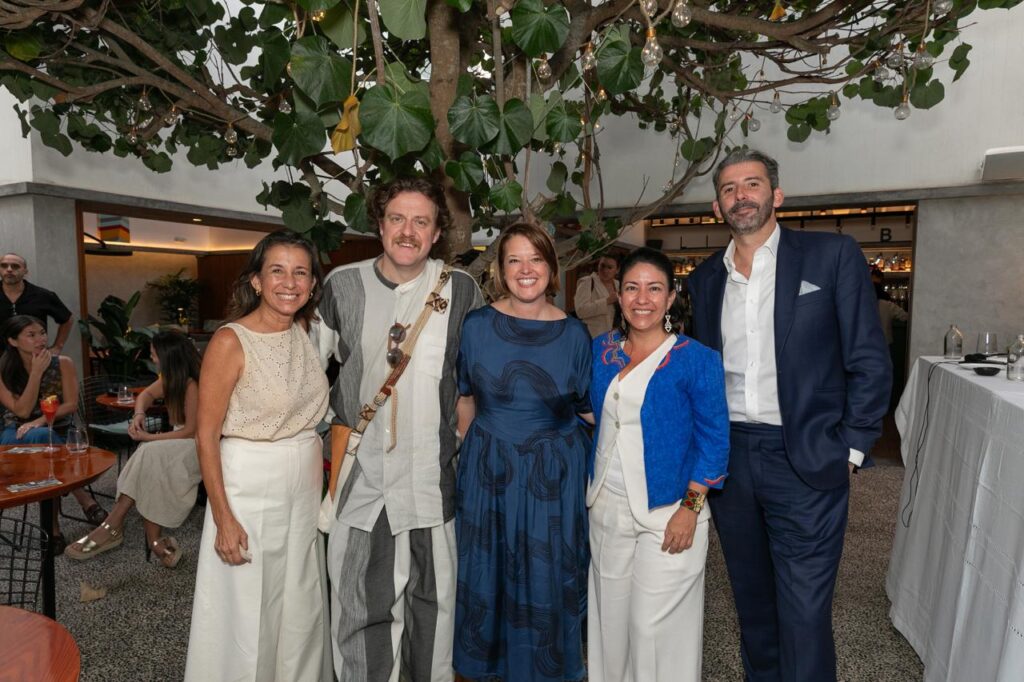
The panel put that framework into practice through examples from different kinds of hospitality businesses. Alex D’Aguiar, who leads bars and restaurants globally for Belmond, described how a large organization can share ideas across its properties and involve more than 3,000 food and beverage team members. One change in southern Europe was removing bottled water from properties and installing filtration systems. The decision reduced deliveries, packaging, storage, and the associated environmental impact. Alex also noted that some food-waste projects may take five years to return their investment, but still make sense as part of a longer-term commitment.
Billy Wagner of Berlin’s Nobelhart & Schmutzig spoke about change’s gradual nature. Staff can take new practices home and carry them to future workplaces, extending a restaurant’s impact beyond its own walls. He also addressed the cost of responsible sourcing. A business may appear expensive when compared with suppliers or restaurants that do not account for fairer terms and working conditions. As Wagner put it, “We don’t find products; we find people.” For his restaurant, relationships with suppliers help shape both the ingredients on the plate and the story it can share with guests.
Cindy Reátegui of La Patarashca brought the discussion to the Amazon. Her group buys farm-raised paiche for S/40 per kilo. During the sustainable fishing season, it buys from a local community, pays five months in advance, and pays S/80 per kilo. That higher price recognizes the work involved in managing the resource and gives families a more direct stake in the value chain. Reátegui also described the importance of educating teams and working collectively, so that sustainable practices can spread beyond one business.
For Limaná founder Anita Belaunde, the standard has helped identify changes that can benefit both the environment and the business. After working on ways to reduce food waste, Limaná developed fermented drinks that became popular with customers and generated additional income. The restaurant also replaced imported pasta with a gluten-free version made in-house using flour from Peruvian farmers. After a year of testing, the change lowered costs on one of its signature dishes.
Limaná was among the first restaurants in Peru and South America to receive Food Made Good certification. It now holds the standard’s highest distinction, three stars. Belaunde said the assessments helped the team see where it could improve, while regular training and measurement helped make sustainability part of daily operations.
The examples at Limaná showed that responsible hospitality is built through ongoing decisions: how a business buys, what it does with waste, how it treats its team, and whether the people who produce its ingredients share in the value they create. The conversation’s central lesson was that sustainability becomes meaningful when those choices are visible in the way a business works.

